Rabbi Yisrael Salanter was the founder of the 19th-century Mussar movement in Lithuania. One evening, as he was walking home, he passed a shoe-repair shop and saw the shoemaker working very late by the light of a flickering candle. Rabbi Salanter asked him why he was still working so late into the evening. The cobbler responded: “As long as the candle burns, there is still time to make repairs.” Rabbi Salanter was stunned by the man’s reply. He repeated the words to himself, over and over: “As long as the candle is still burning, there is time to make repairs.” What it meant to Rabbi Salanter was that as long as the light of one’s neshama (the soul) still burns, there is still a chance to improve oneself, and to draw closer to the Creator.
Rabbi Salanter understood that there could be gaps between our knowledge and our behaviors. He created Mussar, a discipline of practices to transform one’s behavior that involved small changes over time. The Mussar masters promoted a path of very gradual change involving routine and regular step-by-step practice. Rabbi Salanter taught that change involves small steps, repeated regularly, since what changes quickly in one direction can just as easily change back again.
Although we may understand on an intellectual level the need to change, to do things differently, it is quite another thing to actually take steps towards that transformation. If you go to the doctor for a checkup and find out that your blood pressure is too high or that you need to lose weight, but you choose not to do anything about it, then the information has little impact on your life. If however, you choose to make small daily changes— taking a pill for high blood pressure, committing to take a short walk at lunchtime each day—then over time we make those small changes and our life is transformed. Walking this way requires patience, as Rabbi Yosef Yozel Hurwitz (1849-1919) noted: “The problem with people,” he said, “is that they want to change overnight—and have a good night’s sleep that night, too!
We all know that change does not happen overnight, much as we sometimes wish that we could make it magically happen. We aren’t going to step into a tele- phone booth like Superman (if there are any telephone booths left anymore!) and fly off to spin the world back in time and right the wrongs we have done, or fly off to save the world in record time. Real, lasting change happens not in a leap but through a series of small steps.
Rabbi Simcha Zissel Ziv, (1824-1898), another master of Mussar, taught that we make changes to improve our relationships with God and with our loved ones “in simple things, small things, to come through them to the greatest heights.” He also taught, “It is the work of a lifetime, and that is why you were given a lifetime in which to do it.”
Everyone’s life has its challenges—some more difficult than others. It is through the experiences that we have in life and how we are able to deal with those challenges that we grow and change. As we look back over the last year, can we see the ways in which we have grown and changed? Growth is a fundamental part of life. Every- thing that is alive is growing. Trees, plants, birds, fish, and insects, are all growing or dying. And the same is true for us.
The Yamim Noraim (Days of Awe) each year remind us of that possibility, our potential to change and grow as human beings. It is more important that we start some- where and not be concerned with it being the “right” place. It is more important that we take one small step and find right behind that step another small step to take and not be concerned with our progress on the journey being too slow. It is enough that we take the first steps on this journey of a lifetime. The spiritual challenge is in the moment. This year as we open our hearts and our souls on this journey of transformation, may these small steps move us forward in the coming year to transform our souls and our lives on this journey of a lifetime.
Showing posts with label journey. Show all posts
Showing posts with label journey. Show all posts
Wednesday, October 1, 2014

Thursday, August 28, 2014
Ayecha - Where Are You? The Shofar Sounds
“Suddenly you are awakened by a strange noise, a noise that fills the full field of your consciousness and then splits into several jagged strands, shattering that field, shaking you awake. The ram's horn, the shofar, the same instrument that will sound one hundred times on Rosh Hashanah, the same sound that filled the world when the Torah was spoken into being on Mount Sinai, is being blown to call you to wakefulness. You awake to confusion. Where are you? Who are you?” (Rabbi Alan Lew, "This Is Real And You Are Completely Unprepared: The Days of Awe as a Journey of Transformation")
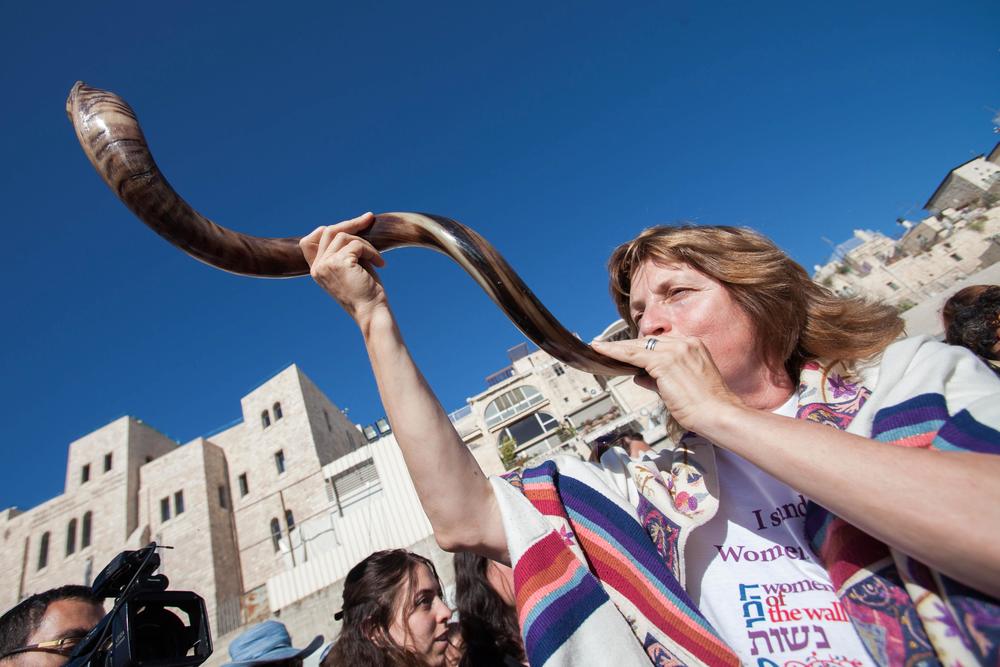
Welcome to Elul. The month of Elul ushers in the season of awakening, on our way to the new year that awaits, as we move through the cycle of the Yamim Noraim, the Days of Awe. It is traditional to hear the sound of the shofar every morning in Elul, reminding us that we need to wake up and realize who we really are, and where we have been on our journey. The shofar calls us to come back, to return to God and to who God created us to be. The sound of the shofar calls us to wake up to how we are living and how we want to live, how we want to change. We are entering the new year. The shofar calls to us: "What am I doing in this moment of my life?"
Have you thought about how you would like to grow and change in the coming year? The sound of the shofar calls to us: You are more than your long list of errands to check off this week, you are more than the report that needs to get written, you are more than the shortcomings that you see in yourself for all that you have not done. Where are you? Who are you? Who have you been? Who would you like to be in the coming year?
The shofar’s call reminds us to pay attention. As we go on this journey of life we are not alone. Others are walking in front of us, beside us and behind us. God’s presence is with us. We must give careful attention to what we do, what we say, what we think and how we respond to those whom we meet along the way. The blast of the shofar echoes within us. What are we called to do? Who have we been created to be? Are we living each day with mindfulness, with purpose, with awareness?
When we hear the shofar’s call we awaken to the journey that we are all on, each and every day, that is most often buried beneath the layers of everything we think is important. The shofar calls us back to our center and reminds us of what is of real importance: reconnecting with our souls, with who we are, with our family, our friends, our God. This journey of return, this path of teshuvah is not a ten day process between Rosh Hashanah and Yom Kippur. It is not only a yearlong journey, but a lifelong journey of our souls. We need to look at ourselves each day and see who we are and where we are going.
We are all on a journey. Where that journey will take you in the next 60 days is up to you.
My family and I wish you and your loved ones a Shanah Tovah U’Metukah, a year filled with joy and the sweetness of life.
May this year 5775 be for all of us a year of blessing, health, joy, and return.
Welcome to Elul. The month of Elul ushers in the season of awakening, on our way to the new year that awaits, as we move through the cycle of the Yamim Noraim, the Days of Awe. It is traditional to hear the sound of the shofar every morning in Elul, reminding us that we need to wake up and realize who we really are, and where we have been on our journey. The shofar calls us to come back, to return to God and to who God created us to be. The sound of the shofar calls us to wake up to how we are living and how we want to live, how we want to change. We are entering the new year. The shofar calls to us: "What am I doing in this moment of my life?"
Have you thought about how you would like to grow and change in the coming year? The sound of the shofar calls to us: You are more than your long list of errands to check off this week, you are more than the report that needs to get written, you are more than the shortcomings that you see in yourself for all that you have not done. Where are you? Who are you? Who have you been? Who would you like to be in the coming year?
 | |||
|
When we hear the shofar’s call we awaken to the journey that we are all on, each and every day, that is most often buried beneath the layers of everything we think is important. The shofar calls us back to our center and reminds us of what is of real importance: reconnecting with our souls, with who we are, with our family, our friends, our God. This journey of return, this path of teshuvah is not a ten day process between Rosh Hashanah and Yom Kippur. It is not only a yearlong journey, but a lifelong journey of our souls. We need to look at ourselves each day and see who we are and where we are going.
We are all on a journey. Where that journey will take you in the next 60 days is up to you.
My family and I wish you and your loved ones a Shanah Tovah U’Metukah, a year filled with joy and the sweetness of life.
May this year 5775 be for all of us a year of blessing, health, joy, and return.
Subscribe to:
Posts (Atom)

 Posts
Posts