Showing posts with label religious freedom. Show all posts

Wednesday, November 9, 2016

After the Election


November 9, 2016/ 8 Heshvan 5777

After the Election
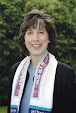
Rabbi Audrey S. Pollack

For those who have been asking, what should I say to my children, how will you respond to the members of your congregation-our Canadian friends who ask how could this have happened, how is this possible, what will we do. This is my response:

My father was a proud American.  The son of immigrant parents who had come to America in the early part of the 20th century in search of a better life free of the persecutions and pogroms against Jews in Eastern Europe, he raised us with the values of democracy.  He was a student of history, and later a teacher of history, who believed in the value of public education and the ideals that extend civil rights, freedoms and justice to every American. On Flag Day and the 4th of July, I have strong memories of him putting out our American flag in its holder on the front of our house, and being carried on his shoulders to watch the parades. He instilled in my sisters and me the importance of voting, of civic engagement, and in dialogue with those whom we might not agree with.  He taught us to believe in the values and ideals of American democracy and to stand up for the rights of those who did not have a voice. 

My mother is a proud American. Her grandparents were immigrants who also came seeking a better life, a place where they would enjoy freedom and as Jews, not fear for their lives because they were a minority, different, other.  She, like my father, believes in the value of public education and civic engagement and dialogue. My parents spent their careers teaching in the public education system and devoted their lives to helping children and families from all walks of life, ethnicities, cultures, religions, socio-economic status, political leanings, and beliefs.  And they raised me and my sisters in a community that shares those values.

This morning is a mix of emotions.  Many political commentators are writing opinions about what is broken in America, and how the political system delivered last night’s election results. I will leave it to them to analyze. We must realize that there is a part of America that is elated by last night’s election results.  We have to try and understand and make sense of what that means. Most Americans that I know, however, are worried, embarrassed, angry, hurt, and fearful.
As Jews we know all too well the lessons of history and what happens when hate and fear is allowed to prevail.  Last night we were expecting the shattering of a glass ceiling, to see the first woman in US history elected to the presidency. Today, November 9th , is the anniversary of another shattering of glass, Kristallnacht, the Night of Broken Glass. 78 years ago in Nazi Germany and Austria after years of Hitler's campaign against Jewish citizens, crowds and soldiers burned synagogues and broke into Jewish houses and stores, attacking and murdering Jews.   German authorities looked on without intervening. The tide had turned.

Some of my friends’ children are asking their parents this morning “what will happen to my friends who came here from Mexico, who are Muslim immigrants, who have brown skin”? We are fearful of what will happen to the great strides that were made for the protection of LGBTQ Americans, for marriage equality, for the rights of women to make their own decisions about their bodies, for civil rights and religious freedoms.  

I understand that fear. That fear runs deep -  My mother always taught us that it was important to always have a valid passport.  I’d like to think it was because her mother, who came through the Great Depression as a child, enjoyed clipping articles from National Geographic and dreaming of the places she wanted to visit, something she was fortunate to enjoy in her later years.  I’d like to think that. But I know that it is about something deeper. It is not because we did not have a comfortable life, not because there was anything rationally known to fear. But “just in case.”   That is not to say that I think most liberal Americans should leave the country, even as I know that many liberal Americans were/are considering options to leave. Last night as we watched the election returns from our home in Canada, the immigration Canada website crashed from all of the traffic.   

To the contrary, I believe that we cannot allow fear and anxiety to guide us. To be sure, this election will have great effect on the world. But we must also remember that America is still a democracy.  It is a democracy that has at its center a system of checks and balances built into it.  We must work together to hold back the tide of xenophobia, racism, misogyny and homophobia.  We must recommit ourselves to protect those who are most marginalized and most at risk. We have to strive together to uphold decency, fairness, moderation, compromise and the rule of law. We have to work harder to encourage multiculturalism and diversity, to diversify and support our own networks of friends, to help those less fortunate, to speak up when we hear people speaking bigotry and untruths, and to be vigilant.

We must remind our children each and every day to treat others with respect, and to always speak up when someone is being disrespectful, to them or someone else, to be kind, and help people who need help.  Stand up for your beliefs and your rights while taking care to listen to those who disagree. We must continue to teach our children to stand up for what they believe in and to stand up for the rights that democracy promises us. We must make sure they know that we are always here to support and care for them, that our love surrounds them, and that they can use the power of their love and caring for good in this world. We must work even harder to bring light into the world.

Now more than ever we need the teachings of our prophetic tradition, reminding us: “Learn to do good. Devote yourselves to justice; Aid the wronged. Uphold the rights of the orphan; Defend the cause of the widow.” (Isaiah 1:17) and “You have been told what is good, And what Adonai requires of you: Only to do justice; to love goodness, and to walk humbly with your God.” (Micah 6:8)  These same teachings were eloquently phrased in the inspiring words of Michelle Obama: “When they go low, we go high.”


Friday, March 1, 2013

The Pesach Project - Passover in the FSU

40 years ago, in 1974, 26 year old Soviet Jewish dissident Natan Sharansky attended his first seder. For Sharansky, it was not difficult to identify with the Pesach story of freedom told in the Haggadah.  As a dissident, his life was made difficult and KGB agents waited around every corner. Some years later Sharansky led his own seder for the first time, but without the benefit of a Haggadah to read, or any of the elements of the seder to enjoy – no karpas, no matzah, no maror. Sharansky was alone in his prison cell but he did recount the story of Pesach to the prisoners next door through the small window of his cell.

For the community of dissidents in the Soviet Union of the 1970s no symbols were needed to remind them of the power that freedom has to transform society. The compelling story of the Exodus from Egypt, a nation of slaves rising up to defeat the most powerful Pharoah and his army, and lead the people forward to be a free people in their own nation was not ancient history, it was a symbol of of their cause. They understood the bitter tears of slavery that the Jewish people shed while in Egypt. For Sharansky and his fellow prisoners, their lives were a prayer and hope that the yoke of oppression would soon be broken and they would be able to sit reclining at the seder table and taste the flavor of freedom in years to come.  In 1986 Sharansky was finally released from Soviet imprisonment and he made aliyah to Israel. He is now the chairman of the Jewish Agency for Israel, the organization in charge of immigration and absorption of Jews from the diaspora into Israel.

As we sit at our seder tables this year, it may seem that 40 years is a short time, a blip in history. Yet our people wandered forty years in the desert on the way to the Promised Land.  And our work is not yet done.

Today in the former Soviet Union it is now possible to both learn about and practice Judaism: The Reform movement (known as the World Union for Progressive Judaism  -WUPJ) in the FSU has an active and vital presence: “After over 70 years of Communism, religious oppression and persecution, Jewish communities in the FSU have once again become vibrant with the World Union's assistance."

 
 The first congregation to officially join the Reform movement was Hineini in Moscow in 1990. Today, over 60 congregations in Russia, Ukraine, Belarus and the Baltic states, spanning 11 time zones from the Polish border to the Pacific Ocean, have officially become part of the World Union family, which now has offices in Moscow, St. Petersburg, Kiev and Minsk. There are currently six native-born rabbis and a full-time academic program, Machon, (the Institute for Modern Jewish Studies), to locate and train local paraprofessional community workers.

The Progressive movement operates nursery schools and Sunday schools all over the FSU under the leadership of a team of full-time education directors. Netzer Olami, the international Zionist youth movement of the World Union for Progressive Judaism, has become the largest Jewish youth movement in the FSU, operating summer and winter camps for some 1,000 participants, as well as youth clubs and counselor training programs.          

This Pesach, our former WELFTY advisor, Chase Foster, now a 1st year rabbinic student at Hebrew Union College (HUC) in Jerusalem will be participating this year in the Pesach Project, an annual program through HUC and the World Union for Progressive Judaism. He will be traveling along with 20 classmates to Berlin and then to various cities in the FSU - Gomel, Minsk and Lida, Belarus to assist small Jewish communities that do not have the resources to provide for Jewish professionals. Last year’s FSU trip allowed approximately 5,500 people to join around the seder table with community for Passover.  Chase has committed to fundraising $2500 for the Pesach project to help Jews in the FSU celebrate Pesach.  

At this season of freedom, may our love for the Jewish people and our support for outreach and education make this Passover a time of re-commitment to our people and our faith.

Sunday, July 8, 2012

An Inspiring Quest

A little more than a month ago I received an email that read: “Hello Rabbi Pollack, Once again I am writing you about my quest of meeting all the female Rabbis that contributed to the Women’s Torah Commentary . So far I have met 36 Rabbis and look forward to meeting you. I am going to be in your area the first week of July 2012 and was hoping that you would be available to meet with me and sign my book…. Bonny Katz.”

As it happened this week I am serving on faculty at our regional URJ camp, GUCI, so when Bonny and her husband Ian drove through, they honored me my stopping here to meet and I signed her book. This is a quest she has been on for quite some time. It’s not easy to meet up with 54 female rabbis who live all across North America. I was really thrilled and honored to be a part of Bonny’s quest. It has been very exciting to be a part of a Torah commentary that has all female rabbinic contributors. And as one of the writers, I hope to be able to inspire women and men, with our teachings on the parashiot.

At camp this session our theme is “Partners with God”.  We’ve been looking at this from many aspects, and one of the shiurim (lessons) this week that particularly resonated with our campers is the concept of what it means to be a leader and a role model.  We examined the idea of being a great leader, but not a great role model, and what it takes to be a role model, from a Jewish perspective, not just in the Torah, but how we can strive to live our own lives as role models.

As rabbis, naturally, we are expected to be role models, in all aspects, not just in Jewish practice, but in everything that we do.  One of the great things about being at camp is that I sit with campers in programs, at meals, in shiur, and get out there and do activities with them in the camp setting, not in an office, or behind a desk.  We’re all sweating together this week in shorts and t-shirts in the 100 degree heat, we’re dancing at song session, and cheering, praying together, eating together, and having conversations that are meaningful and important – about God and Judaism, and what it means to be a Jew today, especially in places where there aren’t many other Jewish kids in their schools.  The other night I led a lights out program for cabin 3.  I brought my guitar and sang some of my favorite songs, and the girls asked me questions – how long have you been a rabbi, what is the scariest thing that ever happened to you, what is your favorite camp song, who are your role models. The kinds of questions that maybe they don’t ask their own rabbi at home, but here at camp, these are the important questions.

The girls of cabin 3 didn’t seem at all surprised to have a female rabbi doing their lights out program, probably because they see both female and male rabbis at camp every year.  It’s something that I still find amazing, because when I was their age, there weren’t many female rabbis at all.  In Tefillah (worship services) this week, I’ve also been reflecting on how much stayed the same and how much has changed.  We are singing many of the same melodies for prayers that we sang at camp, even as newer beautiful melodies have been added.  Back when I was a camper, there was a vigorous debate over whether or not to include the Imahot (matriarchs) in the Avot prayer.  Today, the Avot v’Imahot is a given. The debate today is over whether Leah comes before Rachel in the liturgy.  All of this made Bonny’s quest even more amazing and inspiring for me.

When I was a camper Bonny’s quest wouldn’t even have been possible. There were not enough female rabbis back then to have had 54 writers on the parashiot.  The questions   we are asking and the discussions we are having today may be some of the same questions and discussions, but they are different because women’s voices are added to the mix.  As I hugged her before she left, I told Bonny that I want to hear more about her journey as it continues – I know she will have some wonderful stories to tell.

(cross posted at Kol Isha, the blog of the Women's Rabbinic Network)

Tuesday, April 3, 2012

Religious Freedom and Equality in Israel

What does freedom mean?  As Pesach approaches, we retell the story of our ancestors, and offer thanks to God that in this season we went forth from slavery to freedom.  The Haggadah reminds us that each of us must teach our children that “it is because of what God did for me, when I went out of Egypt”, in other words, each of us must view ourselves as having personally gone forth from Egypt. Freedom is defined as the absence of coercion or constraint imposed by another person or by the state.  A person is free to the extent that she can choose her own goals and course of life, can make choices between the alternatives available to her, and is not compelled to act in a manner that she would not choose; or is not prevented from acting as she would like.  In our world there is a practical connection between freedom and power. 

In Israel today there are many challenges posed by an imbalance of power that threatens the core values of Israeli society. Democracy and fairness are under attack because the ultra-Orthodox leadership insist that their Jewish vision is the only way. The power that the ultra-Orthodox religious authority currently holds, undermines the freedom for different religious expressions of Judaism to exist in Israel.  Israeli Reform, Masorti/Conservative, and secular Jews are uniting in support to strengthen pluralism in Israeli society and promote equal rights for different religious expressions of Judaism.

The Israel Religious Action Center is actively involved in challenging the ultra-Orthodox establishment, and is involved in more than 60 court cases each year.  

These cases include:
  • Choice in wedding ceremonies – recognition of non-Orthodox rabbis as officiants and civil marriage in Israel as an alternative to religious ceremonies.
  • Choice in burial procedures – implementing an already existing alternative burial law allowing for civil burial sections in all public cemeteries
  • Recognizing non-Orthodox conversions
  • Preventing discriminatory legislation against non-Orthodox practices
  • Equal treatment of all streams of Judaism – the employment of non-orthodox Rabbis in municipal settings, providing equitable funding of communal, educational and religious activities
  • Eliminating gender separation - on public buses and all public places and facilities
  • Core curriculum for all - schools receiving any State funding must teach the Ministry of Education core curriculum which prepares students to participate in the job market and a democratic, civil society
  • Reducing the authority of religious courts  – in family and life cycle matters
  • The right for women to pray together at the Wall – Women of the Wall seek to pray aloud as a group, wear tallit and read from the Torah 
  • Freedom of religion and conscience - as protected by the 1948 Declaration of Independence of the State of Israel.
Over the last several decades, the Reform and Masorti/Conservative movements have made progress. The outreach efforts of our congregations and education initiatives all over the country are bearing fruit. As more and more Reform congregations spring up and become established pillars of their communities, Israelis are starting to see that the Reform movement has a lot to offer them.  Anat Hoffman, head of the Israel Religious Action Center reports that “Many Israelis who oppose gender segregation, racist incitement by rabbis, or the Orthodox monopoly on marriage and divorce see that we are on the front lines pushing back against the ultra-Orthodox hegemony. They look at our work and think, "Here is a group that represents my Jewish values. If that is what it means to be Reform, then I'm Reform."”

As Rabbi Gilad Kariv, Executive Director of the Israel Movement for Progressive Judaism, recently said "it is striking that the political and legal reality in Israel regarding relations between religion and state lags far behind the true position of Israeli society. For sure, both movements still face significant challenges, but it is no longer possible to dismiss their activities in Israel or their impact on Israeli society. We believe that the development of both movements will eventually lead to a change in their political and legal status.”

Within the last month one of the major issues that non-Orthodox Israelis have been concerned with has made progress.  The Tal law, that exempts the ultra-Orthodox from military service has been struck down. According to this recent court decision, now all Israelis, including the ultra-Orthodox, must share the burden of full army or national service. 

In January, Shimon Peres became the first president of Israel to appear publicly with the Masorti (Conservative) movement, after 35 years since the movement’s founding in Israel. Peres attended a performance of Shirat Machar, the Masorti co-ed performance troupe, and opened his remarks by saying, “I came here this evening to hear women singing,” referring to the haredi soldiers who walked out of an IDF event where women soldiers were performing. He also praised the Masorti movement’s “commitment to humanism, peace, human rights and the rights of citizens,” saying that it is time to recognize the religious rights of all Jews in Israel. “Different streams exist in Judaism,” Peres said, “which has room for conservative and liberal viewpoints.” 

Yet there is more work to be done. In response to the work of IRAC, Ultra-Orthodox Member of the Knesset Eichler has publicly referred to IRAC staff and Rabbi Gilad Kariv  as "Reform anti-semites" and "Reform enemies of the state". Certainly change needs to happen at the grassroots level by Israeli voters  who can focus their efforts to ensure that members in the next Knesset will promote legislation to protect the democratic, Jewish and pluralistic nature of the State of Israel.  As American Jews and supporters and lovers of Israel, we can also work for change to ensure that Israel lives up to the Declaration of the Establishment of the State of Israel  which says: "[The State] will ensure complete equality of social and political rights to all its inhabitants irrespective of religion, race or sex". What is at stake is nothing less than the morality of Israel’s motives, and the integrity of her actions; the democratic, pluralistic future of the modern state of Israel. Anat Hoffman, Executive Director of the Israel Religious Action Center reports that the internal issues currently plaguing Israel - religious pluralism, minority rights, and gender equality are as great a threat to Israel's future as the prospect of a nuclear Iran.

What can you do? Get involved.  Become informed - read the Israeli press, follow what is going on through organizations like Hiddush: for religious freedom and equality in Israel. Let Israel know that you care.  Send messages of support to the Israel Movement for Progressive Judaism, our Israeli counterparts in the Reform movement. Send contributions to support the work of the Israel Religious Action Center and the Women of the Wall. Sign petitions to let the Israeli government know that Israel is a place for all Jews. And go Visit Israel.

Women of the Wall website: www.womenofthewall.org.il.