As I write this we are in the midst of another cold spell. The wind whips across the open fields and the air is a frigid blast from the polar vortex. The sun shines on the frozen landscape and tires crunch on ice on the roads. Our lives feel disrupted as events are canceled, schools and businesses operate on two-hour delays or are closed altogether. Even our membership that relocates to the warmth of sunny Florida for the winter reports that it is cold - they have had to put on sweaters and turn on the heat!
In the Talmud, tractate Avodah Zarah, “Our Rabbis taught:When Adam, the first human, saw the day getting gradually shorter, he said, 'Woe is me, perhaps because I have sinned, the world around me is being darkened and returning to its state of chaos and confusion; this then is the kind of death to which I have been sentenced from Heaven!' So he began keeping an eight days' fast. But as he observed the winter equinox and noted the day getting increasingly longer, he said, 'This is the world's course', and he set forth to keep an eight days' festivity. In the following year he appointed both the days before and the days after the equinox as festivals.” (Bavli Avodah Zarah 8a).
When it is cold and dark, when the days are short and the nights are longer, we often feel like the first Adam. He worries that the world is returning to the chaos that preceded creation, concerned that warmth and light are disappearing. But when he sees that the light is returning, that the days are growing longer, his fears are eased, and he celebrates both the days leading up to the equinox as they grow shorter, and the days following, as the hours of light lengthen.
There is a reason that we talk so much about the weather this time of year. When it’s -5 with a windchill of -25, when the bitter wind whistles outside and the cold air makes it hard to take a breath, we notice much more than when the weather is pleasant and does not disrupt our plans. It is harder to see the changes that are taking place day by day when it is dark and cold. But Adam’s story teaches us that even when things seem dark and cold around us, not to despair, because the sun will shine again, the days will lengthen, and what has been growing slowly will blossom in days to come.
Snow Women of the Wall, Jerusalem
We aren’t the only ones experiencing colder than normal winter weather.
On August 1st, Jewish men and women across the globe will be joining in celebration of Siyum HaShas, the completion of the seven year cycle of Talmud reading. Daf yomi, as it is known, is the practice of learning a daf, or page, of Talmud each day. Studied in this way, the 2,711 pages of Talmud can be completed in seven and a half years. Two days later, on August 3, 2012, Jews the world over will begin the new Daf Yomi cycle, and begin learning Talmud from the beginning, from Seder Zeraim (Seeds): Tractate Berakhot (Blessings).
This system of learning Talmud, meant to encourage everyone, not just scholars, to learn Talmudic law and teaching, was developed by Rabbi Meir Shapiro in 1923 in Poland. Talmud is made up of two main parts, the Mishnah, or first written compendium of the Oral Law, codified around the year 200 CE, and the Gemara, which is commentary on the Mishnah, codified by 600 CE. The Mishnah is a commentary on the Torah and the Gemara is a commentary on the Mishnah. The Talmud is the basis for all of the codes and commentaries of rabbinic law, and is also know as Shas, an abbreviation of Shisha Sedarim, or six orders of the Mishnah. Originally these laws and teachings were handed down by word of mouth, hence called the Oral Law, but it gradually came to be codified in the six orders of the Talmud.
The first page of Tractate Berakhot
These six orders, or general subjects are subdivided into 60 masekhtot, or tractates, which is further subdivided into perakim (chapters), and this comprises the 2,711 pages of text. Surrounding the Mishnah and Gemara are later commentaries and codes, marginal texts. Just as we often make notes in the margins of a book, later scholars and teachers did the same with the Talmud text and their commentaries and conversations are recorded on the same page. When you sit down with a daf,or page, of Talmud, you are entering a conversation that has taken place over thousands of years with great rabbis and teachers, and you are sitting at the table entering into conversation with them. You can learn more about the Talmud from this interactive Talmud page.
Until recently, the world of the Talmud has been a challenging and somewhat difficult world for most modern liberal Jews to enter. There is of course a language barrier, since the Talmud was written in Hebrew and Aramaic. There is also the fact that much of the passages assume a certain level of textual knowledge on the part of the reader. Much of the commentators in the margins serve to assist the reader by providing explanations of words, interpreting seeming contradictions, and providing references to Biblical passages and related passages from elsewhere in the Talmud.
This Daf Yomi cycle will be different than those that have preceded it because of the level of unprecedented access that modern liberal Jews, both men and women, now have to access the text. Although the first English translation of the Talmud was published over 100 years ago, the text has remained relatively cryptic and difficult for non-Hebrew readers. The latest English translations of the Talmud have attempted to render the text in such a way as to make it much more understandable for the lay reader, including not only an English translation, but also guides to the text, biblical references, and unpacking of the more obscure and difficult material. The newest English editions of the Talmud are available in both traditional book volumes and iPad editions.
The most traditional way to study Talmud is with a partner, in chevruta, or partnered study. The text is read aloud and debated and discussed. In that way it comes alive and it is not just you or your chevruta that is part of the discussion, but all those whose words you are reading, and all those who throughout the centuries have debated and discussed and whose lives have been affected by the rulings on the pages. Many of you may know that I have a chevruta with whom I learn Talmud weekly. Our study is a much more in depth learning than daf yomi ( a page a day) will allow, we don’t have a goal to get through a page or more each time we learn, but to get through as much text as we can understand and discuss, whether that is a few lines, or a few paragraphs. Even so, we are both excited about the new daf yomi cycle, and even more so about the newest editions of Talmud that invite access for more Jews to learn the foundations of Jewish law and life.
Will you join the 13th Daf Yomi cycle on August 3rd this year?
Tu Bishevat - the fifteenth day of the month of Shevat in the Jewish calendar, falls this year on February 8th. Tu Bishevat is the New Year of the trees. We rejoice in the fruit of the tree and the fruit of the vine. In the Talmud there is a legend about Honi, who came upon an old man planting a carob tree. When Honi saw the old man, he at once questioned the old man’s actions, saying, “Foolish man, do you think you will still be alive to eat of the fruit of this tree?” The old man replied, “I found trees in the world when I was born. My grandparents planted them for me. Now I am planting for the generations that will come after me.” The story goes on to tell us that Honi fell into a deep sleep, from which he did not awaken for 70 years. When he awoke he was surprised to see an old man picking the fruit from a fully grown carob tree. When he inquired of the old man, “Are you the man who planted this tree?” the old man answered, “My grandfather planted it for me.” (Talmud Bavli, Ta’anit 23a)
The Talmud says that the root is the soul and the branch is the body. Just so, there is a branch of the tree of life representing each and every Jew. How marvelous are these branches, for while nourished by the same roots, the fruit of every branch is completely different. Our rabbis taught that one who sees a multitude of Jews should recite this blessing: “Blessed is the all-wise and mysterious God, for each person’s opinion is different and each person’s appearance is different,” and yet they are all Jews (Talmud Bavli, Berachot 58a). United by the tree of life, the Torah, we each create our own Jewish life.
All too often these days, however, too many of us feel that our active participation in Jewish life and Jewish community does not matter. I am saddened when I hear this phrase: “As long as I feel Jewish, what does it matter if I do anything or not.” I am saddened because it is not enough to “feel” like a branch of the tree of life. Judaism is about doing, and living Jewishly. A feeling is intangible. It cannot be transmitted or passed to another without real, physical contact. The fruit of Jewish life means seeing, tasting, touching, smelling, and acting in order to live as a Jew and to have an impact on the world around us. We are obligated to live Jewishly in order to fulfill the commandments and to sow the seeds of future Jewish living. Tu Bishevat calls us to action because it asks us to plant. We too are like trees, requiring constant nourishment in order to flourish and grow. While certain aspects of our own trees of life can take nourishment from any ground, there is a second system, a root which reaches hungrily for the teaching of Torah. Being Jewish requires constant rejewvenation from the soil of Torah. We are commanded to take action and participate in doing Jewish life in order to flourish and grow. We have planted and transplanted this tree time and again. May we keep the soil fertile that our faith in God and our Jewish acts may grow. May we strengthen our roots with the past, and may our branches reach towards the future to bear sweet fruit.
The sage Hillel, a great rabbi and teacher of the Mishnaic period, taught us "Do not say 'when I have leisure, I will study,' for you may never have leisure." Pirke Avot 2:4
Over the past summer in Jerusalem, I had the leisure time and the opportunity to indulge in one of my great loves, the study of Jewish text. In addition to floating in the Dead Sea with my kids, I went swimming in the sea of Talmud and drank in the ancient wisdom of our tradition with the warm, dry air in the hills of Jerusalem. While I have always made time to study in one form or another, all too often, it felt squeezed into small chunks of time. This summer I had time to luxuriate in long periods of uninterrupted studywith colleagues and friends, old and new.
Since returning home, I have continued my regular practice of studying Talmud weekly with my chevruta partner via Skype. It is one of the gifts I give to myself each week, and by extension, to our community, because I am continually learning and growing as a Jew.
How many of you have said to yourself that when you have leisure, you will grow in your Judaism? How often have you put off something that is actually quite valuable and important to you, anticipating that at some point in the future, you will have the leisure time that you deprive yourself of today? Rather than postponing Jewish learning, greater participation in our synagogue or growing in your Judaism, the time to act is now.
We may lament that if we had started sooner we’d know more now, or could have made a greater contribution. However, now is as good a time as any to begin. As the saying goes, “The past is history. The future is a mystery. Today is a gift. That's why they call it the present.” We cannot change the past and the future is yet to come.
Let’s embrace our journey in the present. Take some time today to make a renewed commitment to your Jewish journey. Join our "Jewish Literacy" study group, sign up for the URJ “Ten Minutes of Torah” digest, join a Temple Israel activity, volunteer to help with a program or committee, make Shabbat at home, or come to services. Show your children, your peers, or your parents that growing Jewishly is valuable enough to you to make the time for it and invite and inspire others to join you.
Our ancestors provided a path for us to walk on today. As we go on our Jewish journey in the present, we have the opportunity to give a gift for the future by leaving our loved ones, our faith and our world a little stronger, a little better, through our own commitment to grow Jewishly today.
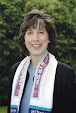
Rabbi Pollack is the rabbi of Solel Congregation of Mississauga where she has served since July 2015. She previously served as the rabbi of Temple Israel in West Lafayette, Indiana beginning in August, 2002. Her congregational work includes teaching, counseling, pastoral care, and community outreach. She finds spiritual sustenance in music and frequently leads tefillah with singing and playing the guitar.


 Posts
Posts