Rabbi Yisrael Salanter was the founder of the 19th-century Mussar movement in Lithuania. One evening, as he was walking home, he passed a shoe-repair shop and saw the shoemaker working very late by the light of a flickering candle. Rabbi Salanter asked him why he was still working so late into the evening. The cobbler responded: “As long as the candle burns, there is still time to make repairs.” Rabbi Salanter was stunned by the man’s reply. He repeated the words to himself, over and over: “As long as the candle is still burning, there is time to make repairs.” What it meant to Rabbi Salanter was that as long as the light of one’s neshama (the soul) still burns, there is still a chance to improve oneself, and to draw closer to the Creator.
Rabbi Salanter understood that there could be gaps between our knowledge and our behaviors. He created Mussar, a discipline of practices to transform one’s behavior that involved small changes over time. The Mussar masters promoted a path of very gradual change involving routine and regular step-by-step practice. Rabbi Salanter taught that change involves small steps, repeated regularly, since what changes quickly in one direction can just as easily change back again.
Although we may understand on an intellectual level the need to change, to do things differently, it is quite another thing to actually take steps towards that transformation. If you go to the doctor for a checkup and find out that your blood pressure is too high or that you need to lose weight, but you choose not to do anything about it, then the information has little impact on your life. If however, you choose to make small daily changes— taking a pill for high blood pressure, committing to take a short walk at lunchtime each day—then over time we make those small changes and our life is transformed. Walking this way requires patience, as Rabbi Yosef Yozel Hurwitz (1849-1919) noted: “The problem with people,” he said, “is that they want to change overnight—and have a good night’s sleep that night, too!
We all know that change does not happen overnight, much as we sometimes wish that we could make it magically happen. We aren’t going to step into a tele- phone booth like Superman (if there are any telephone booths left anymore!) and fly off to spin the world back in time and right the wrongs we have done, or fly off to save the world in record time. Real, lasting change happens not in a leap but through a series of small steps.
Rabbi Simcha Zissel Ziv, (1824-1898), another master of Mussar, taught that we make changes to improve our relationships with God and with our loved ones “in simple things, small things, to come through them to the greatest heights.” He also taught, “It is the work of a lifetime, and that is why you were given a lifetime in which to do it.”
Everyone’s life has its challenges—some more difficult than others. It is through the experiences that we have in life and how we are able to deal with those challenges that we grow and change. As we look back over the last year, can we see the ways in which we have grown and changed? Growth is a fundamental part of life. Every- thing that is alive is growing. Trees, plants, birds, fish, and insects, are all growing or dying. And the same is true for us.
The Yamim Noraim (Days of Awe) each year remind us of that possibility, our potential to change and grow as human beings. It is more important that we start some- where and not be concerned with it being the “right” place. It is more important that we take one small step and find right behind that step another small step to take and not be concerned with our progress on the journey being too slow. It is enough that we take the first steps on this journey of a lifetime. The spiritual challenge is in the moment. This year as we open our hearts and our souls on this journey of transformation, may these small steps move us forward in the coming year to transform our souls and our lives on this journey of a lifetime.
Showing posts with label Elul. Show all posts
Showing posts with label Elul. Show all posts
Wednesday, October 1, 2014

Thursday, August 28, 2014
Ayecha - Where Are You? The Shofar Sounds
“Suddenly you are awakened by a strange noise, a noise that fills the full field of your consciousness and then splits into several jagged strands, shattering that field, shaking you awake. The ram's horn, the shofar, the same instrument that will sound one hundred times on Rosh Hashanah, the same sound that filled the world when the Torah was spoken into being on Mount Sinai, is being blown to call you to wakefulness. You awake to confusion. Where are you? Who are you?” (Rabbi Alan Lew, "This Is Real And You Are Completely Unprepared: The Days of Awe as a Journey of Transformation")
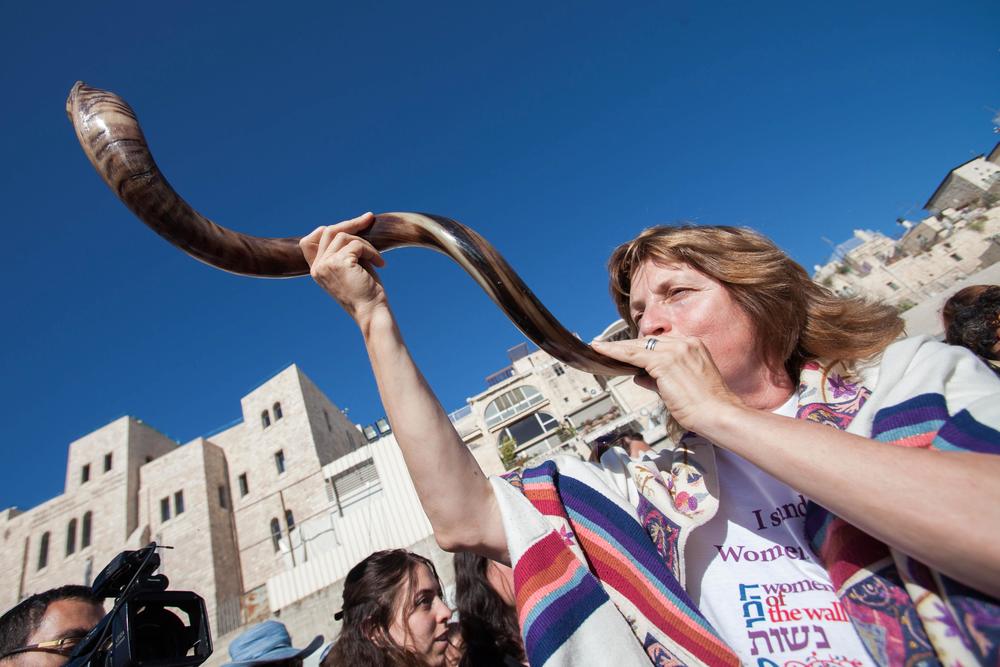
Welcome to Elul. The month of Elul ushers in the season of awakening, on our way to the new year that awaits, as we move through the cycle of the Yamim Noraim, the Days of Awe. It is traditional to hear the sound of the shofar every morning in Elul, reminding us that we need to wake up and realize who we really are, and where we have been on our journey. The shofar calls us to come back, to return to God and to who God created us to be. The sound of the shofar calls us to wake up to how we are living and how we want to live, how we want to change. We are entering the new year. The shofar calls to us: "What am I doing in this moment of my life?"
Have you thought about how you would like to grow and change in the coming year? The sound of the shofar calls to us: You are more than your long list of errands to check off this week, you are more than the report that needs to get written, you are more than the shortcomings that you see in yourself for all that you have not done. Where are you? Who are you? Who have you been? Who would you like to be in the coming year?
The shofar’s call reminds us to pay attention. As we go on this journey of life we are not alone. Others are walking in front of us, beside us and behind us. God’s presence is with us. We must give careful attention to what we do, what we say, what we think and how we respond to those whom we meet along the way. The blast of the shofar echoes within us. What are we called to do? Who have we been created to be? Are we living each day with mindfulness, with purpose, with awareness?
When we hear the shofar’s call we awaken to the journey that we are all on, each and every day, that is most often buried beneath the layers of everything we think is important. The shofar calls us back to our center and reminds us of what is of real importance: reconnecting with our souls, with who we are, with our family, our friends, our God. This journey of return, this path of teshuvah is not a ten day process between Rosh Hashanah and Yom Kippur. It is not only a yearlong journey, but a lifelong journey of our souls. We need to look at ourselves each day and see who we are and where we are going.
We are all on a journey. Where that journey will take you in the next 60 days is up to you.
My family and I wish you and your loved ones a Shanah Tovah U’Metukah, a year filled with joy and the sweetness of life.
May this year 5775 be for all of us a year of blessing, health, joy, and return.
Welcome to Elul. The month of Elul ushers in the season of awakening, on our way to the new year that awaits, as we move through the cycle of the Yamim Noraim, the Days of Awe. It is traditional to hear the sound of the shofar every morning in Elul, reminding us that we need to wake up and realize who we really are, and where we have been on our journey. The shofar calls us to come back, to return to God and to who God created us to be. The sound of the shofar calls us to wake up to how we are living and how we want to live, how we want to change. We are entering the new year. The shofar calls to us: "What am I doing in this moment of my life?"
Have you thought about how you would like to grow and change in the coming year? The sound of the shofar calls to us: You are more than your long list of errands to check off this week, you are more than the report that needs to get written, you are more than the shortcomings that you see in yourself for all that you have not done. Where are you? Who are you? Who have you been? Who would you like to be in the coming year?
 | |||
|
When we hear the shofar’s call we awaken to the journey that we are all on, each and every day, that is most often buried beneath the layers of everything we think is important. The shofar calls us back to our center and reminds us of what is of real importance: reconnecting with our souls, with who we are, with our family, our friends, our God. This journey of return, this path of teshuvah is not a ten day process between Rosh Hashanah and Yom Kippur. It is not only a yearlong journey, but a lifelong journey of our souls. We need to look at ourselves each day and see who we are and where we are going.
We are all on a journey. Where that journey will take you in the next 60 days is up to you.
My family and I wish you and your loved ones a Shanah Tovah U’Metukah, a year filled with joy and the sweetness of life.
May this year 5775 be for all of us a year of blessing, health, joy, and return.
Sunday, September 1, 2013
A Question for the New Year: What will I become in the future?
What is it about the High Holy Days that draws so many of us into the synagogue? Even if we have not been more than a few times or perhaps not at all during the past year, Rosh Hashanah and Yom Kippur bring us here to pray, to reflect, and to be a part of community. As we enter the doors of the synagogue once again, we are reminded that the gates of repentance are always open, that no matter how often or how infrequently we may have come to synagogue over the past year, we are always welcome here. Sometimes it is difficult to find the path back towards God and Torah and being amongst other Jews. Judah Halevi, the medieval poet said: “When I go forth looking for You, I find You seeking me.” In the process of searching for God, and returning to synagogue, we find ourselves.
Judaism is a religion of questions and questioning. So, too, at this time of year, as we approach the Yamim Noraim, we must ask ourselves the important questions, the hard questions. How do we take stock of our actions and our interactions with loved ones, friends, neighbors, even business associates during the previous year? How can we even begin to confront these hard questions? We start by letting go of the fear of ourselves, and acknowledging that we are not perfect, and that we do have the capacity to change. We must ask ourselves: “What have I done? and What have I become?” (Rabbi Jonah of Gerona in his Gates of Repentance, a treatise of the 13th century). To Rabbi Jonah’s wisdom, I think we must add one additional question: What will I become in the future? Our tradition calls the process of self reflection cheshbon hanefesh, literally, “taking an account of our soul”. It is what the period leading up to the Yamim Noraim is all about. This time of preparation is not easy but it is also a gift, an opportunity to begin anew, as we consider not only our interactions and actions over the past twelve months, but the process of teshuvah, of repentance and change. Each day we begin with ourselves, unafraid to confront the past, for as we return towards God, we come to learn that these actions of the past are no longer what we have become or must be in the future.
My family and I wish each of you a Shanah Tova U’Metukah, a year filled with health, joy and the sweetness of life. May this new year of 5774 be a year of health, happiness, and growth for you and your family.
Judaism is a religion of questions and questioning. So, too, at this time of year, as we approach the Yamim Noraim, we must ask ourselves the important questions, the hard questions. How do we take stock of our actions and our interactions with loved ones, friends, neighbors, even business associates during the previous year? How can we even begin to confront these hard questions? We start by letting go of the fear of ourselves, and acknowledging that we are not perfect, and that we do have the capacity to change. We must ask ourselves: “What have I done? and What have I become?” (Rabbi Jonah of Gerona in his Gates of Repentance, a treatise of the 13th century). To Rabbi Jonah’s wisdom, I think we must add one additional question: What will I become in the future? Our tradition calls the process of self reflection cheshbon hanefesh, literally, “taking an account of our soul”. It is what the period leading up to the Yamim Noraim is all about. This time of preparation is not easy but it is also a gift, an opportunity to begin anew, as we consider not only our interactions and actions over the past twelve months, but the process of teshuvah, of repentance and change. Each day we begin with ourselves, unafraid to confront the past, for as we return towards God, we come to learn that these actions of the past are no longer what we have become or must be in the future.
My family and I wish each of you a Shanah Tova U’Metukah, a year filled with health, joy and the sweetness of life. May this new year of 5774 be a year of health, happiness, and growth for you and your family.
Monday, August 5, 2013
Elul: 40 Days of Preparation
The month of Elul, the month leading up to the High Holidays, which begins this year on August 7, 2013, is a time for rethinking, self-reflection, and meditation. During this month it is customary that every Jew - not just scholars or rabbis - take time to join in Jewish study, read the Bible, and rethink and take stock of his or her life. Why 40 days of preparation? This custom is explained in relationship to the earliest of reconciliations between the Jewish people and God: the 40 days which Moses spent on Mount Sinai after destroying the first set of the Ten Commandments. Moses had come down the mountain and saw the people with the golden calf. He punished the people, destroyed the calf and then went back up the mountain to fast and pray for 40 days. These ended - on Yom Kippur - when Moses received the second set of Ten Commandments from God as a sign of God's forgiveness and reconciliation with the Jewish people. In identifying the 40 days Moses spent on the mountain with the days leading up to Yom Kippur, the Jewish community tries to spend those 40 days as Moses did - in prayer and study and in rethinking one's life in order to merit God's forgiveness. The month of Elul is 30 days long, and there are ten days from the first of Tishrei to Yom Kippur. So, the 40 days begin with the first of Elul.
There are two major customs associated with these forty days. Each morning of the month of Elul, with the exception of Shabbat and the last day of Elul, the shofar is blown. This is meant to be a spiritual wakeup call, and is also a reminder of the shofar blowing that will be heard on Rosh Hashanah. The second custom is the reading of Psalm 27 at every service. This plea to God for help and deliverance from our enemies is understood at this time of year as a plea for deliverance from our own internal enemies, from the challenges we face daily that may have caused us not to be true to ourselves. As Elul comes to an end, our spiritual preparation, prayers and self-reflection intensify with special prayers of Selichot, prayers of asking forgiveness from God and for spiritual healing.
For your own spiritual preparation leading up to the High Holidays:
Jewels of Elul
Seasons of Our Joy - Arthur Waskow
The Jewish Holidays, A Guide and Commentary - Michael Strassfeld
Days of Awe - Shmuel Yosef Agnon
Preparing Your Heart for the High Holy Days: A Guided Journal by Kerry M. Olitzky and Rachel T. Sabath
There are two major customs associated with these forty days. Each morning of the month of Elul, with the exception of Shabbat and the last day of Elul, the shofar is blown. This is meant to be a spiritual wakeup call, and is also a reminder of the shofar blowing that will be heard on Rosh Hashanah. The second custom is the reading of Psalm 27 at every service. This plea to God for help and deliverance from our enemies is understood at this time of year as a plea for deliverance from our own internal enemies, from the challenges we face daily that may have caused us not to be true to ourselves. As Elul comes to an end, our spiritual preparation, prayers and self-reflection intensify with special prayers of Selichot, prayers of asking forgiveness from God and for spiritual healing.
For your own spiritual preparation leading up to the High Holidays:
Jewels of Elul
Seasons of Our Joy - Arthur Waskow
The Jewish Holidays, A Guide and Commentary - Michael Strassfeld
Days of Awe - Shmuel Yosef Agnon
Preparing Your Heart for the High Holy Days: A Guided Journal by Kerry M. Olitzky and Rachel T. Sabath
Sunday, September 2, 2012
Spiritual Reflection During Elul
We are now in the month of Elul, the Hebrew month that leads us into the Yamim Noraim, the High Holy Days. Many Jews use this time period to think back on the year that has passed in anticipation of Rosh Hashanah and Yom Kippur. A few years ago my colleague, Rabbi Debra Orenstein, introduced me to a very meaningful spiritual tool to prepare for the Days of Awe. The custom is to use the last 12 days of the month of Elul (this year from Sept. 5, 2012 onward) until Rosh Hashanah to review and meditate each day on one month from the last year. On the day of Erev Rosh Hashanah, you review Elul, the month just gone by.
Some people will begin each day in meditation or make a quiet space to reflect on the month they are focusing on each day. If you are in the habit of praying the morning prayers, Rabbi Orenstein suggests that you might find this to be a particularly good time to reflect. “The daily prayers in the Amidah, asking for wisdom, forgiveness, healing, justice, a good year, and peace, among other aspirations – create a beautiful vision against which to measure the past year.”
This reflection can be done with a study partner, a friend or spouse, or written in a journal. You might look in your calendar – paper or electronic, from the past year to remind yourself of where you were during each of the months of last year.
Spiritual reflection can lead to a deeper self-awareness of self, of community, of the world, because it helps us to do teshuvah – literally to return to who we really are.
We also do this kind of reflection together as a community during these Days of Awe. And when you are in synagogue for all of the services of Selichot, Rosh Hashanah, and Yom Kippur, if you pay close attention to the themes that run throughout the liturgy of these days, you can see the threads of self-reflection, communal confession and prayers of selichot, asking for forgiveness. But it is really to our benefit to prepare for these 10 days before they begin and then by continuing to let the questions go through you as you go through the ten days of teshuvah – return.
My family and I wish each of you a Shanah Tova U’Metukah, a year filled with health, joy and the sweetness of life. May this new year of 5773 be a year of health, happiness, and growth for you and your family.
Some people will begin each day in meditation or make a quiet space to reflect on the month they are focusing on each day. If you are in the habit of praying the morning prayers, Rabbi Orenstein suggests that you might find this to be a particularly good time to reflect. “The daily prayers in the Amidah, asking for wisdom, forgiveness, healing, justice, a good year, and peace, among other aspirations – create a beautiful vision against which to measure the past year.”
This reflection can be done with a study partner, a friend or spouse, or written in a journal. You might look in your calendar – paper or electronic, from the past year to remind yourself of where you were during each of the months of last year.
Spiritual reflection can lead to a deeper self-awareness of self, of community, of the world, because it helps us to do teshuvah – literally to return to who we really are.
We also do this kind of reflection together as a community during these Days of Awe. And when you are in synagogue for all of the services of Selichot, Rosh Hashanah, and Yom Kippur, if you pay close attention to the themes that run throughout the liturgy of these days, you can see the threads of self-reflection, communal confession and prayers of selichot, asking for forgiveness. But it is really to our benefit to prepare for these 10 days before they begin and then by continuing to let the questions go through you as you go through the ten days of teshuvah – return.
My family and I wish each of you a Shanah Tova U’Metukah, a year filled with health, joy and the sweetness of life. May this new year of 5773 be a year of health, happiness, and growth for you and your family.
Thursday, September 1, 2011
Elul: 29 Days to Prepare for the High Holy Days
Welcome to Elul! The Hebrew month of Elul ushers in the introspective period of time prior to the Yamim Noraim, the High Holy Days. We are given a gift of time in which to move closer to God, to ask ourselves if we have made the most of the year that has passed and to think about what we would like to do differently in the coming year. During Elul we pray prayers of Selichot, prayers of repentance, each day. During Elul the shofar is sounded each morning, as a reminder that it is time to wake up and prepare for Rosh Hashanah and Yom Kippur. The daily prayers include the recitation of Psalm 27, in which we ask that we might “dwell in the house of God all the days of my life.”
Many people follow the tradition of dedicating the 29 days of Elul towards preparing for the High Holidays through study, prayer, and journaling. We use each day as an opportunity to grow and to be inspired to make each day count. We have these 29 days to begin anew, to make a change in our lives, to figure out how we can do better in the coming year.
Take some time each day during Elul to consider the past year, to remind yourself of where you were personally and where our world was during the past year and to focus on thankfulness, forgiveness, and repentance. This may not seem like an easy thing to do given our busy lives, and the emotional challenges that it may present, but it is a practice that has great wisdom in helping us to prepare to more fully experience the High Holidays.
Here are a few resources to help in your Elul spiritual preparations:
 Jewels of Elul - Seven years ago Craig Taubman, Jewish composer, artist, performer began publishing Jewels of Elul, a collection of inspirational reflections for the month of Elul. Each year a diverse group of contributors share stories and insights to help us reflect on changing our selves and our world. You can receive Jewels of Elul each day in your email inbox. (If you don’t want to subscribe you can simply go to the page every day and read the new one).
 Institute for Jewish Spirituality Podcasts - The Institute for Jewish Spirituality teaches mindfulness meditation and contemplative practice, and offers free podcasts that can be listened to online or downloaded. Listen to podcasts to help prepare for the High Holidays in the chagim (holiday) podcasts section.
My family and I wish you and your loved ones a Shanah Tovah Tikatevu v’Techateimu!
Many people follow the tradition of dedicating the 29 days of Elul towards preparing for the High Holidays through study, prayer, and journaling. We use each day as an opportunity to grow and to be inspired to make each day count. We have these 29 days to begin anew, to make a change in our lives, to figure out how we can do better in the coming year.
Take some time each day during Elul to consider the past year, to remind yourself of where you were personally and where our world was during the past year and to focus on thankfulness, forgiveness, and repentance. This may not seem like an easy thing to do given our busy lives, and the emotional challenges that it may present, but it is a practice that has great wisdom in helping us to prepare to more fully experience the High Holidays.
Here are a few resources to help in your Elul spiritual preparations:

My family and I wish you and your loved ones a Shanah Tovah Tikatevu v’Techateimu!
Wednesday, August 10, 2011
Av to Elul - The Soul's Journey
The rhythm of Jewish time seems to run a bit slower in the summer months, as the sun shines high in the sky, the heat lingers and the days last longer. Traditionally the Jewish months of Sivan, Tammuz, Av and Elul are bookends to this hot period of time. Sivan ushers in summer with the holiday of Shavuot, the giving of the Torah at Mt. Sinai, and Elul is introspective as we prepare for Rosh Hashanah and Yom Kippur. Within Tammuz and Av are days of mourning that reflect sad times within Jewish history – the fast of the 17th of Tammuz which marks the breaching of the Temple walls which culminated in the destruction of the Temple in Jerusalem on the 9th of Av. Between these dates is the period of three weeks known as Bein Hametzarim, literally “in a narrow place”. It is not hard to imagine the kind of narrow straits our people must have felt in the dry heat of summer in Jerusalem as they witnessed the destruction. On Tisha B’Av Jews fast, sit on the floor, and weep as we chant the beautiful and mournful words of Lamentations. In ancient times the Jewish people believed that the holy Temple was the meeting place between us and God. Though we believe that the Divine presence is everywhere, this was the place of great intimacy between people and God. Several times each year Jews would journey to the Temple in Jerusalem and perform rituals and seek to come closer to the Divine presence in the world.
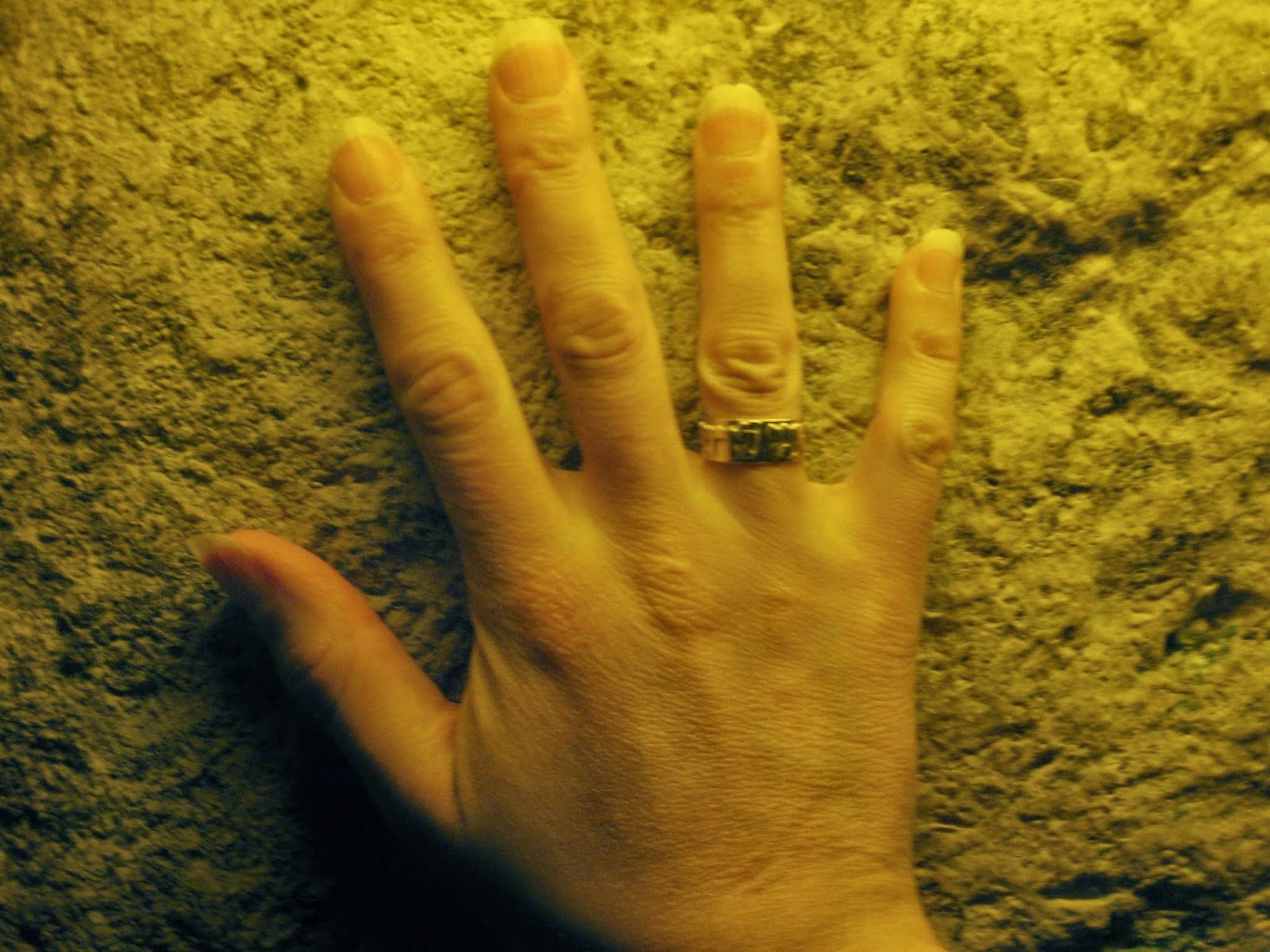
 What do these days mean for us today? For us today, this may seem distant and ancient history. Many liberal Jews are not familiar with the fast of Tammuz or the observance of Tisha B’Av. And yet, there is something powerful that connects us to these stories and this place. Last summer in Jerusalem I went to the Kotel, the Western Wall many times. I had the opportunity to tour underneath the Wall in the tunnels and place my hand on the ancient stones close to where the Holy of Holies had been, where for thousands of years Jews had placed their hands on the ancient stones, and cried, and rejoiced and prayed. There is something about being in a sacred space that opens us to the spiritual, that shuts out the noisiness of life and allows us to hear and be at one with the universe.
 A Hasidic tale about the “Seer of Lublin”, Rabbi Yitzchak Yaakov Horowitz, explains the power of place and time that changes us, that enables us to be more in harmony with God:
As a young child the rabbi lived near a forest. Almost every day he would venture off in to the woods by himself. His father did not want to interfere with his son’s explorations but he worried about robbers and animals that could be lurking in the forest that could harm his son. One day his father pulled the boy aside and said “I know that you go to the forest every day. I am concerned for your safety. What is it that draws you there and what do you do there?
The young boy responded simply: “I go there to find God.”
His father thought for a moment and then responded: “That’s beautiful, but don’t you know that God is the same everywhere?”
“God is”, responded the boy, “but I’m not.”
As the summer wanes and we enter Elul, our soul’s journey calls us to awaken and reflect on the year that has passed and the one that is yet to be. As we embark on the journey from Av to Elul may we seek the place that connects us, that changes us, and that enables us to take the next steps along our sacred path.
As a young child the rabbi lived near a forest. Almost every day he would venture off in to the woods by himself. His father did not want to interfere with his son’s explorations but he worried about robbers and animals that could be lurking in the forest that could harm his son. One day his father pulled the boy aside and said “I know that you go to the forest every day. I am concerned for your safety. What is it that draws you there and what do you do there?
The young boy responded simply: “I go there to find God.”
His father thought for a moment and then responded: “That’s beautiful, but don’t you know that God is the same everywhere?”
“God is”, responded the boy, “but I’m not.”
As the summer wanes and we enter Elul, our soul’s journey calls us to awaken and reflect on the year that has passed and the one that is yet to be. As we embark on the journey from Av to Elul may we seek the place that connects us, that changes us, and that enables us to take the next steps along our sacred path.
Subscribe to:
Posts (Atom)

 Posts
Posts