We are back home from another wonderful summer at GUCI. Camp is something I look forward to each summer. Maybe it’s because I’m just a kid at heart and it’s fun to spend two weeks living at camp with lots of enthusiastic kids and staff and other rabbis and cantors and educators. Maybe it’s because I like being able to sit outside in the grass and have deep conversations with campers about God and Torah and what it’s like to be Jewish in a small town and how camp is the place where they feel most connected. Maybe it’s because for two weeks I get to eat camp food (which is great because I don’t have to shop for food, prepare it, or clean up afterwards - that in itself makes it great). Maybe it’s because I get to sing songs I love after every meal and enjoy seeing the whole camp come alive in the Chadar Ochel (Dining Hall) as they sing and dance and jump and do shticks.
Singing in the Dining Hall
At camp, celebrating Shabbat is cool. Being Jewish is fun and interesting and learning Hebrew is easy. Campers meet and become friends with kids from all over the region and some from much further away, like Israel. Some kids come from large congregations, and some from temples where there are very few students in the entire religious school. Our kids spend time with dedicated counselors -college students who remember their own days as campers and are here to give something back. Camp is staffed with wonderful specialists in art, sports, aquatics, Hebrew, music, and dance, among other things. Our kids learns to canoe, climb the Migdal (Alpine Tower), Israeli dance, and camp out - all in a Jewish atmosphere with friends they'll have for a lifetime.
Welcoming Everyone on the Shabbat Walk
I've been fortunate to spend most of my summers since ordination at one of our URJ camps. As part of the rabbinic faculty, I am privileged to be a part of a community that grows our youth. When I learn Torah with a camper who is preparing for her bat mitzvah, or talk with the Avodahniks (12th graders who are the work crew at camp) about challenging issues, I see every day that camp builds a sense of excitement in our kids that tells them that Judaism is valuable and something to be proud of. Each day a different camp group leads the Tefillah (prayer) at our beautiful outdoor Beit Tefillah, and they share their thoughts on what a beautiful spiritual place this is. At camp Jewish community comes alive in a way that we cannot duplicate in the few hours we spend together in our congregational educational programs. It is an investment in our children’s future, whose reward is a child who develops self-confidence and who comes away from camp with a love for Judaism.
Shabbat Singing
Jewish camping is one of the most exciting, enjoyable programs we can offer our children. It offers them a chance to live in a Jewish atmosphere, learning about themselves and their Jewish identity as they gain independence and discover their own strengths. After the first summer, they return to camp eager to be with good friends and continue the personal growth that they have experienced at camp. Perhaps most importantly, children who attend Jewish camps tend to retain their Jewish identity and commitment in their adult lives.
Passover is almost upon us! A holiday that we eagerly await and celebrate joyfully. Passover, with its timeless story of the escape from freedom to slavery, the symbols of the Seder which delight all of the senses, and the excitement of joining together around the Seder table with family and friends to retell the ancient story is looked forward to with great anticipation. As adults, we know the deeper meaning of the holidays - the Passover story of freedom, and the importance of passing on our tradition to the next generation.
But with children, where do we begin? As it says in the Pesach Haggadah: For the young one, who does not know enough to ask the question, you shall begin with the story, explaining it simply: “This is what God did for me, when I went forth out of Egypt.” The Haggadah’s message not only reminds us that we should begin where a child can understand, but that the celebration of the Jewish holidays is meant to be experiential. After all, we are taught that “In every age, one must regard himself as if he himself had come out of Egypt”. So, make your celebrations experiential and try to involve everyone present!
Children love stories and one of the best ways to get children involved in the celebrations of both Purim and Passover is by reading or telling them the story at an age-appropriate level. Doing this in advance of the holiday will whet their appetites and prepare them for the events to come. Children also love to play dress-up and act. To get them involved in this year’s Passover Seder, have them act out the story as you read it from the Haggadah, or make paper bag puppets and act it out for them.
Children also love songs, especially simple ones with repeating choruses. Try to interject singing into your celebrations. Try playing CD’s in the car or at home a few weeks ahead so they’ll be familiar. If you don’t feel confident singing by yourself, bring CD’s or an iPhone loaded with mp3’s to your celebration and everyone can sing along.
Almost every Jewish holiday has special foods that accompany the celebration. Involve your child in the preparations - have him help you shop for the ingredients. Give her simple tasks to do in preparing the Seder plate for Passover. As you mix the different elements for the charoset, ask your child what the foods smell and taste like. Are they sweet? salty? sour? crunchy? soft? Children can also make special table decorations for each guest, which can be used every year for your celebration of the holidays.
I have bar mitzvah on the brain. Of course, as a congregational
rabbi, I train bar and bat mitzvah students, teach family classes,
counsel parents, and help guide families through this milestone on their
Jewish journeys. But lately I have bar mitzvah on the brain because I
am planning the upcoming service and celebration for our oldest son.
There seems to be a preponderance of articles and discussions lately
about bar and bat mitzvah. Perhaps this is just something I am noticing
in the way that you notice cars when you are in the market to buy a new
one, or how the whole world seems to be pregnant when you are hoping to
have a baby.
I have found some positive messages, such as the nechemta offered by the author of “Dancing My Own Way”,
published this month in The Atlantic. Her story was one that I growing
up in the same era as the author, could relate to, even though I did not
attend even close to 60 bar and bat mitzvahs in my 13th year. I was
moved by Wendy Jaffe’s letter to her daughter,
re-posted by one of my friends on Facebook this week, in which she
lovingly explains all of the reasons that we cry at bar mitzvahs.
Less positive were some of the more controversial pieces that have appeared within the last few weeks, such as this save-the-date video.
As a rabbi and a mom, I have followed the discussions and news features
on this one with interest, but in the end, I hope that for this young
man, he will be able to remember his bar mitzvah not for all of the
notoriety or controversy that has accompanied his save-the-date video,
but for the meaningful ritual of welcome into adult Jewish life that the
ceremony is meant to be.
And I found myself resonating with some of the messages that Alan Sufrin and Patrick Aleph
call for in their ideas about rethinking bar and bat mitzvah. Sufrin
talks about teaching our children to struggle with themselves and with
their Judaism, and how not to see bar and bat mitzvah as an endpoint,
but as the new beginning that it is meant to be. Aleph calls for a
radical shift in the way that we educate our bar and bat mitzvah
students and their families and prepare them for Jewish adulthood. He
asks why we hold pre-teens to and educational standard that very few
adults have achieved, and suggests that we need to re-examine b’nei
mitzvah expectations and education.
I can’t stand the idea that the message for young adults today, and
for their family members and guests is only about the party, such as in
this montage of photographs from bar and bat mitzvah parties. And I find it scary that there is a market out there for bar and bat mitzvah simcha speeches
in which you can hire a rabbi to ghost-write the speech for the parents
or even the bar mitzvah boy or bat mitzvah girl’s d‘var torah.
I want my son and the bar and bat mitzvah students in our small
congregation to know that bar and bat mitzvah is about preparation for a
lifetime as a Jewish adult, that it’s not just an “event” that is all
over by the next morning. I want my son to be part of building a Jewish
community that is a place where most of these b’nei mitzvah will
regularly lead worship, read Torah, and wear their tallitot after the
big day is over. Not that this is all there is to becoming a Jewish
adult, but these certainly are the responsibilities that a young man or
woman is being prepared for. I hope that I am able to teach them that
becoming a bar or bat mitzvah is about attaining a certain level of
Jewish literacy, and spiritual development, and that this is an ongoing
process of Jewish adulthood. I want them to learn and grow and question
and look at the bigger picture of what they will be able to do within
the context of their Jewish lives and our community. That is what it
means to become a bar and bat mitzvah, and take the next step on your
Jewish journey. And that is why as a rabbi and a mom, I continue to do
the important work of helping young people and their families connect to
bar and bat mitzvah as a time for learning, practice and celebration,
within the context of a meaningful, relevant Jewish life.
40 years ago, in 1974, 26 year old Soviet Jewish dissident Natan Sharansky attended his first seder. For Sharansky, it was not difficult to identify with the Pesach story of freedom told in the Haggadah. As a dissident, his life was made difficult and KGB agents waited around every corner. Some years later Sharansky led his own seder for the first time, but without the benefit of a Haggadah to read, or any of the elements of the seder to enjoy – no karpas, no matzah, no maror. Sharansky was alone in his prison cell but he did recount the story of Pesach to the prisoners next door through the small window of his cell.
For the community of dissidents in the Soviet Union of the 1970s no symbols were needed to remind them of the power that freedom has to transform society. The compelling story of the Exodus from Egypt, a nation of slaves rising up to defeat the most powerful Pharoah and his army, and lead the people forward to be a free people in their own nation was not ancient history, it was a symbol of of their cause. They understood the bitter tears of slavery that the Jewish people shed while in Egypt. For Sharansky and his fellow prisoners, their lives were a prayer and hope that the yoke of oppression would soon be broken and they would be able to sit reclining at the seder table and taste the flavor of freedom in years to come. In 1986 Sharansky was finally released from Soviet imprisonment and he made aliyah to Israel. He is now the chairman of the Jewish Agency for Israel, the organization in charge of immigration and absorption of Jews from the diaspora into Israel.
As we sit at our seder tables this year, it may seem that 40 years is a short time, a blip in history. Yet our people wandered forty years in the desert on the way to the Promised Land. And our work is not yet done.
Today in the former Soviet Union it is now possible to both learn about
and practice Judaism: The Reform movement (known as the World Union for Progressive Judaism -WUPJ) in the FSU has an active and vital presence:
“After over 70 years of Communism, religious oppression and
persecution, Jewish communities in the FSU have once again become
vibrant with the World Union's assistance."
The first congregation to officially join the Reform movement was Hineini in Moscow in 1990. Today, over 60 congregations in Russia, Ukraine, Belarus and the Baltic states, spanning 11 time zones from the Polish border to the Pacific Ocean, have officially become part of the World Union family, which now has offices in Moscow, St. Petersburg, Kiev and Minsk. There are currently six native-born rabbis and a full-time academic program, Machon, (the Institute for Modern Jewish Studies), to locate and train local paraprofessional community workers.
The Progressive movement operates nursery schools and Sunday schools all over the FSU under the leadership of a team of full-time education directors. Netzer Olami, the international Zionist youth movement of the World Union for Progressive Judaism, has become the largest Jewish youth movement in the FSU, operating summer and winter camps for some 1,000 participants, as well as youth clubs and counselor training programs.
This Pesach, our former WELFTY advisor, Chase Foster, now a 1st year rabbinic student at Hebrew Union College (HUC) in Jerusalem will be participating this year in the Pesach Project, an annual program through HUC and the World Union for Progressive Judaism. He will be traveling along with 20 classmates to Berlin and then to various cities in the FSU - Gomel, Minsk and Lida, Belarus to assist small Jewish communities that do not have the resources to provide for Jewish professionals. Last year’s FSU trip allowed approximately 5,500 people to join around the seder table with community for Passover. Chase has committed to fundraising $2500 for the Pesach project to help Jews in the FSU celebrate Pesach.
At this season of freedom, may our love for the Jewish people and our support for outreach and education make this Passover a time of re-commitment to our people and our faith.
On August 1st, Jewish men and women across the globe will be joining in celebration of Siyum HaShas, the completion of the seven year cycle of Talmud reading. Daf yomi, as it is known, is the practice of learning a daf, or page, of Talmud each day. Studied in this way, the 2,711 pages of Talmud can be completed in seven and a half years. Two days later, on August 3, 2012, Jews the world over will begin the new Daf Yomi cycle, and begin learning Talmud from the beginning, from Seder Zeraim (Seeds): Tractate Berakhot (Blessings).
This system of learning Talmud, meant to encourage everyone, not just scholars, to learn Talmudic law and teaching, was developed by Rabbi Meir Shapiro in 1923 in Poland. Talmud is made up of two main parts, the Mishnah, or first written compendium of the Oral Law, codified around the year 200 CE, and the Gemara, which is commentary on the Mishnah, codified by 600 CE. The Mishnah is a commentary on the Torah and the Gemara is a commentary on the Mishnah. The Talmud is the basis for all of the codes and commentaries of rabbinic law, and is also know as Shas, an abbreviation of Shisha Sedarim, or six orders of the Mishnah. Originally these laws and teachings were handed down by word of mouth, hence called the Oral Law, but it gradually came to be codified in the six orders of the Talmud.
The first page of Tractate Berakhot
These six orders, or general subjects are subdivided into 60 masekhtot, or tractates, which is further subdivided into perakim (chapters), and this comprises the 2,711 pages of text. Surrounding the Mishnah and Gemara are later commentaries and codes, marginal texts. Just as we often make notes in the margins of a book, later scholars and teachers did the same with the Talmud text and their commentaries and conversations are recorded on the same page. When you sit down with a daf,or page, of Talmud, you are entering a conversation that has taken place over thousands of years with great rabbis and teachers, and you are sitting at the table entering into conversation with them. You can learn more about the Talmud from this interactive Talmud page.
Until recently, the world of the Talmud has been a challenging and somewhat difficult world for most modern liberal Jews to enter. There is of course a language barrier, since the Talmud was written in Hebrew and Aramaic. There is also the fact that much of the passages assume a certain level of textual knowledge on the part of the reader. Much of the commentators in the margins serve to assist the reader by providing explanations of words, interpreting seeming contradictions, and providing references to Biblical passages and related passages from elsewhere in the Talmud.
This Daf Yomi cycle will be different than those that have preceded it because of the level of unprecedented access that modern liberal Jews, both men and women, now have to access the text. Although the first English translation of the Talmud was published over 100 years ago, the text has remained relatively cryptic and difficult for non-Hebrew readers. The latest English translations of the Talmud have attempted to render the text in such a way as to make it much more understandable for the lay reader, including not only an English translation, but also guides to the text, biblical references, and unpacking of the more obscure and difficult material. The newest English editions of the Talmud are available in both traditional book volumes and iPad editions.
The most traditional way to study Talmud is with a partner, in chevruta, or partnered study. The text is read aloud and debated and discussed. In that way it comes alive and it is not just you or your chevruta that is part of the discussion, but all those whose words you are reading, and all those who throughout the centuries have debated and discussed and whose lives have been affected by the rulings on the pages. Many of you may know that I have a chevruta with whom I learn Talmud weekly. Our study is a much more in depth learning than daf yomi ( a page a day) will allow, we don’t have a goal to get through a page or more each time we learn, but to get through as much text as we can understand and discuss, whether that is a few lines, or a few paragraphs. Even so, we are both excited about the new daf yomi cycle, and even more so about the newest editions of Talmud that invite access for more Jews to learn the foundations of Jewish law and life.
Will you join the 13th Daf Yomi cycle on August 3rd this year?
Tu Bishevat - the fifteenth day of the month of Shevat in the Jewish calendar, falls this year on February 8th. Tu Bishevat is the New Year of the trees. We rejoice in the fruit of the tree and the fruit of the vine. In the Talmud there is a legend about Honi, who came upon an old man planting a carob tree. When Honi saw the old man, he at once questioned the old man’s actions, saying, “Foolish man, do you think you will still be alive to eat of the fruit of this tree?” The old man replied, “I found trees in the world when I was born. My grandparents planted them for me. Now I am planting for the generations that will come after me.” The story goes on to tell us that Honi fell into a deep sleep, from which he did not awaken for 70 years. When he awoke he was surprised to see an old man picking the fruit from a fully grown carob tree. When he inquired of the old man, “Are you the man who planted this tree?” the old man answered, “My grandfather planted it for me.” (Talmud Bavli, Ta’anit 23a)
The Talmud says that the root is the soul and the branch is the body. Just so, there is a branch of the tree of life representing each and every Jew. How marvelous are these branches, for while nourished by the same roots, the fruit of every branch is completely different. Our rabbis taught that one who sees a multitude of Jews should recite this blessing: “Blessed is the all-wise and mysterious God, for each person’s opinion is different and each person’s appearance is different,” and yet they are all Jews (Talmud Bavli, Berachot 58a). United by the tree of life, the Torah, we each create our own Jewish life.
All too often these days, however, too many of us feel that our active participation in Jewish life and Jewish community does not matter. I am saddened when I hear this phrase: “As long as I feel Jewish, what does it matter if I do anything or not.” I am saddened because it is not enough to “feel” like a branch of the tree of life. Judaism is about doing, and living Jewishly. A feeling is intangible. It cannot be transmitted or passed to another without real, physical contact. The fruit of Jewish life means seeing, tasting, touching, smelling, and acting in order to live as a Jew and to have an impact on the world around us. We are obligated to live Jewishly in order to fulfill the commandments and to sow the seeds of future Jewish living. Tu Bishevat calls us to action because it asks us to plant. We too are like trees, requiring constant nourishment in order to flourish and grow. While certain aspects of our own trees of life can take nourishment from any ground, there is a second system, a root which reaches hungrily for the teaching of Torah. Being Jewish requires constant rejewvenation from the soil of Torah. We are commanded to take action and participate in doing Jewish life in order to flourish and grow. We have planted and transplanted this tree time and again. May we keep the soil fertile that our faith in God and our Jewish acts may grow. May we strengthen our roots with the past, and may our branches reach towards the future to bear sweet fruit.
Chanukah is probably the most celebrated of all of the Jewish holidays. Many people enjoy it as a festive time to gather together with family and friends, eat latkes, spin dreidels, and light the menorah. Some people, Jews as well as gentiles, mistakenly think of Chanukah as the Jewish Christmas. But far from it. Chanukah is not a Jewish response to the Christmas season. The real meaning of Chanukah is about celebrating heroism, courage, and religious freedom. It is indeed ironic that this holiday, which is rooted in a revolution against assimilation and the suppression of the practice of Judaism, has become an overwhelmingly secular, commercial holiday.
Chanukah was established by religious leaders to teach a specific message: our freedom to worship God and practice our beliefs without coercion from government. Chanukah teaches us about the dangers of government interference with religious practice and about the importance of religious liberty. Under King Antiochus, the Greek government forcibly imposed the worship of Greek gods, desecrating the Temple, and sacrificing pigs on the altar. Antiochus forbade the Jews from worshipping according to Jewish belief, banned the practice of circumcision, and used force to make Jews worship Greek gods.
What we celebrate on Chanukah is the response of the Jews, known as the Maccabees, who stood up for their Jewish way of life and refused to give in to the coercion of the Greeks. The second blessing we recite over the Chanukah lights gives thanks for the miracles God performed for our ancestors, recalling the celebration of the Maccabees when they were no longer oppressed by tyranny and were once again able to practice their faith and traditions.
So, the celebration of Chanukah is first and foremost a celebration of religious freedom. We celebrate by doing Jewish things: we study Torah, we sing songs in praise of God, and we joyfully recite prayers in celebration of that freedom. King Antiochus and his government forbade these things, so we celebrate by doing them.
As we remember and give thanks for what happened in ancient times, we also give thanks that we are blessed to live in a country that values religious freedom, allowing Jews and people of other faiths or no faith to worship or refrain from worship as they see fit. It is this policy of religious liberty that allows all Americans to participate fully in our open, multicultural society.
As we light the lights of the Chanukah Menorah this year, let us make sure that the flame of religious freedom for all never goes out. Chag Chanukah Sameach!
Recently, I had a discussion with a good friend about a serious issue. He was grappling, he said with the question of “What Kind of a Jew are You?” How is it that we define ourselves as Jews?
Many of you know that I am fond of saying that in 21st century America, all of us are Jews by choice – that is, whether you are born Jewish or convert to Judaism as an adult, each one of us has to actively choose Judaism because it is much easier to passively choose not to make Judaism part of our identities today. The question of “What kind of Jew are you” - Reform, Conservative, Orthodox, Reconstructionist, Renewal, Secular, Atheist, other – is on the one hand a question of identity, and on the other hand, an issue of where do I feel comfortable. For instance, we have some members who were raised in Conservative or Orthodox congregations, but feel much more comfortable with the worship style and the community that exists here at Temple.
My friend had been raised in a culturally Jewish home, with parents for whom Judaism was about family get-togethers on Hannukah and Passover, and he attended a public school that had lots of Jewish kids. Recently though, after a personal crisis, he has been doing a lot of soul searching and is looking for a deeper, more spiritual connection to his Judaism.
Yet, as he explains: I attend services but I can’t understand anything that is said in Hebrew. Philosophically, I am very liberal but I want to be observant and I’m not sure if I can find a place where that works. I want to share good Jewish values and ideals with my family but I don’t know where to begin.
As our discussion unfolded, I began to see that my friend is certainly a person who has come to value being Jewish, and who is also actively struggling with what that means. I commend the seriousness with which he is struggling, and that rather than back away from it, or use it as an excuse not to actively choose a Jewish identity, he is persevering.
By the end of our talk, we came to this conclusion: More important than the question of whether one is a Reform or Orthodox or Conservative Jew is a first question: what does being Jewish mean for me; and this second question: how do I go about living Jewishly according to that definition. By continuing to ask and to wrestle with the questions, one becomes a serious and committed Jew, who finds his place in the community by living out those values and ideals that are part of our beautiful heritage. By continuing to study and learn about the gifts of our tradition, history and culture, and how these guide us in modern life, one begins to feel comfortable and proud of where he is Jewishly. And in the end, it is the struggling and searching that are most valuable, because this continuously offers him new perspectives and definitions of what it means to him personally to be Jewish.
The sage Hillel, a great rabbi and teacher of the Mishnaic period, taught us "Do not say 'when I have leisure, I will study,' for you may never have leisure." Pirke Avot 2:4
Over the past summer in Jerusalem, I had the leisure time and the opportunity to indulge in one of my great loves, the study of Jewish text. In addition to floating in the Dead Sea with my kids, I went swimming in the sea of Talmud and drank in the ancient wisdom of our tradition with the warm, dry air in the hills of Jerusalem. While I have always made time to study in one form or another, all too often, it felt squeezed into small chunks of time. This summer I had time to luxuriate in long periods of uninterrupted studywith colleagues and friends, old and new.
Since returning home, I have continued my regular practice of studying Talmud weekly with my chevruta partner via Skype. It is one of the gifts I give to myself each week, and by extension, to our community, because I am continually learning and growing as a Jew.
How many of you have said to yourself that when you have leisure, you will grow in your Judaism? How often have you put off something that is actually quite valuable and important to you, anticipating that at some point in the future, you will have the leisure time that you deprive yourself of today? Rather than postponing Jewish learning, greater participation in our synagogue or growing in your Judaism, the time to act is now.
We may lament that if we had started sooner we’d know more now, or could have made a greater contribution. However, now is as good a time as any to begin. As the saying goes, “The past is history. The future is a mystery. Today is a gift. That's why they call it the present.” We cannot change the past and the future is yet to come.
Let’s embrace our journey in the present. Take some time today to make a renewed commitment to your Jewish journey. Join our "Jewish Literacy" study group, sign up for the URJ “Ten Minutes of Torah” digest, join a Temple Israel activity, volunteer to help with a program or committee, make Shabbat at home, or come to services. Show your children, your peers, or your parents that growing Jewishly is valuable enough to you to make the time for it and invite and inspire others to join you.
Our ancestors provided a path for us to walk on today. As we go on our Jewish journey in the present, we have the opportunity to give a gift for the future by leaving our loved ones, our faith and our world a little stronger, a little better, through our own commitment to grow Jewishly today.
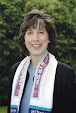
Rabbi Pollack is the rabbi of Solel Congregation of Mississauga where she has served since July 2015. She previously served as the rabbi of Temple Israel in West Lafayette, Indiana beginning in August, 2002. Her congregational work includes teaching, counseling, pastoral care, and community outreach. She finds spiritual sustenance in music and frequently leads tefillah with singing and playing the guitar.


 Posts
Posts