Wednesday, August 10, 2011

Av to Elul - The Soul's Journey

The rhythm of Jewish time seems to run a bit slower in the summer months, as the sun shines high in the sky, the heat lingers and the days last longer.   Traditionally the Jewish months of Sivan, Tammuz, Av and Elul are bookends to this hot period of time.  Sivan ushers in summer with the holiday of Shavuot, the giving of the Torah at Mt. Sinai, and Elul is introspective as we prepare for Rosh Hashanah and Yom Kippur.  Within Tammuz and Av are days of mourning that reflect sad times within Jewish history – the fast of the 17th of Tammuz which marks the breaching of the Temple walls which culminated in the destruction of the Temple in Jerusalem on the 9th of Av.   Between these dates is the period of three weeks known as Bein Hametzarim, literally “in a narrow place”.  It is not hard to imagine the kind of narrow straits our people must have felt in the dry heat of summer in Jerusalem as they witnessed the destruction.  On Tisha B’Av Jews fast, sit on the floor, and weep as we chant the beautiful and mournful words of Lamentations.  In ancient times the Jewish people believed that the holy Temple was the meeting place between us and God.  Though we believe that the Divine presence is everywhere, this was the place of great intimacy between people and God.  Several times each year Jews would journey to the Temple in Jerusalem and perform rituals and seek to come closer to the Divine presence in the world. 
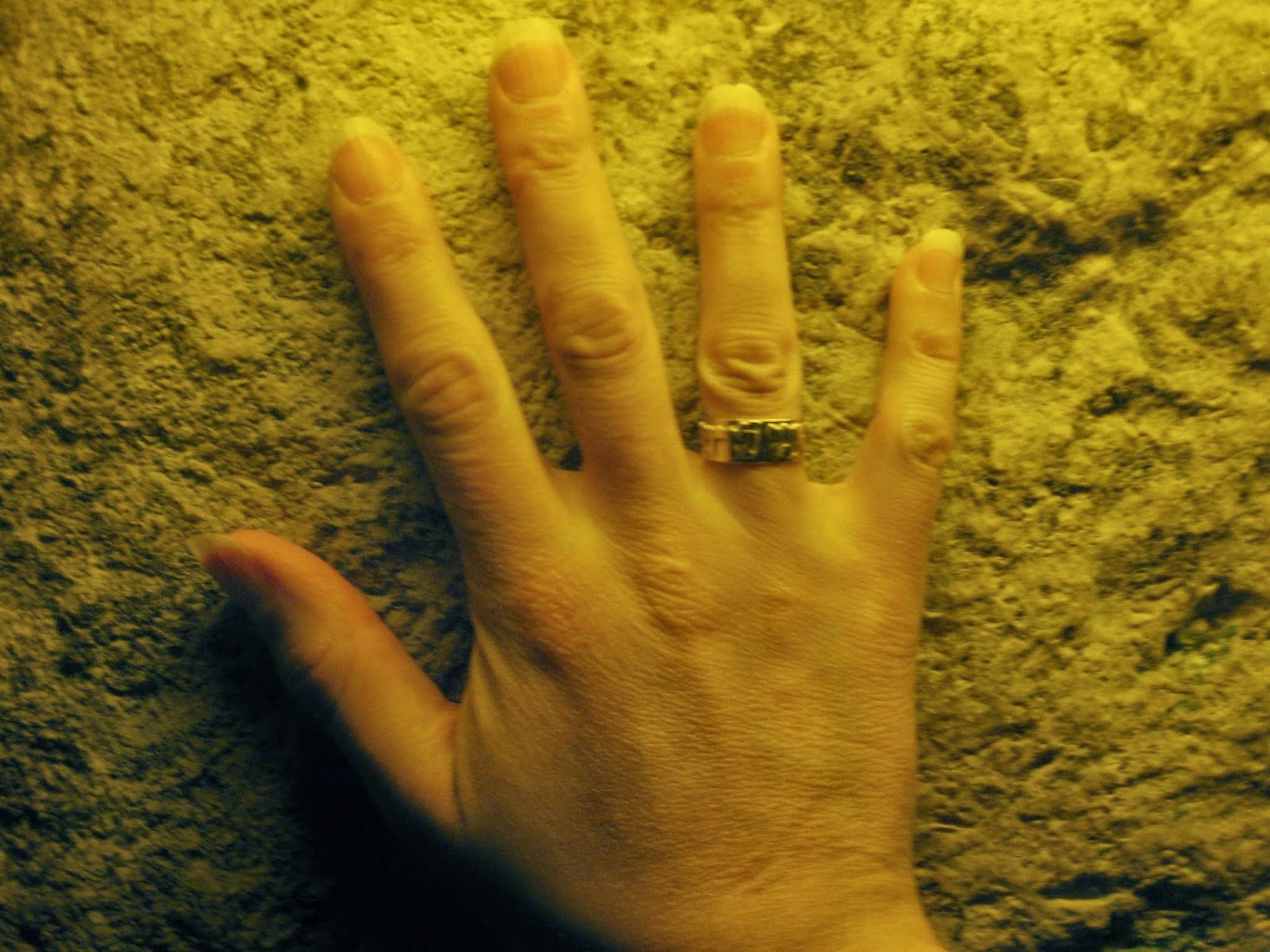
What do these days mean for us today? For us today, this may seem distant and ancient history.  Many liberal Jews are not familiar with the fast of Tammuz or the observance of Tisha B’Av. And yet, there is something powerful that connects us to these stories and this place.  Last summer in Jerusalem I went to the Kotel, the Western Wall many times.  I had the opportunity to tour underneath the Wall in the tunnels and place my hand on the ancient stones close to where the Holy of Holies had been, where for thousands of years Jews had placed their hands on the ancient stones, and cried, and rejoiced and prayed.  There is something about being in a sacred space that opens us to the spiritual, that shuts out the noisiness of life and allows us to hear and be at one with the universe.
A Hasidic tale about the “Seer of Lublin”, Rabbi Yitzchak Yaakov Horowitz, explains the power of place and time that changes us, that enables us to be more in harmony with God:
 
As a young child the rabbi lived near a forest. Almost every day he would venture off in to the woods by himself.  His father did not want to interfere with his son’s explorations but he worried about robbers and animals that could be lurking in the forest that could harm his son.  One day his father pulled the boy aside and said “I know that you go to the forest every day. I am concerned for your safety.  What is it that draws you there and what do you do there? 

The young boy responded simply:  “I go there to find God.” 

His father thought for a moment and then responded: “That’s beautiful, but don’t you know that God is the same everywhere?” 

“God is”, responded the boy, “but I’m not.”

As the summer wanes and we enter Elul, our soul’s journey calls us to awaken and reflect on the year that has passed and the one that is yet to be. As we embark on the journey from Av to Elul may we seek the place that connects us, that changes us, and that enables us to take the next steps along our sacred path.

Wednesday, May 4, 2011

What Kind Of A Jew Are You?

Recently, I had a discussion with a good friend about a serious issue.  He was grappling, he said with the question of “What Kind of a Jew are You?”  How is it that we define ourselves as Jews?

Many of you know that I am fond of saying that in 21st century America, all of us are Jews by choice – that is, whether you are born Jewish or convert to Judaism as an adult, each one of us has to actively choose Judaism because it is much easier to passively choose not to make Judaism part of our identities today.  The question of “What kind of Jew are you” -  Reform, Conservative, Orthodox, Reconstructionist, Renewal, Secular, Atheist, other – is on the one hand a question of identity, and on the other hand, an issue of where do I feel comfortable.  For instance, we have some members who were raised in Conservative or Orthodox congregations, but feel much more comfortable with the worship style and the community that exists here at Temple.
    
My friend had been raised in a culturally Jewish home, with parents for whom Judaism was about family get-togethers on Hannukah and Passover, and he attended a public school that had lots of Jewish kids.  Recently though, after a personal crisis, he has been doing a lot of soul searching and is looking for a deeper, more spiritual connection to his Judaism.

Yet, as he explains:  I attend services but I can’t understand anything that is said in Hebrew.   Philosophically, I am very liberal but I want to be observant and I’m not sure if I can find a place where that works.  I want to share good Jewish values and ideals with my family but I don’t know where to begin.

As our discussion unfolded, I began to see that my friend is certainly a person who has come to value being Jewish, and who is also actively struggling with what that means.  I commend the seriousness with which he is struggling, and that rather than back away from it, or use it as an excuse not to actively choose a Jewish identity, he is persevering.

By the end of our talk, we came to this conclusion: More important than the question of whether one is a Reform or Orthodox or Conservative Jew is a first question: what does being Jewish mean for me; and this second question: how do I go about living Jewishly according to that definition.  By continuing to ask and to wrestle with the questions, one becomes a serious and committed Jew, who finds his place in the community by living out those values and ideals that are part of our beautiful heritage.  By continuing to study and learn about the gifts of our tradition, history and culture, and how these guide us in modern life, one begins to feel comfortable and proud of where he is Jewishly.  And in the end, it is the struggling and searching that are most valuable, because this continuously offers him new perspectives and definitions of what it means to him personally to be Jewish.

How do you define yourself as a Jew?

Friday, April 1, 2011

Passover is Almost Here!

In the weeks leading up to our Purim celebrations the messages began appearing in my inbox: “Prepare for Passover”…..“Passover Made Easy”….. “Seder Tips and More”…..“Passover 2011 and MAZON: A Jewish Response to Hunger”…… “New Perspectives on the Exodus story”…. each one an enticing reminder that once Purim has arrived, Pesach is looming right around the corner.  Soon it will be time to clean the house and get rid of chametz, leavened products, to take out the seder plate, matzah cover, and Elijah’s cup and the haggadot, and shop early to find matzah and other kosher for Pesach foods and begin the Passover cooking.
Each year as the winter fades away and the first signs of Spring appear, we anticipate this festival of freedom, a time of new beginnings for our ancestors and for us.  Passover is one of the most favorite holidays for Jews around the world.  Maybe this is because it is a celebration that involves family and friends, maybe because of the fact that there is lots of good food, or maybe because we anticipate the retelling of our people’s story in the words of the Haggadah, and participating in the rituals at the Seder meal.


But for most of us, Passover doesn’t just happen. It requires all of the preparations mentioned above and sometimes a few more. And, if you are hosting the Seder at your house, you’ll want to be sure to make it a festive meal where everyone feels welcome and engaged in the retelling of the story of the Exodus.  Begin your planning well in advance and feel free to ask your guests to bring a dish to the meal so that you don’t have to do all of the cooking.  You can even send out recipes from different Jewish cultures around the world. Consider the knowledge, participation level and attention span of your guests and find a Haggadah that fits.  Then, with the haggadah that you will be using, decide how you want to conduct the Seder. Who will lead? Who will read parts? How will you will get everyone around the table to be engaged in the telling?  Consider asking your guests to bring alternative readings to add to the Seder. Invite your guest to bring their own questions to add to the ones traditionally asked in the Haggadah. Purchase a CD or download some Passover music to add to the festivities. Advance preparations lead to a more relaxed and enjoyable Seder for you as the host, and a memorable experience for everyone there. 
 

Tuesday, March 1, 2011

Growing Jewishly

The sage Hillel, a great rabbi and teacher of the Mishnaic period, taught us "Do not say 'when I have leisure, I will study,' for you may never have leisure." Pirke Avot 2:4

Over the past summer in Jerusalem, I had the leisure time and the opportunity to indulge in one of my great loves, the study of Jewish text. In addition to floating in the Dead Sea with my kids, I went swimming in the sea of Talmud and drank in the ancient wisdom of our tradition with the warm, dry air in the hills of Jerusalem. While I have always made time to study in one form or another, all too often, it felt squeezed into small chunks of time. This summer I had time to luxuriate in long periods of uninterrupted studywith colleagues and friends, old and new.

Since returning home, I have continued my regular practice of studying Talmud weekly with my chevruta partner via Skype. It is one of the gifts I give to myself each week, and by extension, to our community, because I am continually learning and growing as a Jew.
 How many of you have said to yourself that when you have leisure, you will grow in your Judaism? How often have you put off something that is actually quite valuable and important to you, anticipating that at some point in the future, you will have the leisure time that you deprive yourself of today? Rather than postponing Jewish learning, greater participation in our synagogue or growing in your Judaism, the time to act is now.

We may lament that if we had started sooner we’d know more now, or could have made a greater contribution. However, now is as good a time as any to begin. As the saying goes, “The past is history. The future is a mystery. Today is a gift. That's why they call it the present.” We cannot change the past and the future is yet to come.

Let’s embrace our journey in the present. Take some time today to make a renewed commitment to your Jewish journey. Join our "Jewish Literacy" study group, sign up for the URJ “Ten Minutes of Torah” digest, join a Temple Israel activity, volunteer to help with a program or committee, make Shabbat at home, or come to services. Show your children, your peers, or your parents that growing Jewishly is valuable enough to you to make the time for it and invite and inspire others to join you.

Our ancestors provided a path for us to walk on today. As we go on our Jewish journey in the present, we have the opportunity to give a gift for the future by leaving our loved ones, our faith and our world a little stronger, a little better, through our own commitment to grow Jewishly today.

Thursday, February 3, 2011

Remembering Debbie Friedman

On Sunday, January 9, 2011, the Jewish world lost a most beautiful treasure: Debbie Friedman, Jewish composer, singer, and teacher, died at the age of 59 from complications of pneumonia. On Friday, January 14th, at Temple Israel we joined together for Shabbat in a tribute to Debbie Friedman through her music.
This is an excerpt from my remarks during the service:


Debbie Friedman’s first album, Sing Unto God, came out in 1972 when I was 4 years old, the same age my daughter is now.  I probably did not have her album when I was 4, but within a year or two later, my Mom, Dad, sister, and I had gone on a family retreat with our synagogue to OSRUI in Oconomowoc, Wisconsin and discovered Debbie’s music.  My friend across the street, Laura, and I spent hours listening to that album, dancing around her living room to the energetic and uplifting sounds of guitars, drums, and Debbie’s voice rising in prayer.             


Over this past winter break I pulled out my old turntable from college and a box of albums in the basement to share some of the music from my youth with our kids.  While I was dismayed to find out that I need a new turntable and, while I also do not have the Sing Unto God LP today (although Laura’s copy played just fine, we had made multiple trips to the record store to find the reason that our copy of the record skipped), I have all of her other early LPs, and most of her other recordings on cassette tapes and CDs.  


Debbie’s music is, as many others have said, the soundtrack for the music of our lives.  I learned Debbie’s music as I learned in religious school and Hebrew school what it is to be a Jew in contemporary America.  Her prayer settings were what we sang and continue to sing in the youth choirs at Beth Emet synagogue where I grew up, in youth group, at camp, and in our congregations. My sister-in-law, who today is also a Reform rabbi, had the distinction of having a young Debbie Friedman perform at her bat mitzvah reception.  I walked down the aisle at our wedding to her music, I have sung her music at the brit milah of each of our sons and the brit bat of our daughter, and her prayer settings accompanied the levayah of my father.  


Over the years, at camp, at Women’s Rabbinic Network gatherings and in songleading classes at Hava Nashira, I have been privileged to sit with Debbie and learn from her, and to hear her in concerts at the Jewish Folk festivals in Chicago, at many NFTY and URJ conventions.  She and Cantor Jeff Klepper have profoundly influenced my musical and spiritual development, and have been beacons in the world of Jewish songleading. 

Debbie Friedman with Cantor Jeff Klepper, 2008
As Jerry Kaye, director of the Olin-Sang-Ruby Union Institute (OSRUI) in Oconomowoc, Wisconsin, which was her second home, said: "For more than 40 years Debbie’s words and music were the voice, the expression of all we value and hold close to our hearts: love of Judaism; the power of our tradition in our lives to connect, inspire, heal and provide meaning, joy and sweetness. Without doubt, Debbie was the inspiration for a new generation of worshippers…she made real the idea that art and religion are the only two human pursuits that bypass the intellect and speak directly to the soul. “
Hava Nashira Faculty 2010
Debbie Friedman started as a group song-leader at OSRUI in the early 1970s where she set Jewish liturgy to her own contemporary melodies. Her first album, “Sing Unto God”, was followed by 22 more.  She is probably best known for her setting of “Mi Shebeirach”, the prayer for healing. Her gift to the world was her amazing ability to reach people and help them pray. She understood the power of prayer and felt her gift was to be a vessel for God’s power to convey this to others.  By combining Hebrew texts with English in singable, folk-inspired melodies, she made the experience of prayer more accessible and taught us to pray with our voices in song.  She was a pioneer in gender sensitive language, and helped transform the synagogue to make a place for the God of our mothers, and to make a place for those who were standing on the margins of the community, by honoring tradition but not fearing change. Most of all, Debbie taught that a prayer service, a song session, or a concert was not about the leader or performer, but about lifting the spirits of everyone in the room, inspiring everyone to sing and pray and connect to God.
 Yet, despite the popularity of her music, Debbie Friedman struggled in the Jewish musical world for much of her career.  In the 1970s and 80s the Jewish establishment and some cantors and rabbis dismissed her music as inappropriate in the synagogue. She never finished college, and she did not have cantorial training. She was not a classically trained musician. In fact, she could not even read music. When you would ask her, “What key is that in, or what guitar chords are you playing?”, she’d say, “ It’s this one, just put your fingers like this.”  But as my mentor and teacher, Cantor Jeff Klepper, who first met Debbie at Kutz Camp in 1969, has written: “Musically she was untrained; her genius was intuitive and expressive. She could see the musical talent in others and knew how to bring it out. She understood prayer and was able to teach it in a way you could understand. Singing with her was exhilarating in ways that words cannot express.”  Debbie Friedman was officially embraced by the Reform movement decades after her music had been informally welcomed and adopted in our camps and synagogue services.  She was made an honorary member of the American Conference of Cantors and in 2007 was appointed to the faculty of our Reform seminary, Hebrew Union College-Jewish Institute of Religion’s School of Sacred Music to teach music and prayer to our cantorial students.

Debbie Friedman’s life and work has profoundly changed modern Jewish worship.  One of my fellow havanashirites shared that the highest level a song can reach is when it becomes so much a part of the canon that it is as if it was always there and nobody wrote it.  This is what Debbie Friedman’s music and teaching has been to modern Jewish life, leaving behind a sacred teaching of which we cannot imagine a time when it wasn’t part of our spiritual lives.
We lost her during the week of Shabbat Shira, the Shabbat of Song, the Torah portion Beshalach, of the Song at the Sea. She was our Miriam, teaching us to pray with song. And it is also during this week, that the Haftarah is the story of Deborah the prophet. Arise, arise Devorah and sing your song– Uri uri Dabri shir! Rest in peace, sweet singer in Israel.

Postscript to the sermon:

Debbie Friedman’s funeral was held in California on January 11th and over 7,000 people were able to watch the service via live internet streaming.  Since then over 20,000 have viewed the archived service.

More information and tributes to Debbie Friedman, her life, and her music, including streaming video of other concerts in her memory are at the URJ Debbie Friedman page, Debbie Friedman's website and at the "remembering debbie" page.  Debbie's music is available on her website, at URJ Books and Music, and on itunes.

Friday, January 7, 2011

Tu B’shevat and the Carmel Forest Fire

During our sabbatical in Israel this past summer, my family and I were fortunate to enjoy hiking in Israel’s nature preserves and forests, and swimming in natural pools and waterfalls.  But Israel is in the midst of a severe drought and this year during Chanukah,  the festival of lights, Israel faced a severe crisis.  A massive wildfire burned over 12,500 acres, over 5 million trees, in the Carmel Forest near Haifa.   The fire claimed 42 lives and displaced more than 17,000 people from their homes.  As the winds intensified, the flames spread across the dry forest and raged through the Carmel Hai-Bar Nature Reserve, the UNESCO BioReserve on the Carmel Mountain Range and Kibbutz Beit Oren, decimating wildlife, unique forestry and  plants, and homes, including those of Israeli Jews, Israeli Arabs, and Druze.

Over many years Israel  has reached out to assist many countries during devastating disasters.  They have sent humanitarian aid to help after the earthquakes in Turkey, Haiti, Chile and El Salvador, sent personnel and food to help with starvation in Ethiopia and responded to Hurricane Katrina and the tsunami in 2004. And we are grateful that the world responded to help Israel this time of need: the Palestinian Authority sent trucks and crews that drove for hours to help with the raging fires.  Turkey put aside the diplomatic challenges of the past year and sent fire fighting planes in formation with Greece to stop the fire.  The US, Bulgaria, and Azerbaijan all sent aid to help Israel. Russia, France, Britain, Switzerland, and Germany sent planes and helicopters. Dozens of nations sent help and expressions of support. As Danny Ayalon, Israel’s deputy foreign minister said: “It is an incredible and much needed response and is proof that Israel can count on its friends during a time of national tragedy. To these, and the many other nations that offered assistance and aid, we send our most heartfelt appreciation.”

During this month of January, we will celebrate Tu B’shevat, the New Year of the Trees.  Many of us remember the blue boxes for JNF, and bringing home a certificate from religious school for planting a tree in Israel in honor of a significant occasion – a birthday, or a bar mitzvah, or in memory of a loved one.  This year it is even more important to plant trees in Israel to aid in the recovery from this tragic ecological and humanitarian disaster.  The Jewish National Fund is committed to forestry development and soil conservation, fire prevention, and innovative solutions to alleviate the water crisis in Israel. You can help Israel by donating funds to plant trees or order water certificates, and help JNF purchase fire trucks and protective gear, and provide for firefighter training.  

ARZA, the American Reform Zionist Association, is also accepting donations to help rebuild the affected areas.  Keren B’Kavod, ARZA’s humanitarian aid project, provided hot meals, food and supplies for the firefighters, and assisted people evacuated  due to the fire. Rabbi Gaby Dagan, rabbi of Reform congregation Ohel Avraham and the Leo Baeck education center in Haifa wrote:

“On Saturday morning, a Bar Mitzva ceremony was held in Ohel Avraham synagogue. A few minutes before the ceremony began, one of the guests told me that Elad Riven, a young school student from Haifa and a friend of the family, had died in the fire. It was not clear to the family that the ceremony should go ahead in such circumstances.

Once again, we must cross familiar and unfamiliar boundaries of joy marred by profound sadness. We said the “Shehechiyanu” prayer for the young boy who had just become a man, and with the same breath and the same tears we said Kaddish for those who will celebrate no more. The Bar Mitzva boy’s speech was transformed from the usual blend of optimism and naivety to the burning reality we faced. We celebrated, and we wept.

On Saturday afternoon and Sunday morning, students from Leo Baeck Education Center packed hundreds of food parcels for the firemen and for the families of school students from Usafiya, Daliyat al-Carmel, the Carmel Coast region, and the Dania neighborhood of Haifa. The showers at the community center were opened up to the security forces, offering a brief chance for them to relax and clean themselves. At such times, our lives are guided by the needs of families who have experienced and are still experiencing loss.”

ARZA is collecting donations towards helping the communities in the North rebuild.  You can donate online toward Keren B’Kavod and the fire relief programs in the North.

Friday, December 3, 2010

Ma’achil R’eivim - It is a Mitzvah to Feed the Hungry

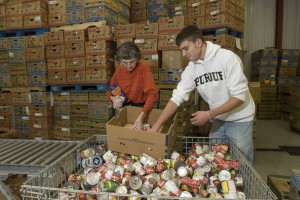
As we move into the dark of December, illuminated by the Chanukah lights, many are busy with holiday plans, galas, and all the festivities that go along with them.  We often worry this time of year about increasing waistlines, indigestion, and the diet and exercise program we will reluctantly start on January 1st.  Yet, while so many are celebrating, while we enjoy the parties and the delicacies, the 2010 Hunger in America Study by Feeding America shows that the demand for food assistance by Hoosier families is increasing. 

In a recent interview, Katy Bunder, the Executive Director of Food Finders, reported that: “The demand this past year has been nearly overwhelming. We hear more and more that people in our service area are suffering. Kids are going to bed hungry, families have no money for food after paying utilities and rent and seniors are having to choose to buy medication or to eat. We just believe there is more we can do.”

“Local statistics indicate that Food Finders serves an estimated 10,000 different clients per week in programs throughout the mid north Indiana service area.  The survey samples also indicate that 33.9 % of all households seeking food assistance have at least one adult working.  27% of all adults had lost their jobs in the previous 11 months. Women comprise 64.3% of all clients at program sites and 43.1% of the households served have children younger than 18 years of age.  In addition, results also show that 99% of clients have a place to prepare meals and more than half live in traditional households.  99% of clients at emergency food programs are US citizens and 73% of emergency food clients in Food Finders service areregistered voters. More than 50% of clients reported having very low food security which indicates one or more members either skip meals or experience increased hunger due to a lack of adequate resources for food.”


There are many organizations that help to fight hunger, and I encourage you to continue to support organizations that you have donated to in the past.  Locally we have several food drives each year to support Food Finders.  You can make donations of either foodstuffs or monetary donations: Food Finders Food Bank, Inc., 50 Olympia Ct., Lafayette, In 47909-5182 or donate online.


Nationally, MAZON: A Jewish Response to Hunger is a national nonprofit organization that allocates donations from the Jewish community to prevent and alleviate hunger among people of all faiths and backgrounds.

Each year, MAZON ( Hebrew for “sustenance”) grants over $4 million to more than 300 carefully screened hunger-relief agencies, including emergency food providers, food banks, multi-service organizations and advocacy groups that seek long-term solutions to the hunger problem. Many Jews now honor the Jewish tradition of not eating until you have provided for the poor by donating at least 3% of the cost of their life-cycle celebrations – weddings, bar mitzvahs, anniversaries, etc. Donate at: MAZON: A Jewish Response to Hunger, PO Box 894765  Los Angeles, CA 90189-4765 or online.


Our tradition teaches that we are to say a blessing (HaMotzi) before we eat a meal, and then to say a blessing (Birkat HaMazon) after we have eaten.  Our sages asked, why is it necessary to recite a blessing after the meal when we have already thanked God for our food before the meal?  We are taught that when we are hungry it is easy to be thankful for food.  It is when we have been satisfied that is easy to take sustenance for granted and when we have finished eating that it is even more difficult to remember to be grateful.  May we learn that sustenance is not something to be taken for granted, and may we help in being God’s partner by seeing to it that those in need know the feeling of a full stomach, rather than the pangs of hunger.