Sunday, March 2, 2014

Like Dreamers

So much has been written about the history of modern Israel, a place we love, and whose politics we also sometimes struggle to understand.  I recently finished reading Yossi Klein Halevi’s new book, "Like Dreamers: The Story of the Israeli Paratroopers Who Reunited Jerusalem and Divided a Nation”.  “Like Dreamers” tells the story of modern Israel through the personal stories of seven men who served as paratroopers in the elite 55th brigade, who were part of the miraculous victory of the war of 1967 and the recapturing of the Old City of Jerusalem.

Yossi Klein Halevi spent the past 10 years following the lives of the paratroopers who liberated the Kotel in 1967.  Not long after making aliyah in 1982, he decided that he wanted to write a book interviewing veterans of the battle of Jerusalem.  “How had the war changed their lives? What role did they play in trying to influence the political outcome of their military victory?"  Through ten years of research and developing relationships with seven of these men, each of whom took distinct paths.  As he follows their stories, Halevi tells the story of Israel through their eyes and gives us a greater understanding of the political dilemmas, different ideologies, and myriad personalities that have shaped Israel today.

1967 paratroopers with 2013 Women of the Wall (Anat Hoffman - chairwoman (right) and Lesley Sachs - executive director (left))
The characters in the book are not characters, they are real people with real lives and real dilemmas and that is what can give us a greater understanding of many of the internal debates that are a very real part of life in Israel today. Of the seven paratroopers profiled, some became religious settlers, others secular kibbutzniks, musicians and artists. They had careers in high tech, and politics, and industry. Some became active on the left, others on the right. And in this small country, being part of the same small elite brigade connected them together for life in spite of their differences. Their stories serve as a metaphor for the challenges both internal and external that Israel faces today.
David Rubinger’s famous photo of the IDF paratroopers at the Western Wall in 1967
When I was in Israel in November for the  Women of the Wall 25th anniversary solidarity mission, I was overcome with emotion at the Wall, in being there together with so many women from so many disparate Jewish backgrounds, yet bound together by a single purpose.  After reading "Like Dreamers", I now look at the iconic photograph of the young soldiers standing at the wall in a different way. The young men of the 55th brigade, like all Israelis in 1967, had dreams and visions and hopes. Yet they too came from disparate backgrounds and went on to live different lives all in the same small country, all struggling with the same questions of Israel’s survival, and a quest for “normalcy” within what Halevi describes as "the agonizing complexity of Israel's dilemmas."

Sunday, February 2, 2014

Polar Vortex

As I write this we are in the midst of another cold spell. The wind whips across the open fields and the air is a frigid blast from the polar vortex.  The sun shines on the frozen landscape and tires crunch on ice on the roads. Our lives feel disrupted as events are canceled, schools and businesses operate on two-hour delays or are closed altogether. Even our membership that relocates to the warmth of sunny Florida for the winter reports that it is cold - they have had to put on sweaters and turn on the heat!
In the Talmud, tractate Avodah Zarah, “Our Rabbis taught:When Adam, the first human, saw the day getting gradually shorter, he said, 'Woe is me, perhaps because I have sinned, the world around me is being darkened and returning to its state of chaos and confusion; this then is the kind of death to which I have been sentenced from Heaven!' So he began keeping an eight days' fast. But as he observed the winter equinox and noted the day getting increasingly longer, he said, 'This is the world's course', and he set forth to keep an eight days' festivity. In the following year he appointed both the days before and the days after the equinox as festivals.” (Bavli Avodah Zarah 8a).
When it is cold and dark, when the days are short and the nights are longer, we often feel like the first Adam. He worries that the world is returning to the chaos that preceded creation, concerned that warmth and light are disappearing. But when he sees that the light is returning, that the days are growing longer, his fears are eased, and he celebrates both the days leading up to the equinox as they grow shorter, and the days following, as the hours of light lengthen.
 
There is a reason that we talk so much about the weather this time of year. When it’s -5 with a windchill of -25, when the bitter wind whistles outside and the cold air makes it hard to take a breath, we notice much more than when the weather is pleasant and does not disrupt our plans. It is harder to see the changes that are taking place day by day when it is dark and cold. But Adam’s story teaches us that even when things seem dark and cold around us, not to despair, because the sun will shine again, the days will lengthen, and what has been growing slowly will blossom in days to come.
Snow Women of the Wall, Jerusalem

We aren’t the only ones experiencing colder than normal winter weather.

Monday, January 6, 2014

Renewal On Tu B'Shevat

Shevat, the Hebrew month that usually coincides with February, is the beginning of Spring in Israel.  The rains lessen, the sun comes out, and the sap beings to rise in the fruit trees.  Tiny leaf buds appear and almost overnight, the almond trees seem to burst into bloom. This is a time for rejoicing, for celebrating the New Year of the trees on the 15th day of Shevat, or Tu B’Shevat, corresponding to the Hebrew letters “Tet” (9) and “Vav” (6), which add up to 15.


The holiday of Tu B’Shevat is not mentioned in the Bible.  It marks the beginning of a new cycle for the tithe on fruit trees.  Before the great Temple was destroyed in Jerusalem in 70 CE, ten percent of all produce was set aside for the priests and the poor.  When the Temple was destroyed, this tithing ceased.  Yet, the principles are still relevant today and it is why we continue to observe Tu B’Shevat by planting trees, sharing the bounty of the land with those in need, and allowing fields to lie fallow during the sabbatical year (every seventh year), and taking care of the earth so it will sustain future generations.

The early chalutzim (pioneers) in Israel celebrated Tu B’Shevat by planting trees.  This practice continues today.  Jewish communities around the world also celebrate Tu B’Shevat as a kind of Jewish earth day, organizing events that express a Jewish commitment to protecting the earth.


In the early 1600s, The Kabbalists, the Jewish mystics of Tzfat created a new tradition.  They saw Tu B’Shevat as a holiday which connected the revival of nature after the long winter and the revival of the Jewish people.  They created a seder which included readings about trees, planting and nature, the ingathering of the Jewish exiles and the covenant of the people of Israel with God; and the eating of fruits and nuts. So, the birthday of the trees is also the birthday of the tree of life, a moment when God needs our human presence to witness the annual renewal of life. As we eat fruits and nuts, drink wine or grape juice and read from a special Tu B'Shevat Haggadah, we celebrate the new year of the trees, rejoicing in the abundant gifts of nature which give our senses delight and our bodies life.

Wednesday, November 13, 2013

Reflections on the 25th Anniversary of Women of the Wall Rabbinic Mission

We woke early, at 5:30am and grabbed a quick breakfast on our way to the Old City of Jerusalem. We made our way through the narrow, winding streets until we arrived at the security entrance to get to the Kotel, the Western Wall.  Standing in line as I waited to pass through security, I looked up at the sign that read: “Dear Visitor, You are approaching the holy site of the Western Wall where the Divine Presence always rests. Please make sure you are appropriately and modestly dressed so as not to cause harm to this holy place or to the feelings of the worshippers. Sincerely, Rabbi of the Western Wall and Holy Sites.” In my small bag rested my tallit, and camera. As I put my bag on the conveyor belt, my kippah already on my head, I thought back to the last time I had been to the Kotel for Rosh Chodesh, in the summer of 2010.  A summer in which Anat Hoffman, leader of Nashot Hakotel, Women of the Wall, had been arrested for carrying the Torah scroll, and was then prohibited from coming near to the Kotel for 30 days, “so as not to cause harm to this holy place or to the feelings of the worshippers”.
As I entered the Kotel plaza, the gathering area in the back, which was relatively quiet and empty in the early morning, I thought back to my first visit to the Kotel plaza, on a summer college trip, and of the service we held there, praying together as a mixed group, singing our prayers aloud. I thought about the family trip I had been on with my home congregation, where as a group we made havdalah at the end of Shabbat and sang aloud together Debbie Friedman’s setting of the havdalah blessings. And I thought of the many IDF soldiers who have been commissioned at this same spot, where no longer are mixed groups able to gather for prayer, and where women’s voices have been silenced during public ceremonies such as the IDF commissioning, “so as not to cause harm to this holy place or to the feelings of the worshippers.”

I thought about the 25 years that each month the Women of the Wall have come on Rosh Hodesh, in small groups and large, in rain or heat, in prayer and persistence, to lift their hearts and voices together in prayer out loud, wearing tallit and tefillin. I thought about the Israeli paratroopers who stood at the Wall in 1967 with tears streaming down their faces and of those same soldiers who stood again at the Wall with Anat Hoffman last February, and of the 10 women who were arrested after the paratroopers and the press left, “so as not to cause harm to this holy place or to the feelings of the worshippers.”
I looked at the beautiful sunlight glinting on the light colored Jerusalem stone, and I took my place to secure the perimeter edge for the group of my sisters, my mothers, my grandmothers, my daughters, my friends who were coming to raise their voices out loud to celebrate Rosh Hodesh Kislev, the month of dreams, and I prayed
זֶה-הַיּוֹם, עָשָׂה יְהוָה;  נָגִילָה וְנִשְׂמְחָה בוֹ
Zeh Hayom Asah Adonai Nagilah v'nis'mecha vo
This is the Day that God has made, let us rejoice and be glad in it. (Psalm 118:24)


And I rejoiced. With more than 800 Jewish women who gathered from all over Israel and across the world, and over 200 male supporters who stood behind the mechitza and the barrier, I rejoiced. I rejoiced with Orthodox and Reform and Conservative and Reconstructionist and Renewal and Just Jews, I rejoiced.  I rejoiced with the young girls who were under a tallit chuppah to chant the blessings for the Rosh Hodesh Torah reading. I rejoiced with the Israeli policewomen who came not to harass us this time, not to tell us to shhh be quiet or to wrap our tallitot like scarves, but this time to ring our group with their bodies to protect us from harassment and from things thrown at us, from spitting and yelling and whistles.
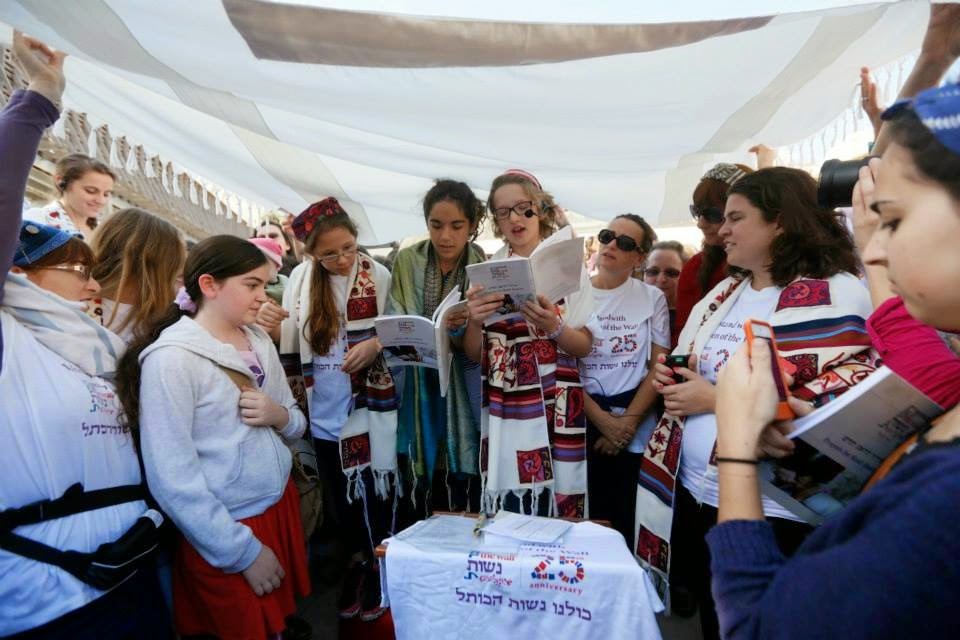

And I thought, surely the Shechina, the Divine Presence who always rests here, rejoices that I am here in the holy place with my tallit, surely the Shechina wants to hear the voices of all Jews raised in prayer in song , surely the Shechina understands that our prayers cannot cause harm to this holy place or to the feelings of the worshippers.

Sunday, September 1, 2013

A Question for the New Year: What will I become in the future?

What is it about the High Holy Days that draws so many of us into the synagogue?  Even if we have not been more than a few times or perhaps not at all during the past year, Rosh Hashanah and Yom Kippur bring us here to pray, to reflect, and to be a part of community.  As we enter the doors of the synagogue once again, we are reminded that the gates of repentance are always open, that no matter how often or how infrequently we may have come to synagogue over the past year, we are always welcome here.  Sometimes it is difficult to find the path back towards God and Torah and being amongst other Jews.  Judah Halevi, the medieval poet said: “When I go forth looking for You, I find You seeking me.”  In the process of searching for God, and returning to synagogue, we find ourselves. 

Judaism is a religion of questions and questioning.  So, too, at this time of year, as we approach the Yamim Noraim, we must ask ourselves the important questions, the hard questions.  How do we take stock of our actions and our interactions with loved ones, friends, neighbors, even business associates during the previous year?  How can we even begin to confront these hard questions?  We start by letting go of the fear of ourselves, and acknowledging that we are not perfect, and that we do have the capacity to change. We must ask ourselves: “What have I done? and What have I become?” (Rabbi Jonah of Gerona in his Gates of Repentance, a treatise of the 13th century). To Rabbi Jonah’s wisdom, I think we must add one additional question: What will I become in the future?  Our tradition calls the process of self reflection cheshbon hanefesh, literally, “taking an account of our soul”.  It is what the period leading up to the Yamim Noraim is all about.  This time of preparation is not easy but it is also a gift, an opportunity to begin anew, as we consider not only our interactions and actions over the past twelve months, but the process of teshuvah, of repentance and change.  Each day we begin with ourselves, unafraid to confront the past, for as we return towards God, we come to learn that these actions of the past are no longer what we have become or must be in the future.

My family and I wish each of you a Shanah Tova U’Metukah, a year filled with health, joy and the sweetness of life.  May this new year of 5774 be a year of health, happiness, and growth for you and your family.

Monday, August 5, 2013

Elul: 40 Days of Preparation

The month of Elul, the month leading up to the High Holidays, which begins this year on August 7, 2013, is a time for rethinking, self-reflection, and meditation.  During this month it is customary that every Jew - not just scholars or rabbis - take time to join in Jewish study, read the Bible, and rethink and take stock of his or her life.  Why 40 days of preparation? This custom is explained in relationship to the earliest of reconciliations between the Jewish people and God:  the 40 days which Moses spent on Mount Sinai after destroying the first set of the Ten Commandments.  Moses had come down the mountain and saw the people with the golden calf.  He punished the people, destroyed the calf and then went back up the mountain to fast and pray for 40 days.  These ended - on Yom Kippur - when Moses received the second set of Ten Commandments from God as a sign of God's forgiveness and reconciliation with the Jewish people. In identifying the 40 days Moses spent on the mountain with the days leading up to Yom Kippur, the Jewish community tries to spend those 40 days as Moses did - in prayer and study and in rethinking one's life in order to merit God's forgiveness.  The month of Elul is 30 days long, and there are ten days from the first of Tishrei to Yom Kippur.  So, the 40 days begin with the first of Elul.
 
There are two major customs associated with these forty days.  Each morning of the month of Elul, with the exception of Shabbat and the last day of Elul, the shofar is blown.  This is meant to be a spiritual wakeup call, and is also a reminder of the shofar blowing that will be heard on Rosh Hashanah.  The second custom is the reading of Psalm 27 at every service.  This plea to God for help and deliverance from our enemies is understood at this time of year as a plea for deliverance from our own internal enemies, from the challenges we face daily that may have caused us not to be true to ourselves.  As Elul comes to an end, our spiritual preparation, prayers and self-reflection intensify with special prayers of Selichot, prayers of asking forgiveness from God and for spiritual healing.

For your own spiritual preparation leading up to the High Holidays:

Jewels of Elul

Seasons of Our Joy - Arthur Waskow

The Jewish Holidays, A Guide and Commentary - Michael Strassfeld

Days of Awe - Shmuel Yosef Agnon

Preparing Your Heart for the High Holy Days: A Guided Journal by Kerry M. Olitzky and Rachel T. Sabath

Sunday, June 2, 2013

Do Not Separate Yourself From the Community

Hillel said: Do not separate yourself from the community. And do not trust in yourself until the day of your death. And do not judge your fellow until you have stood in their place. Do not say something which cannot be heard (on the assumption) that eventually it will be heard. And do not say, 'When I have time I shall study,' perhaps you will never make the time. - Pirke Avot 2:5.

The lead article in the Summer issue of Reform Judaism magazine focuses on navigating the cyberworld of technology and re-inventing the synagogue.  The new world of networked computing has led us to this new frontier in synagogue life. The relative ease with which we can connect and the openness of the internet as a conduit for information have radically changed the world we live in.  The old models for doing synagogue assume a very different structure than the networked connections and social network conversations that many of us are able to have through email, Facebook, texting, and internet exploration.

 Ron Wolfson, visionary educator and cofounder of Synagogue 3000, is the author of Relational Judaism: Using the Power of Relationships to Transform the Jewish Community (Jewish Lights Publishing).  In a Synagogue 3000 report last year,  Wolfson gave this advice: “ We have to move from a synagogue of programs targeting different populations to a deepening relationship between the synagogue and their members...The best way to root people in the life of the congregation is through relationships….” 

Wolfson’s new book is an exploration of how relationships transform synagogues from institutions into communities: “For me, the value-added must be a face-to-face community of relationships that gives my life meaning and purpose, belonging and blessing. "Meaning" is an understanding of the significance of life. "Purpose" is an imperative to do what you are put on earth to do during your life. "Belonging" is a community of people who will be there for you and with you. "Blessing" is a feeling of deep satisfaction and gratitude, a calendar and life cycle of opportunities to celebrate the gifts of life.”

At the heart of it, synagogue life is about what Rabbi Hillel taught thousands of years ago – synagogue life is about community and about communal responsibility. While we may be busy lamenting the declining affiliation rates in churches and synagogues across North America, the good news is that many Jews are very interested in Judaism. Transforming the synagogue means thinking differently about how to build community and connectedness. We have to change our measurement of success from looking at the attendance at programs and services, to looking at how many people have deep and lasting relationships within our congregational communities. People come for programs; they stay members if they have those relationships. Our congregation's recent Conversation Café’s have been a wonderful way to think about our relationships within our own synagogue community and think about we can build on the strengths that we already have.