Showing posts with label Women's Rabbinic Network. Show all posts

Wednesday, November 13, 2013

Reflections on the 25th Anniversary of Women of the Wall Rabbinic Mission

We woke early, at 5:30am and grabbed a quick breakfast on our way to the Old City of Jerusalem. We made our way through the narrow, winding streets until we arrived at the security entrance to get to the Kotel, the Western Wall.  Standing in line as I waited to pass through security, I looked up at the sign that read: “Dear Visitor, You are approaching the holy site of the Western Wall where the Divine Presence always rests. Please make sure you are appropriately and modestly dressed so as not to cause harm to this holy place or to the feelings of the worshippers. Sincerely, Rabbi of the Western Wall and Holy Sites.” In my small bag rested my tallit, and camera. As I put my bag on the conveyor belt, my kippah already on my head, I thought back to the last time I had been to the Kotel for Rosh Chodesh, in the summer of 2010.  A summer in which Anat Hoffman, leader of Nashot Hakotel, Women of the Wall, had been arrested for carrying the Torah scroll, and was then prohibited from coming near to the Kotel for 30 days, “so as not to cause harm to this holy place or to the feelings of the worshippers”.
As I entered the Kotel plaza, the gathering area in the back, which was relatively quiet and empty in the early morning, I thought back to my first visit to the Kotel plaza, on a summer college trip, and of the service we held there, praying together as a mixed group, singing our prayers aloud. I thought about the family trip I had been on with my home congregation, where as a group we made havdalah at the end of Shabbat and sang aloud together Debbie Friedman’s setting of the havdalah blessings. And I thought of the many IDF soldiers who have been commissioned at this same spot, where no longer are mixed groups able to gather for prayer, and where women’s voices have been silenced during public ceremonies such as the IDF commissioning, “so as not to cause harm to this holy place or to the feelings of the worshippers.”

I thought about the 25 years that each month the Women of the Wall have come on Rosh Hodesh, in small groups and large, in rain or heat, in prayer and persistence, to lift their hearts and voices together in prayer out loud, wearing tallit and tefillin. I thought about the Israeli paratroopers who stood at the Wall in 1967 with tears streaming down their faces and of those same soldiers who stood again at the Wall with Anat Hoffman last February, and of the 10 women who were arrested after the paratroopers and the press left, “so as not to cause harm to this holy place or to the feelings of the worshippers.”
I looked at the beautiful sunlight glinting on the light colored Jerusalem stone, and I took my place to secure the perimeter edge for the group of my sisters, my mothers, my grandmothers, my daughters, my friends who were coming to raise their voices out loud to celebrate Rosh Hodesh Kislev, the month of dreams, and I prayed
זֶה-הַיּוֹם, עָשָׂה יְהוָה;  נָגִילָה וְנִשְׂמְחָה בוֹ
Zeh Hayom Asah Adonai Nagilah v'nis'mecha vo
This is the Day that God has made, let us rejoice and be glad in it. (Psalm 118:24)


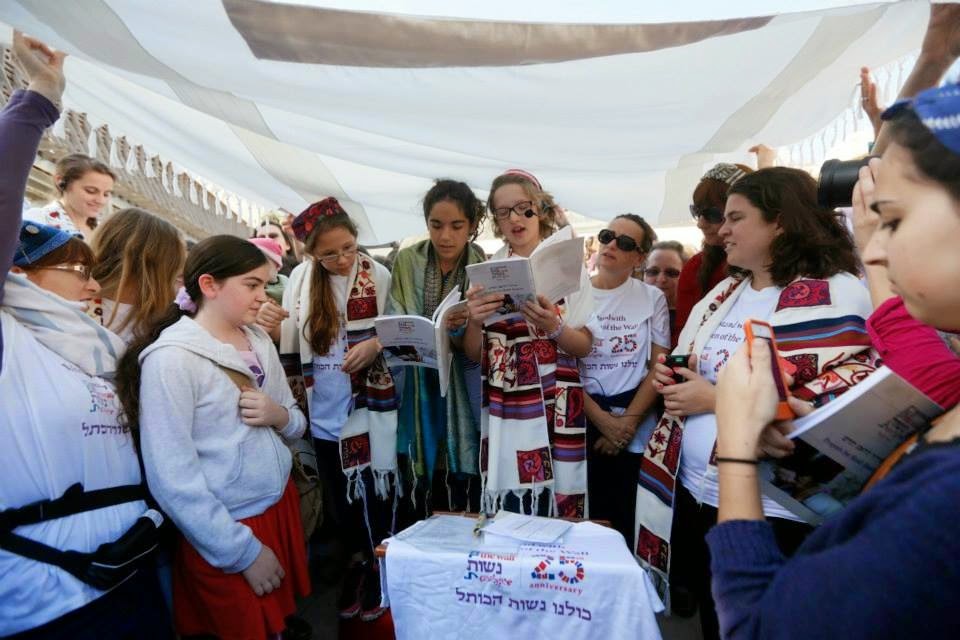
And I rejoiced. With more than 800 Jewish women who gathered from all over Israel and across the world, and over 200 male supporters who stood behind the mechitza and the barrier, I rejoiced. I rejoiced with Orthodox and Reform and Conservative and Reconstructionist and Renewal and Just Jews, I rejoiced.  I rejoiced with the young girls who were under a tallit chuppah to chant the blessings for the Rosh Hodesh Torah reading. I rejoiced with the Israeli policewomen who came not to harass us this time, not to tell us to shhh be quiet or to wrap our tallitot like scarves, but this time to ring our group with their bodies to protect us from harassment and from things thrown at us, from spitting and yelling and whistles.


And I thought, surely the Shechina, the Divine Presence who always rests here, rejoices that I am here in the holy place with my tallit, surely the Shechina wants to hear the voices of all Jews raised in prayer in song , surely the Shechina understands that our prayers cannot cause harm to this holy place or to the feelings of the worshippers.

Friday, January 18, 2013

Remembering Dr. Martin Luther King Jr.

This week I had the privilege of participating in the Women’s Rabbinic Network  convention in Memphis TN. Our bi-annual convention of Reform women rabbis from across North America (and one colleague from the former Soviet Union who now lives in Israel), gathered for 4 days of rich learning, beautiful praying and singing, and sisterhood and support. I was privileged to work on planning and leading the opening and closing ritual moments and part of our tefillot (worship) together.
 
As part of our gathering in Memphis, we went to the Lorraine Hotel where Rev. Dr. Martin Luther King Jr. was assassinated on the evening of April 4, 1968 and the Civil Rights museum. It was very moving to be in Memphis during the week of Dr. King’s birthday. Had he lived, he would have been 84 years old. As we stood together in Memphis at that place where we all lost so much,  we reflected on his life and legacy, on what a rare gift he gave to the world with his courage and his passion.

On Tuesday, Dr. King’s birthday, there was an ice storm in Memphis.  Many of the downtown area shops and businesses closed, sending their workers home early.  At dinner we rose and gave a standing ovation to the hotel wait staff, who had not gone home early, and were there serving our meal, and tending to the needs of hotel guests. (full disclosure, we do this at every one of our WRN conventions, because just as we thank God for food in the Motzi and Birkat hamazon, we are mindful that it is through many hands that food comes to our table each and every day.) As we stood, I was reminded of why Dr. King had gone to Memphis in April of 1968 -  sanitation workers in Memphis had staged a walkout to protest unequal wages and working conditions.  Black workers were paid significantly less than whites and received no pay if they stayed home in and weather, while their white counterparts were paid. So many of them were compelled to work in rain and snow storms. King had come to Memphis to prepare for a March the following Monday in support of these striking workers.

Our parashah this week is parashat Bo – “Bo el Paroah”, begins the text, as God says to Moses, “Go to Pharoah”, for I have hardened his heart. God tells Moses to go to Pharoah, his heart hardened, and ask Pharoah to let God’s people go forth from slavery to freedom. It is the message of God to Moses and the teaching of God in Exodus that led Dr. King to have the faith to dream of the end of racial segregation and racial discrimination and achieve equality through the civil rights movement.

Moses does as God tells him and goes to Pharoah demanding that Phaorah let the Jewish people go. But Pharaoh, his heart hardened, responds to Moses’ requests by rebuking him and increasing their workload, making life harder for the Jewish slaves. When the civil rights movement began to gain support, southern whites responded by making the lives of black Americans more difficult, threatening and assaulting civil rights leaders with violence, ultimately taking Dr. King’s life.
Many Jews felt compelled to respond to the fight against racial segregation and discrimination in America. We remembered the teachings of Torah and the call of the rabbis – “you shall not stand by while your neighbor bleeds”, “remember the poor and the stranger, for you were strangers in the land of Egypt”. We knew what it was like to experience discrimination and hatred. So many Jews felt called by faith and familiarity to serve in the cause of racial justice and equality.


On the march from Selma to Montgomery in March 1965, Rabbi Abraham Joshua Heschel walked in the front row with King, a spiritual partner in the struggle against racism. On a conference table in the Union for Reform Judaism’s Religious action Center building, black and Jewish lawyers drafted the Civil Rights Act of 1964 and the Voting Rights Act of 1965. The president of the NAACP at the time was Kivie Kaplan, a prominent member of the Reform movement’s social action commission. Today, Rabbi David Saperstein, the head of the URJ’s Religious Action Center in Washington, is the only non-African American on the board of the NAACP.

This coming August marks 50 years since Rev. King’s galvanizing, inspirational speech delivered on the steps of the Lincoln Memorial in Washington DC and 150 years since President Lincoln signed into law the Emancipation Proclamation.

50 years after Dr. King spoke of the dream that he had for this great country, civil rights and the fight for equality remain an important issue.  Dr. King’s dream has not yet been achieved when we continue to see efforts to disenfranchise voters.  Dr. King’s dream has not yet been achieved when there is still discrimination in this country towards people of different colors, religions, or ethnic origins.  Dr. King’s dream has not yet been achieved when there is discrimination against people because of their sexual orientation.  But he had the courage and the faith and the conviction to go forward, and his legacy still burns clearly today as we celebrate his birthday this weekend.  He had the courage and faith that Moses had to “Bo El Paroah”, to go to Phaorah and say “let me people go.”  His work in the world is now ours to do. As our rabbis teach in Mishna Pirke Avot 2:20-21 “Lo alecha hamlacha ligmor, vlo atah ben chorin lhibateil mimena. “It is not your duty to complete the work, but neither are you free to desist from it. As we honor Dr. King this weekend, let us remember that it is our responsibility to carry on his legacy.

Sunday, July 8, 2012

An Inspiring Quest

A little more than a month ago I received an email that read: “Hello Rabbi Pollack, Once again I am writing you about my quest of meeting all the female Rabbis that contributed to the Women’s Torah Commentary . So far I have met 36 Rabbis and look forward to meeting you. I am going to be in your area the first week of July 2012 and was hoping that you would be available to meet with me and sign my book…. Bonny Katz.”

As it happened this week I am serving on faculty at our regional URJ camp, GUCI, so when Bonny and her husband Ian drove through, they honored me my stopping here to meet and I signed her book. This is a quest she has been on for quite some time. It’s not easy to meet up with 54 female rabbis who live all across North America. I was really thrilled and honored to be a part of Bonny’s quest. It has been very exciting to be a part of a Torah commentary that has all female rabbinic contributors. And as one of the writers, I hope to be able to inspire women and men, with our teachings on the parashiot.

At camp this session our theme is “Partners with God”.  We’ve been looking at this from many aspects, and one of the shiurim (lessons) this week that particularly resonated with our campers is the concept of what it means to be a leader and a role model.  We examined the idea of being a great leader, but not a great role model, and what it takes to be a role model, from a Jewish perspective, not just in the Torah, but how we can strive to live our own lives as role models.

As rabbis, naturally, we are expected to be role models, in all aspects, not just in Jewish practice, but in everything that we do.  One of the great things about being at camp is that I sit with campers in programs, at meals, in shiur, and get out there and do activities with them in the camp setting, not in an office, or behind a desk.  We’re all sweating together this week in shorts and t-shirts in the 100 degree heat, we’re dancing at song session, and cheering, praying together, eating together, and having conversations that are meaningful and important – about God and Judaism, and what it means to be a Jew today, especially in places where there aren’t many other Jewish kids in their schools.  The other night I led a lights out program for cabin 3.  I brought my guitar and sang some of my favorite songs, and the girls asked me questions – how long have you been a rabbi, what is the scariest thing that ever happened to you, what is your favorite camp song, who are your role models. The kinds of questions that maybe they don’t ask their own rabbi at home, but here at camp, these are the important questions.

The girls of cabin 3 didn’t seem at all surprised to have a female rabbi doing their lights out program, probably because they see both female and male rabbis at camp every year.  It’s something that I still find amazing, because when I was their age, there weren’t many female rabbis at all.  In Tefillah (worship services) this week, I’ve also been reflecting on how much stayed the same and how much has changed.  We are singing many of the same melodies for prayers that we sang at camp, even as newer beautiful melodies have been added.  Back when I was a camper, there was a vigorous debate over whether or not to include the Imahot (matriarchs) in the Avot prayer.  Today, the Avot v’Imahot is a given. The debate today is over whether Leah comes before Rachel in the liturgy.  All of this made Bonny’s quest even more amazing and inspiring for me.

When I was a camper Bonny’s quest wouldn’t even have been possible. There were not enough female rabbis back then to have had 54 writers on the parashiot.  The questions   we are asking and the discussions we are having today may be some of the same questions and discussions, but they are different because women’s voices are added to the mix.  As I hugged her before she left, I told Bonny that I want to hear more about her journey as it continues – I know she will have some wonderful stories to tell.

(cross posted at Kol Isha, the blog of the Women's Rabbinic Network)

Tuesday, June 5, 2012

40 Years - A Journey of Transformation

For the closing program this Spring  our Temple Israel Sisterhood held a Woman of Valor Tea, honoring five women of distinction and dedication to our congregation.  At the very end of the celebration I was surprised with a commemorative Lucite plaque, honoring me for ten years at Temple Israel.  As congratulations were shared, a leader of our congregation remarked on how much she and our Temple family appreciated having me as the rabbi, as a leader and teacher in the community. Perhaps more surprising to me, she recalled the complex and fraught discussions and debate that had surrounded the decision to hire me these ten years ago, because I would be their first woman rabbi.

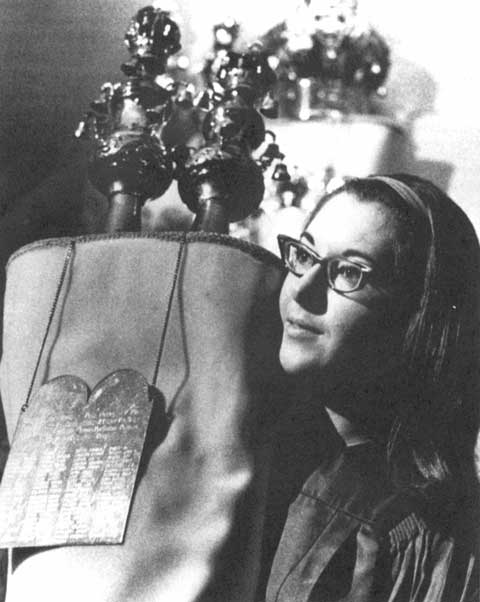
This June marks a momentous event in Jewish history.  On June 3, 1972, forty years ago, Rabbi Sally Priesand stood on the bima at Plum Street Temple in Cincinnati, Ohio, and was ordained as the first female rabbi.  On that same date 18 years ago, June 3, 1994, I stood on that same bima at Plum Street Temple and took my place in the line of  611 female Reform rabbis that have since followed in Rabbi Priesand’s path.

Rabbi Sally Priesand, 1972


Forty is a significant number in Jewish tradition.  When Noah built the ark, the rain lasted for 40 days and nights. The Jewish people wandered for 40 years in the wilderness before entering the land of Israel. Moses spent 40 days and nights up on Mt. Sinai to receive Torah. The spies that Moses sent out to explore the land were there for 40 days. One is only considered old and wise enough to study kabbalah, Jewish mysticism, at the age of 40.  A mikveh must be filled with 40 seahs of water. According to Rabbi Judah Loew, the Maharal of Prague(16th century), the number 40 has the ”power to transform one’s spiritual state. ” 40 is also considered a number of completion.  The number of days that it takes an embryo to form in its mother’s womb according to the Talmud is 40 days (Talmud Bavli Yevamot 69b).  While science today would disagree with that idea, we do know that gestation of a human being is 40 weeks. And  in the Mishnah (Shabbat 7:2) there is a list of 39 melachot or categories of labor or creative work that are forbidden on Shabbat, described as “40 less one”. These categories correspond to the 39 modes of constructive labor it took to build the Mishkan in the wilderness. And on Shabbat we rest from those labors, step out of this physical work, and make room for the spiritual fulfillment of Shabbat. Why 40 less one?  The sages teach that 40 is the number of completion, that these 39 categories of physical  labor it took to build the Mishkan were not complete without the spiritual labor to bring Shabbat into the Mishkan. These 39 categories of work parallel the work that went into the creation, with the one exception of the spiritual dimension of creation, and that is what completes the work, hence the 40th is the completion, the spiritual dimension.

While I would hesitate to say that we have arrived at a place of completion for women’s status in Jewish life, certainly, 40 years of women’s rabbinic leadership have powerfully transformed the Jewish world’s spiritual state.

As I write this message, Rabbi Miri Gold has just been recognized as the first non-orthodox rabbi of a congregation in Israel. This decision paves the way for other Reform and Conservative rabbis in Israel, both men and women, to receive government recognition and a salary, in the same way that over 4000 orthodox rabbis are recognized. Just a few weeks ago, Rabbi Alona Lisitsa became the first Israeli Reform Rabbi to sit on a municipal religious council nominated by the Minister of Courts (after an injuction by the Supreme Court). Two years ago, Rabba Sara Hurwitz became the first Orthodox female rabbi.

Forty years ago, who could have imagined orthodox women learning and teaching Talmud, or leading tefillah (prayer) in orthodox egalitarian minyanim.
But we still have along way to go before we get to the promised land where we can all stand at Sinai together. 40 years of work and journeying in the wilderness have led us as a Jewish family to a new place and a new spiritual state but we are still on a journey. As Judith Plaskow writes “We must expand the notion of Torah to encompass not just the five books of Moses and traditional Jewish learning, but women’s words, teachings, and actions hitherto unseen. To expand Torah, we must reconstruct Jewish history to include the history of women, and in doing so alter the shape of Jewish memory.” (Judith Plaskow,  Standing Again at Sinai, p. 28)

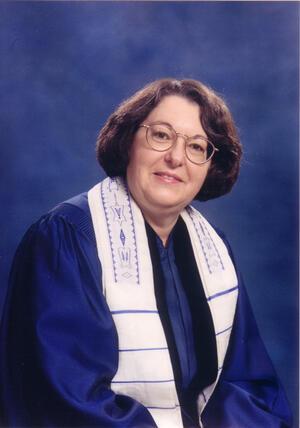
Rabbi Sally Priesand
Judaism has changed and continues to change because of the work and leadership of women rabbis. As we look forward to the next steps on the journey, we wish Rabbi Sally Priesand Mazal Tov and Todah Rabbah!  Yeshar Kochech!

(cross posted on  Kol Isha, the blog of the Women's Rabbinic Network)