Thursday, March 1, 2012

Be Happy - It's Adar!

“When Adar arrives, our joy increases.” So we are told in the Talmud. So much of our lives is given over to serious matters, that when given the chance to rejoice and celebrate, and most of all to be silly, we really should not miss the opportunity.  That’s the case with the month of Adar, for Adar marks the festival of Purim in the Jewish calendar. 

All too often, we relegate Purim to the children in our community. But it’s not just for kids.  I’ve been to some quite wonderful adult Purim celebrations.  We’re never too old to dress up and enjoy this holiday.  After all, the themes, the characters and the story of Purim have much to add to our lives.  Purim is a joyous affirmation of Jewish survival despite the great odds that confronted Esther and her Uncle Mordecai.  The story of Purim is a story of people taking charge of their own destiny and it reminds us that celebration is essential in our sometimes difficult and complex lives.  We are given the opportunity to transcend, at least temporarily, the seriousness and busyness of everyday existence and are magically transported to a world of drama, revelry, and ancient tales of tribulation and triumph.


So this year, celebrate Purim!  Laugh, dress in costume, make hamantaschen and send sweets to friends and family.  Let yourself be lighthearted and remember the sweetness and joys of life.  After all, you should be happy – It’s Adar!

Wednesday, February 1, 2012

Tree of Life - Tu B'shevat and Rejewvenation

Tu Bishevat - the fifteenth day of the month of Shevat in the Jewish calendar, falls this year on February 8th.  Tu Bishevat is the New Year of the trees.  We rejoice in the fruit of the tree and the fruit of the vine.  In the Talmud there is a legend about Honi, who came upon an old man planting a carob tree.  When Honi saw the old man, he at once questioned the old man’s actions, saying, “Foolish man, do you think you will still be alive to eat of the fruit of this tree?”   The old man replied, “I found trees in the world when I was born.  My grandparents planted them for me.  Now I am planting for the generations that will come after me.”  The story goes on to tell us that Honi fell into a deep sleep, from which he did not awaken for 70 years.  When he awoke he was surprised to see an old man picking the fruit from a fully grown carob tree.  When he inquired of the old man, “Are you the man who planted this tree?” the old man answered, “My grandfather planted it for me.” (Talmud Bavli, Ta’anit 23a)


The Talmud says that the root is the soul and the branch is the body.  Just so, there is a branch of the tree of life representing each and every Jew.  How marvelous are these branches, for while nourished by the same roots, the fruit of every branch is completely different.  Our rabbis taught that one who sees a multitude of Jews should recite this blessing: “Blessed is the all-wise and mysterious God, for each person’s opinion is different and each person’s appearance is different,” and yet they are all Jews (Talmud Bavli, Berachot 58a).  United by the tree of life, the Torah, we each create our own Jewish life.

All too often these days, however, too many of us feel that our active participation in Jewish life and Jewish community does not matter.  I am saddened when I hear this phrase: “As long as I feel Jewish, what does it matter if I do anything or not.”  I am saddened because it is not enough to “feel” like a branch of the tree of life.  Judaism is about doing, and living Jewishly.  A feeling is intangible.  It cannot be transmitted or passed to another without real, physical contact.  The fruit of Jewish life  means seeing, tasting, touching, smelling, and acting in order to live as a Jew and to have an impact on the world around us.  We are obligated to live Jewishly in order to fulfill the commandments and to sow the seeds of future Jewish living.   

Tu Bishevat calls us to action because it asks us to plant.  We too are like trees, requiring constant nourishment in order to flourish and grow.  While certain aspects of our own trees of life can take nourishment from any ground, there is a second system, a root which reaches hungrily for the teaching of Torah.  Being Jewish requires constant rejewvenation from the soil of Torah.  We are commanded to take action and participate in doing Jewish life in order to flourish and grow.  We have planted and transplanted this tree time and again.  May we keep the soil fertile that our faith in God and our Jewish acts may grow.  May we strengthen our roots with the past, and may our branches reach towards the future to bear sweet fruit.

Monday, January 9, 2012

URJ Biennial 2011, Washington, DC


This December 14-18, 2011, I was among more than 5000 Jews who attended the Union for Reform Judaism Biennial in Washington DC. Delegates from over 500 congregations in North America, Israel, and the UK studied, prayed, debated resolutions, and celebrated Shabbat together in an atmosphere of learning, networking, and passion for the future of Reform Judaism.

A major highlight of the biennial was hearing from President Obama, who gave a stirring address to the assembly,  addressing issues of social justice and  Israel, and peppered with humor - referring to his daughter Malia's busy schedule attending friends' bat mitzvahs, and giving a shout out to NFTY, the North American Federation of Temple Youth. He began his remarks by wishing us an early Shabbat Shalom and then continued with a d'var Torah on the portion of the week, resonating with the word “Hineini”,  “Here I am”. It was an exciting and moving start to our Shabbat together. We were also privileged to hear from Ehud Barak, and Natan Sharansky, and had the opportunity to dialogue and discuss the challenges and opportunities for Reform Jews in Israel with representatives from Israeli Reform congregations.


This year's biennial marked a major leadership transition as Rabbi Rick Jacobs became the new President of the Union for Reform Judaism.  Rabbi Eric Yoffie, who is retiring after having led the movement for the last 16 years, was celebrated in prayer, speech, and song on Saturday evening at Havdalah. Rabbi Jacobs shared his passionate vision for the future of Reform Judaism at the closing plenary on Sunday morning.

This year's biennial also had the largest attendance of Jews in their 20s and 30s and inaugurated a new initiative for the URJ, the Campaign for Youth Engagement, or CYE.  This initiative is a strategic plan to develop greater youth involvement and reinvigorate our movement's strategies for retaining youth post b'nei mitzvah and through high school and making our congregations more welcoming and responsive to the needs of Jews in the post- college and young adult years through their 20s and 30s. The convention halls were full of people, ideas, and energy.  There was also a large exhibit hall of vendors for Judaica shopping, Jewish books and music, and programmatic resources.
Prayer Services at URJ Biennial 2011
I attended many different learning sessions from Yoga Shalom to the Changing Landscape of Jewish Life, Judaism and Technology in the Digital Age, What Jews Need to know about Genetic Diseases - (the importance of genetic testing and counseling for young Jews),  and New Trends in Jewish Religious Education,  and much more.  I reconnected with old friends,  colleagues,  and teachers,  and made new friends and connections.

Kumsitz with friends
I danced and sang at biennial Shabbat and daily worship, studied text with wonderful and insightful scholars, and was thrilled to hear many Jewish musicians perform - Josh Nelson, Dan Nichols, Julie Silver, Jeff Klepper,  Beth Schafer, Joe Black, Rick Recht,  Michelle Citrin,  Noah Aronson, Ellen Allard, Shira Kline, Peri Smilow, and many more.  We were all profoundly missing Debbie Friedman at this biennial. The conference included a beautifully moving and heartfelt tribute to Debbie and her music. As Josh Nelson said, “She was there at the beginning and she is still with us now through her songs.” Theodore Bikel received a special award from the URJ and Saturday evening we were privileged to hear the incomparable guitarist and Israeli singer David Broza.  Services were enhanced with beautiful music from a special biennial choir and a choir of the American Conference of Cantors.  After the evening programming and concerts ended there was an informal late night kumsitz with old and new friends. The one thing I did not do much of at the biennial was sleep!
Kol B'seder - Rabbi Dan Freelander and Cantor Jeff Klepper - URJBiennial 2011
David Broza at URJ Biennial 2011
You can view videos from this year's biennial of speakers, teachers, and Shabbat services and music at the URJ Biennial 2011 link and be inspired!  And then plan to attend the URJ Biennial 2013 Dec. 11-15 in San Diego!

Friday, December 2, 2011

Chanukah - The Message of Religious Freedom

Chanukah is probably the most celebrated of all of the Jewish holidays.  Many people enjoy it as a festive time to gather together with family and friends, eat latkes, spin dreidels, and light the menorah.  Some people, Jews as well as gentiles, mistakenly think of Chanukah as the Jewish Christmas.  But far from it. Chanukah is not a Jewish response to the Christmas season.  The real meaning of Chanukah is about celebrating heroism, courage, and religious freedom. It is indeed ironic that this holiday, which is rooted in a revolution against assimilation and the suppression of the practice of Judaism, has become an overwhelmingly secular, commercial holiday.
Chanukah was established by religious leaders to teach a specific message: our freedom to worship God and practice our beliefs without coercion from government.  Chanukah teaches us about the dangers of government interference with religious practice and about the importance of religious liberty. Under King Antiochus, the Greek government forcibly imposed the worship of Greek gods, desecrating the Temple, and sacrificing pigs on the altar.  Antiochus forbade the Jews from worshipping according to Jewish belief, banned the practice of circumcision, and used force to make Jews worship Greek gods.


What we celebrate on Chanukah is the response of the Jews, known as the Maccabees, who stood up for their Jewish way of life and refused to give in to the coercion of the Greeks.  The second blessing we recite over the Chanukah lights gives thanks for the miracles God performed for our ancestors, recalling the celebration of the Maccabees when they were no longer oppressed by tyranny and were once again able to practice their faith and traditions.

So, the celebration of Chanukah is first and foremost a celebration of religious freedom. We celebrate by doing Jewish things: we study Torah, we sing songs in praise of God, and we joyfully recite prayers in celebration of that freedom. King Antiochus and his government forbade these things, so we celebrate by doing them.

As we remember and give thanks for what happened in ancient times, we also give thanks that we are blessed to live in a country that values religious freedom, allowing Jews and people of other faiths or no faith to worship or refrain from worship as they see fit. It is this policy of religious liberty that allows all Americans to participate fully in our open, multicultural society.

As we light the lights of the Chanukah Menorah this year, let us make sure that the flame of religious freedom for all never goes out.
Chag Chanukah Sameach!

Monday, October 24, 2011

How Much of The Prayers Have Gone Through You

(This post is excerpted from my Rosh Hashanah 5772 morning sermon)

Prayers can be comforting, prayers can be uplifting, and prayers can be challenging; the words of our liturgy can be disturbing.  Some of the liturgy we may know well and some not so well. Some prayers some have become so interconnected within our tradition that it is virtually impossible to take them out.

We have prayers that span the vast centuries of Jewish history and tradition, all the way back to when the great Temple stood in Jerusalem.  How awesome and incredible it is to think that we stand today and pray the same prayers as Jews across the world, and that we pray the same words our ancestors have prayed in many different places and in vastly different times, and these words have sustained them. So it is that we are all together now, on the pages of our prayerbooks, praying these words with Jews of the time of the Golden Age of Spain, of the Crusades, of our Reform ancestors in the early 1800s.  And yet, knowing this, we realize that some of our prayers are hard to understand and were composed long before our modern understandings.  Their authors could not have predicted how we would think today - they didn’t know that they were medieval any more than we know how our words will sound to Jews a thousand years in the future.  Many of these words were uplifting and meaningful to them. Maybe some of these words bothered them too. We do not know how literally they prayed these same words and phrases. 

Many of the words were chosen for reasons other than their literal meaning - as poetry, allusions to the words of the Bible and Talmud, or because the sounds and syllables lend themselves more easily to chanting and meditation.

Rabbi Lawrence Kushner reminds us of this: “If I tell you to read the Amidah silently, you’ll read it like Evelyn Wood speed-reading dynamics at two thousand words a minute with 90 percent comprehension. What you will discover after a page or two is that you’re reading to get information and there’s no new information in the Siddur. So the first thing you have to (remember) is that reading prayers is not reading to get information.” (Lawrence Kushner, in Making Prayer Real, Mike Comins (ed). p. 175).

In other words, it’s not how much of the prayerbook you have gone through, it’s how much the prayers have gone through you. About 300 years ago there was a very famous teacher, Rabbi Dov Ber, the Maggid of Mezrich. Students came from all over to study with him.  Of all the many lessons he taught his students was the insight of how to know and understand Torah.  They thought that if they could repeat everything he taught them, they would truly know Torah. Not so, the Maggid taught, don’t just say words of Torah, BE Torah. 

Prayer is also challenging because it reminds us of our obligations, our moral responsibilities and our fragility.  The words hold us accountable. If you pray the words of the siddur daily, your world view will change and you will be focused more on how you walk in the world through the lens of Jewish history, tradition, and values.  You will see the world through Jewish eyes. That, above all, keeps us connected to the words of the Siddur.  The language of the prayerbook connects us to Jews throughout the ages who had similar concerns to ours - the amazement at the gift of being alive, the fragility and preciousness of life, the connections between the generations,  how to find joy, and comfort and connection despite the challenges of living, our desire to become better than we are, to return to God.

Rabbi Yehuda Halevi, the 11th Century poet and author of the Kuzari, wrote that prayer is to the soul as food is to the body. If we do not feed our bodies, or eat nourishing food, our bodies suffer; if we don’t pray, or take the time to focus on the spiritual aspects of our lives, our inner being, our souls will not be the same; we will be different people. A person can live without music, art, laughter, love...but her life will not be as full.  In Hebrew the word for prayer is l’hitpaleil.  It is a reflexive verb that means to judge oneself, to examine yourself to understand what it is that you believe, what you need, where you are strong and where you need to grow and strive.  In some languages, we might understand the word “pray” as meaning “to ask’, but in Hebrew praying is really about how the tefillah, the prayer and the praying, changes you, and your relationship with God and with the world around you. 

At the beginning of this New Year, may the words of our prayers help us grow upwards and inward to find God. May they lead us to a place of transformation,  that will make us better people and Jews who will go out into the world and act on our values and make the world a better place. 
Thursday, September 1, 2011

Elul: 29 Days to Prepare for the High Holy Days

Welcome to Elul!  The Hebrew month of Elul ushers in the introspective period of time prior to the Yamim Noraim, the High Holy Days. We are given a gift of time in which to move closer to God, to ask ourselves if we have made the most of the year that has passed and to think about what we would like to do differently in the coming year.  During Elul we pray prayers of Selichot, prayers of repentance, each day.  During Elul the shofar is sounded each morning, as a reminder that it is time to wake up and prepare for Rosh Hashanah and Yom Kippur. The daily prayers include the recitation of Psalm 27, in which we ask that we might “dwell in the house of God all the days of my life.”

Many people follow the tradition of dedicating the 29 days of Elul towards preparing for the High Holidays through study, prayer, and journaling.  We use each day as an opportunity to grow and to be inspired to make each day count.  We have these 29 days to begin anew, to make a change in our lives, to figure out how we can do better in the coming year.

Take some time each day during Elul to consider the past year, to remind yourself of where you were personally and where our world was during the past year and to focus on thankfulness, forgiveness, and repentance.  This may not seem like an easy thing to do given our busy lives, and the emotional challenges that it may present, but it is a practice that has great wisdom in helping us to prepare to more fully experience the High Holidays.

Here are a few resources to help in your Elul spiritual preparations:

Jewels of Elul - Seven years ago Craig Taubman, Jewish composer, artist, performer began publishing Jewels of Elul, a collection of inspirational reflections for the month of Elul. Each year a diverse group of contributors share stories and insights to help us reflect on changing our selves and our world. You can receive Jewels of Elul each day in your email inbox. (If you don’t want to subscribe you can simply go to the page every day and read the new one).


Institute for Jewish Spirituality Podcasts - The Institute for Jewish Spirituality teaches mindfulness meditation and contemplative practice, and offers free podcasts that can be listened to online or downloaded.  Listen to podcasts to help prepare for the High Holidays in the chagim (holiday) podcasts section.

My family and I wish you and your loved ones a Shanah Tovah Tikatevu v’Techateimu!

Wednesday, August 10, 2011

Av to Elul - The Soul's Journey

The rhythm of Jewish time seems to run a bit slower in the summer months, as the sun shines high in the sky, the heat lingers and the days last longer.   Traditionally the Jewish months of Sivan, Tammuz, Av and Elul are bookends to this hot period of time.  Sivan ushers in summer with the holiday of Shavuot, the giving of the Torah at Mt. Sinai, and Elul is introspective as we prepare for Rosh Hashanah and Yom Kippur.  Within Tammuz and Av are days of mourning that reflect sad times within Jewish history – the fast of the 17th of Tammuz which marks the breaching of the Temple walls which culminated in the destruction of the Temple in Jerusalem on the 9th of Av.   Between these dates is the period of three weeks known as Bein Hametzarim, literally “in a narrow place”.  It is not hard to imagine the kind of narrow straits our people must have felt in the dry heat of summer in Jerusalem as they witnessed the destruction.  On Tisha B’Av Jews fast, sit on the floor, and weep as we chant the beautiful and mournful words of Lamentations.  In ancient times the Jewish people believed that the holy Temple was the meeting place between us and God.  Though we believe that the Divine presence is everywhere, this was the place of great intimacy between people and God.  Several times each year Jews would journey to the Temple in Jerusalem and perform rituals and seek to come closer to the Divine presence in the world. 
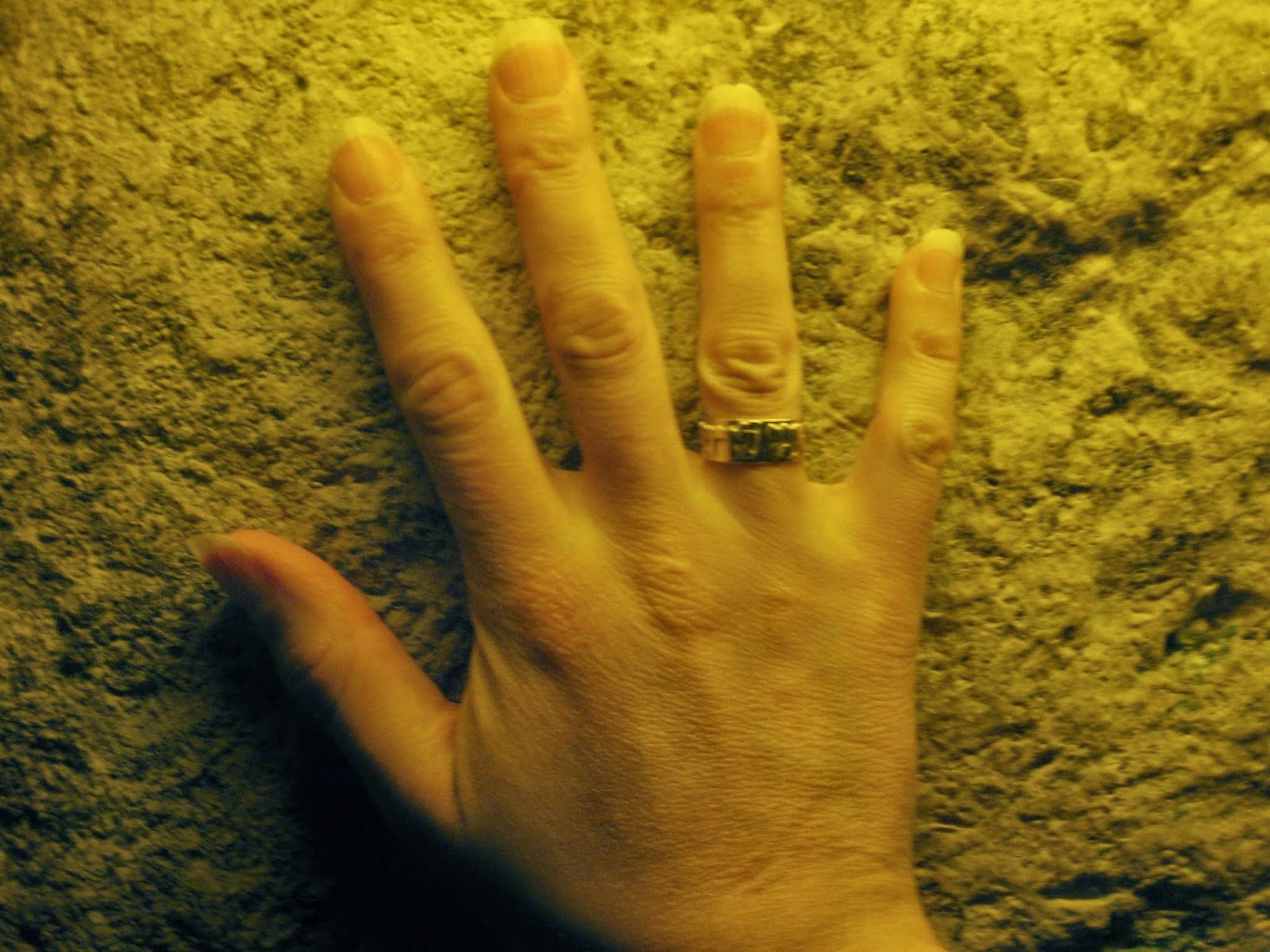
What do these days mean for us today? For us today, this may seem distant and ancient history.  Many liberal Jews are not familiar with the fast of Tammuz or the observance of Tisha B’Av. And yet, there is something powerful that connects us to these stories and this place.  Last summer in Jerusalem I went to the Kotel, the Western Wall many times.  I had the opportunity to tour underneath the Wall in the tunnels and place my hand on the ancient stones close to where the Holy of Holies had been, where for thousands of years Jews had placed their hands on the ancient stones, and cried, and rejoiced and prayed.  There is something about being in a sacred space that opens us to the spiritual, that shuts out the noisiness of life and allows us to hear and be at one with the universe.
A Hasidic tale about the “Seer of Lublin”, Rabbi Yitzchak Yaakov Horowitz, explains the power of place and time that changes us, that enables us to be more in harmony with God:
 
As a young child the rabbi lived near a forest. Almost every day he would venture off in to the woods by himself.  His father did not want to interfere with his son’s explorations but he worried about robbers and animals that could be lurking in the forest that could harm his son.  One day his father pulled the boy aside and said “I know that you go to the forest every day. I am concerned for your safety.  What is it that draws you there and what do you do there? 

The young boy responded simply:  “I go there to find God.” 

His father thought for a moment and then responded: “That’s beautiful, but don’t you know that God is the same everywhere?” 

“God is”, responded the boy, “but I’m not.”

As the summer wanes and we enter Elul, our soul’s journey calls us to awaken and reflect on the year that has passed and the one that is yet to be. As we embark on the journey from Av to Elul may we seek the place that connects us, that changes us, and that enables us to take the next steps along our sacred path.