Friday, October 5, 2012

ופרש עלינו סכת שלומך Ufros Aleinu Sukkat Shlomecha

Ufros Aleinu Sukkat Shlomecha  
Spread over us the shelter of Your peace

בָּרוּךְ אַתָּה ייְָ, הַטּוֹב שִׁמְךָ וּלְךָ נָאֶה לְהוֹדוֹת
Baruch atah Adonai, ha-tov shimcha ul’cha na-eh l’hodot. 
Blessed are you Eternal One, Your name is Goodness and You are worthy of thanksgiving.

These words form the chatimah, or seal, at the end of the Hoda’ah prayer, the second closing benediction of the Amidah (Modim Anachnu Lach). It is natural for us to go about our daily lives scarcely noticing the many blessings that we have each and every day. The words of the Hoda’ah remind us that we are surrounded by miracles and blessings – our lives, our health, our families and friends, our work in this world.  The words of this prayer remind us to pause and notice them, to take a moment and lift our eyes up to see the beauty that is in this world, to feel the sun on our face, the wind in our hair, to see the beauty of autumn’s splendid palette of colors as the leaves float down to the ground.

From the sounds of the Shofar on Rosh Hashanah and Yom Kippur, we have moved into the shelter of the holiday of Sukkot. The Sukkah is a simple structure. It provides a shelter from some of the elements, while letting others, such as wind and rain, come in through the roof.  In the Sukkah we can see the stars. In the Sukkah we can appreciate the wonders of nature, and the fragility of life.


The sixth tractate of the second division of the Mishnah (rabbinic commentary on the Torah, 200CE) is called Sukkah.  The very first verses give a detailed description of how to build a Sukkah:
  1. It must be less than 30 feet high.
  2. The walls must be strong enough to withstand ordinary wind gusts.
  3. The shade offered by the roof of the Sukkah should be able to block most of the sun’s rays while allowing the stars to be visible at night.
  4. There must be at least three walls, made of any material.
  5. The Sukkah must be a temporary structure.
  6. It is a mitzvah to eat one’s meals in the Sukkah.
  7. While it is a mitzvah to live in the Sukkah as much as possible, you are not obligated to sleep in eat, especially in colder climates.  And if it is raining hard enough that there is more water than soup in your bowl, you may finish your meal indoors.
  8. The Sukkah can be decorated with fruits, vegetables, and art projects.
  9. There is no minimum size, but the Sukkah must be large enough for at least one person.
It is a mitzvah to build your own Sukkah and live in it during the week of Sukkot.  It’s also a mitzvah to wave the lulav and etrog, and to invite guests to join you in the Sukkah.

When we spend time in the Sukkah, we get a unique chance to experience the natural world. We feel wind and rain, hot and cold. We see the sun and the moon and stars through the schach, and as we eat our meals we are joined by bugs and bees, and sometimes birds and squirrels. We become closer to nature and are reminded of our interdependence with all that lives and grows.
Living in the Sukkah connects us to our ancestors who left the protection of secure roofs to journey forward in the time of the Exodus towards freedom. They placed themselves under God’s protection, the only true source of protection and security

ופרש עלינו סכת שלומך         
Ufros Aleinu Sukkat Sh’lomecha 
(Spread over us the shelter of Your peace).

When we pray the words of Hoda’ah and give thanks for the miracles that we experience each and every day, we realize that we cannot take them for granted. Life is too precious, and these gifts are too important to notice them only when they are gone.  Our daily recitation of the words of the Hoda’ah can lead us to a practice of being aware and appreciative of the miracles that surround us each day, and to also make it a practice of expressing our gratitude to God and to our loved ones.

At this season of thanksgiving, we are thankful for the daily miracles that surround us each day.  As our awareness of them grows, may we be changed, lifted up, and transformed.

Moadim L’simcha!
(cross posted at Kol Isha, the blog of the Women's Rabbinic Network)  

Sunday, September 2, 2012

Spiritual Reflection During Elul

We are now in the month of Elul, the Hebrew month that leads us into the Yamim Noraim, the High Holy Days.  Many Jews use this time period to think back on the year that has passed in anticipation of Rosh Hashanah and Yom Kippur. A few years ago my colleague, Rabbi Debra Orenstein, introduced me to a very meaningful spiritual tool to prepare for the Days of Awe.  The custom is to use the last 12 days of the month of Elul (this year from Sept. 5, 2012 onward) until Rosh Hashanah to review and meditate each day on one month from the last year. On the day of Erev Rosh Hashanah, you review Elul, the month just gone by.

Some people will begin each day in meditation or make a quiet space to reflect on the month they are focusing on each day.  If you are in the habit of praying the morning prayers, Rabbi Orenstein suggests that you might find this to be a particularly good time to reflect.  “The daily prayers in the Amidah, asking for wisdom, forgiveness, healing, justice, a good year, and peace, among other aspirations – create a beautiful vision against which to measure the past year.”  

This reflection can be done with a study partner, a friend or spouse, or written in a journal.   You might look in your calendar – paper or electronic, from the past year to remind yourself of where you were during each of the months of last year.
Spiritual reflection can lead to a deeper self-awareness of self, of community, of the world, because it helps us to do teshuvah – literally to return to who we really are.

We also do this kind of reflection together as a community during these Days of Awe. And when you are in synagogue for all of the services of Selichot, Rosh Hashanah, and Yom Kippur, if you pay close attention to the themes that run throughout the liturgy of these days, you can see the threads of self-reflection, communal confession and prayers of selichot, asking for forgiveness. But it is really to our benefit to prepare for these 10 days before they begin and then by continuing to let the questions go through you as you go through the ten days of teshuvah – return. 

My family and I wish each of you a Shanah Tova U’Metukah, a year filled with health, joy and the sweetness of life.  May this new year of 5773 be a year of health, happiness, and growth for you and your family.

Wednesday, August 8, 2012

Everyday Blessings

Barukh Atah Adonai Eloheinu Melech Ha-olam, Shekachah Lo B’olamo
Praised are You, Adonai our God, Sovereign of the Universe, who has such beauty in the world.

As summer has passed by all too quickly, I have delighted in watching my three children enjoying the outdoors and the world around them.
All too often I find myself caught up in the busyness of life and forget to notice and be thankful for the many blessings that surround me.  One of the reasons I am grateful for my family is that they remind me to appreciate the many small gifts that are a part of every day.

Jewish tradition teaches us to utter brachot (blessings) throughout the day, and in so doing to live at a deeper level of awareness of experiences that we might otherwise miss.  In reciting a bracha (blessing), we invite in or recognize God’s presence in our midst. Blessings can be said in any language, and express a kavannah, an intention from one’s heart.

According to the great medieval Jewish philosopher, the RaMBaM – Moses Maimonides, there are three types of blessings:

Birchot HaNehenin – Blessings that we recite before eating, drinking, or smelling nice things.
Birchot HaMitzvot – Blessing that we recite prior to performing a commandment.
Birchot Hodaah – Blessings that express praise of God and give our thanks to God, or ask God for things.

There are traditional blessings for many of these experiences of life; you can find these in the siddur.  It is also appropriate to create your own blessing. Begin with the traditional formula: “Barukh Atah Adonai Eloheinu Melech Ha-olam Praised are You, Adonai our God, Sovereign of the Universe” and then continue with whatever you want to say – about your life, your health, how you are feeling, something good or bad that has happened, the world, your spouse, your children….

Reciting blessings open us to the potential for holiness in the world, and remind us that everything is interconnected, linking us to the oneness of God.

(cross posted at Kol Isha, the blog of the Women's Rabbinic Network

Wednesday, August 1, 2012

Learn Talmud - The 13th Daf Yomi cycle Begins on August 3rd

On August 1st, Jewish men and women across the globe will be joining in celebration of Siyum HaShas, the completion of the seven year cycle of Talmud reading.  Daf yomi, as it is known, is the practice of learning a daf, or page, of Talmud each day. Studied in this way, the 2,711 pages of Talmud can be completed in seven and a half years. Two days later, on August 3, 2012,  Jews the world over will begin the new Daf Yomi cycle, and begin learning Talmud from the beginning, from Seder Zeraim (Seeds): Tractate Berakhot (Blessings).

This system of learning Talmud, meant to encourage everyone, not just scholars, to learn Talmudic law and teaching, was developed by Rabbi Meir Shapiro in 1923 in Poland. Talmud is made up of two main parts, the Mishnah, or first written compendium of the Oral Law, codified around the year 200 CE, and the Gemara, which is commentary on the Mishnah, codified by 600 CE. The Mishnah is a commentary on the Torah and the Gemara is a commentary on the Mishnah. The Talmud is the basis for all of the codes and commentaries of rabbinic law, and is also know as Shas, an abbreviation of Shisha Sedarim, or six orders of the Mishnah. Originally these laws and teachings were handed down by word of mouth, hence called the Oral Law, but it gradually came to be codified in the six orders of the Talmud.

The first page of Tractate Berakhot
These six orders, or general subjects are subdivided into 60 masekhtot, or tractates, which is further subdivided into perakim (chapters), and this comprises the 2,711 pages of text. Surrounding the Mishnah and Gemara are later commentaries and codes, marginal texts. Just as we often make notes in the margins of a book, later scholars and teachers did the same with the Talmud text and their commentaries and conversations are recorded on the same page. When you sit down with a daf,or page, of Talmud, you are entering a conversation that has taken place over thousands of years with great rabbis and teachers, and you are sitting at the table entering into conversation with them. You can learn more about the Talmud from this interactive Talmud page.

Until recently, the world of the Talmud has been a challenging and somewhat difficult world for most modern liberal Jews to enter.  There is of course a language barrier, since the Talmud was written in Hebrew and Aramaic.  There is also the fact that much of the passages assume a certain level of textual knowledge on the part of the reader. Much of the commentators in the margins serve to assist the reader by providing explanations of words, interpreting seeming contradictions, and providing references to Biblical passages and related passages from elsewhere in the Talmud.
This Daf Yomi cycle will be different than those that have preceded it because of the level of unprecedented access that modern liberal Jews, both men and women, now have to access the text.  Although the first English translation of the Talmud was published over 100 years ago, the text has remained relatively cryptic and difficult for non-Hebrew readers. The latest English translations of the Talmud have attempted to render the text in such a way as to make it much more understandable for the lay reader, including not only an English translation, but also guides to the text, biblical references, and unpacking of the more obscure and difficult material.  The newest English editions of the Talmud are available in both traditional book volumes and iPad editions.


The most traditional way to study Talmud is with a partner, in chevruta, or partnered study.  The text is read aloud and debated and discussed.  In that way it comes alive and it is not just you or your chevruta that is part of the discussion, but all those whose words you are reading, and all those who throughout the centuries have debated and discussed and whose lives have been affected by the rulings on the pages.  Many of you may know that I have a chevruta with whom I learn Talmud weekly.  Our study is a much more in depth learning than daf yomi ( a page a day) will allow, we don’t have a goal to get through a page or more each time we learn, but to get through as much text as we can understand and discuss, whether that is a few lines, or a few paragraphs.  Even so, we are both excited about the new daf yomi cycle, and even more so about the newest editions of Talmud that invite access for more Jews to learn the foundations of Jewish law and life.

Will you join the 13th Daf Yomi cycle on August 3rd this year?

Sunday, July 8, 2012

An Inspiring Quest

A little more than a month ago I received an email that read: “Hello Rabbi Pollack, Once again I am writing you about my quest of meeting all the female Rabbis that contributed to the Women’s Torah Commentary . So far I have met 36 Rabbis and look forward to meeting you. I am going to be in your area the first week of July 2012 and was hoping that you would be available to meet with me and sign my book…. Bonny Katz.”

As it happened this week I am serving on faculty at our regional URJ camp, GUCI, so when Bonny and her husband Ian drove through, they honored me my stopping here to meet and I signed her book. This is a quest she has been on for quite some time. It’s not easy to meet up with 54 female rabbis who live all across North America. I was really thrilled and honored to be a part of Bonny’s quest. It has been very exciting to be a part of a Torah commentary that has all female rabbinic contributors. And as one of the writers, I hope to be able to inspire women and men, with our teachings on the parashiot.

At camp this session our theme is “Partners with God”.  We’ve been looking at this from many aspects, and one of the shiurim (lessons) this week that particularly resonated with our campers is the concept of what it means to be a leader and a role model.  We examined the idea of being a great leader, but not a great role model, and what it takes to be a role model, from a Jewish perspective, not just in the Torah, but how we can strive to live our own lives as role models.

As rabbis, naturally, we are expected to be role models, in all aspects, not just in Jewish practice, but in everything that we do.  One of the great things about being at camp is that I sit with campers in programs, at meals, in shiur, and get out there and do activities with them in the camp setting, not in an office, or behind a desk.  We’re all sweating together this week in shorts and t-shirts in the 100 degree heat, we’re dancing at song session, and cheering, praying together, eating together, and having conversations that are meaningful and important – about God and Judaism, and what it means to be a Jew today, especially in places where there aren’t many other Jewish kids in their schools.  The other night I led a lights out program for cabin 3.  I brought my guitar and sang some of my favorite songs, and the girls asked me questions – how long have you been a rabbi, what is the scariest thing that ever happened to you, what is your favorite camp song, who are your role models. The kinds of questions that maybe they don’t ask their own rabbi at home, but here at camp, these are the important questions.

The girls of cabin 3 didn’t seem at all surprised to have a female rabbi doing their lights out program, probably because they see both female and male rabbis at camp every year.  It’s something that I still find amazing, because when I was their age, there weren’t many female rabbis at all.  In Tefillah (worship services) this week, I’ve also been reflecting on how much stayed the same and how much has changed.  We are singing many of the same melodies for prayers that we sang at camp, even as newer beautiful melodies have been added.  Back when I was a camper, there was a vigorous debate over whether or not to include the Imahot (matriarchs) in the Avot prayer.  Today, the Avot v’Imahot is a given. The debate today is over whether Leah comes before Rachel in the liturgy.  All of this made Bonny’s quest even more amazing and inspiring for me.

When I was a camper Bonny’s quest wouldn’t even have been possible. There were not enough female rabbis back then to have had 54 writers on the parashiot.  The questions   we are asking and the discussions we are having today may be some of the same questions and discussions, but they are different because women’s voices are added to the mix.  As I hugged her before she left, I told Bonny that I want to hear more about her journey as it continues – I know she will have some wonderful stories to tell.

(cross posted at Kol Isha, the blog of the Women's Rabbinic Network)

Tuesday, June 5, 2012

40 Years - A Journey of Transformation

For the closing program this Spring  our Temple Israel Sisterhood held a Woman of Valor Tea, honoring five women of distinction and dedication to our congregation.  At the very end of the celebration I was surprised with a commemorative Lucite plaque, honoring me for ten years at Temple Israel.  As congratulations were shared, a leader of our congregation remarked on how much she and our Temple family appreciated having me as the rabbi, as a leader and teacher in the community. Perhaps more surprising to me, she recalled the complex and fraught discussions and debate that had surrounded the decision to hire me these ten years ago, because I would be their first woman rabbi.

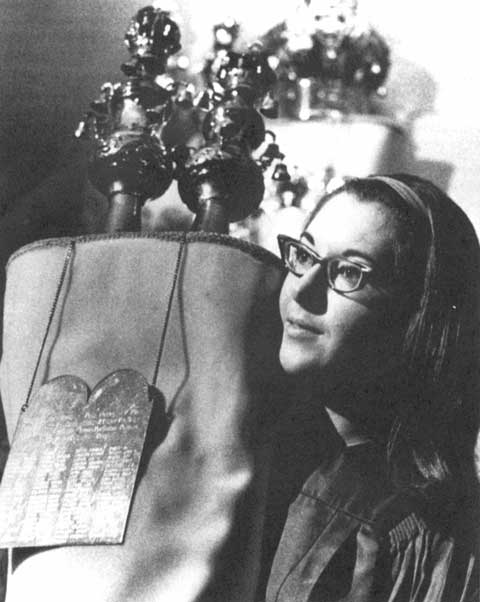
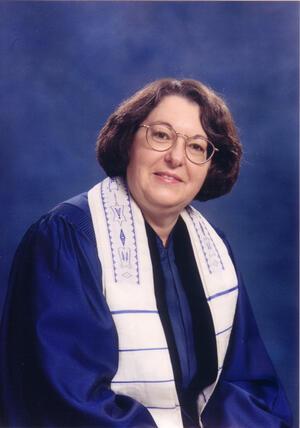
This June marks a momentous event in Jewish history.  On June 3, 1972, forty years ago, Rabbi Sally Priesand stood on the bima at Plum Street Temple in Cincinnati, Ohio, and was ordained as the first female rabbi.  On that same date 18 years ago, June 3, 1994, I stood on that same bima at Plum Street Temple and took my place in the line of  611 female Reform rabbis that have since followed in Rabbi Priesand’s path.

Rabbi Sally Priesand, 1972


Forty is a significant number in Jewish tradition.  When Noah built the ark, the rain lasted for 40 days and nights. The Jewish people wandered for 40 years in the wilderness before entering the land of Israel. Moses spent 40 days and nights up on Mt. Sinai to receive Torah. The spies that Moses sent out to explore the land were there for 40 days. One is only considered old and wise enough to study kabbalah, Jewish mysticism, at the age of 40.  A mikveh must be filled with 40 seahs of water. According to Rabbi Judah Loew, the Maharal of Prague(16th century), the number 40 has the ”power to transform one’s spiritual state. ” 40 is also considered a number of completion.  The number of days that it takes an embryo to form in its mother’s womb according to the Talmud is 40 days (Talmud Bavli Yevamot 69b).  While science today would disagree with that idea, we do know that gestation of a human being is 40 weeks. And  in the Mishnah (Shabbat 7:2) there is a list of 39 melachot or categories of labor or creative work that are forbidden on Shabbat, described as “40 less one”. These categories correspond to the 39 modes of constructive labor it took to build the Mishkan in the wilderness. And on Shabbat we rest from those labors, step out of this physical work, and make room for the spiritual fulfillment of Shabbat. Why 40 less one?  The sages teach that 40 is the number of completion, that these 39 categories of physical  labor it took to build the Mishkan were not complete without the spiritual labor to bring Shabbat into the Mishkan. These 39 categories of work parallel the work that went into the creation, with the one exception of the spiritual dimension of creation, and that is what completes the work, hence the 40th is the completion, the spiritual dimension.

While I would hesitate to say that we have arrived at a place of completion for women’s status in Jewish life, certainly, 40 years of women’s rabbinic leadership have powerfully transformed the Jewish world’s spiritual state.

As I write this message, Rabbi Miri Gold has just been recognized as the first non-orthodox rabbi of a congregation in Israel. This decision paves the way for other Reform and Conservative rabbis in Israel, both men and women, to receive government recognition and a salary, in the same way that over 4000 orthodox rabbis are recognized. Just a few weeks ago, Rabbi Alona Lisitsa became the first Israeli Reform Rabbi to sit on a municipal religious council nominated by the Minister of Courts (after an injuction by the Supreme Court). Two years ago, Rabba Sara Hurwitz became the first Orthodox female rabbi.

Forty years ago, who could have imagined orthodox women learning and teaching Talmud, or leading tefillah (prayer) in orthodox egalitarian minyanim.
But we still have along way to go before we get to the promised land where we can all stand at Sinai together. 40 years of work and journeying in the wilderness have led us as a Jewish family to a new place and a new spiritual state but we are still on a journey. As Judith Plaskow writes “We must expand the notion of Torah to encompass not just the five books of Moses and traditional Jewish learning, but women’s words, teachings, and actions hitherto unseen. To expand Torah, we must reconstruct Jewish history to include the history of women, and in doing so alter the shape of Jewish memory.” (Judith PlaskowStanding Again at Sinai, p. 28)

Rabbi Sally Priesand
Judaism has changed and continues to change because of the work and leadership of women rabbis. As we look forward to the next steps on the journey, we wish Rabbi Sally Priesand Mazal Tov and Todah Rabbah!  Yeshar Kochech!

(cross posted on  Kol Isha, the blog of the Women's Rabbinic Network)

Wednesday, May 9, 2012

Happy Shavuot

For more than a century, the Reform movement has marked the anniversary of the giving of Torah at Mt. Sinai with the ceremony of Confirmation. Each year we look forward to celebrating with our young people as they mark their Confirmation of Judaism as young adults. We celebrate their learning as we usher in the holiday of Shavuot, the Feast of Weeks and the receiving of Torah at Mt. Sinai. 
I am convinced that the festival of Shavuot is the least remembered or observed of holidays among the big three (that is the three festivals that in the time of the Temple Jews went up to Jerusalem to observe – Sukkot and Pesach being the other two).  Since religious school is usually over by the time the holiday rolls around, few of us had terribly strong memories of Shavuot ritual.  For many, Confirmation is the only ritual surrounding Shavuot that sticks in our minds.  Yet, the holiday includes wonderful potential -- after all it does celebrate this most mysterious and momentous event: the giving of Torah at Sinai

But Shavuot is not only for young people; all of us stood at Sinai.  Shavuot is a celebration of Revelation, of the Giving of the Torah to the Jewish people on Mt. Sinai. In recognition of this Revelation, we read the portion of the Torah that the Torah itself says took place on Sinai  the story of the giving of the Ten Words, otherwise known as the Ten Commandments.

These Ten Commandments are not the only commandments of Judaism. Our tradition tells us that there are 613 mitzvot (the word means "commandments," not "good deeds"), all of which are important. But somehow, the Ten Commandments remain for us among the most basic of all laws. They are laws which form the foundation of the life of society: laws against idolatry, about family, about resting, and about basic morality. And these Ten Commandments remain important in our lives today.

Shavuot is also one of the special festivals in the year that has one of the five "scrolls" or megillot assigned to it.  On Shavuot, the scroll that we read is the Book of Ruth.  There are three reasons that the Book of Ruth is read on Shavuot. First, the story of Ruth takes place during the summer harvest.  Second, the story of Ruth reminds us that the Torah, which we received at Sinai, is so precious and valuable.  Ruth, a Moabite, chooses Judaism.  She elects to cast her lot with the Jewish people, saying: "Where you go, I will go, where you lodge I will lodge.  Your people shall be my people, and your God shall be my God."  Ruth's choosing Judaism makes us more aware and appreciative of the blessings of being Jewish.  Third, some scholars say that we read the Book of Ruth because it reminds us of King David.  King David was Ruth's great-grandson and traditionally Shavuot marks both David's birth and death. 

It is customary to stay up the entire night (leil) of Shavuot studying Torah with the community as we symbolically prepare to enter into a sacred relationship with God.  Many contemporary Jews choose to intensify and personalize the experience of revelation through studying Torah, talmudic, mystical and modern text and adding our own experiences and interpretations.

So, join us for Shavuot and the Confirmation service this year, and take some time to appreciate the gift of Torah in your life today as we stand together at Sinai.

Mazal Tov to our Confirmands and Happy Shavuot to All!