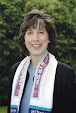
What is it about the High Holy Days that draws so many of us into the synagogue? Even if we have not been more than a few times or perhaps not at all during the past year, Rosh Hashanah and Yom Kippur bring us here to pray, to reflect, and to be a part of community. As we enter the doors of the synagogue once again, we are reminded that the gates of repentance are always open, that no matter how often or how infrequently we may have come to synagogue over the past year, we are always welcome here. Sometimes it is difficult to find the path back towards God and Torah and being amongst other Jews. Judah Halevi, the medieval poet said: “When I go forth looking for You, I find You seeking me.” In the process of searching for God, and returning to synagogue, we find ourselves.
Judaism is a religion of questions and questioning. So, too, at this time of year, as we approach the Yamim Noraim, we must ask ourselves the important questions, the hard questions. How do we take stock of our actions and our interactions with loved ones, friends, neighbors, even business associates during the previous year? How can we even begin to confront these hard questions? We start by letting go of the fear of ourselves, and acknowledging that we are not perfect, and that we do have the capacity to change. We must ask ourselves: “What have I done? and What have I become?” (Rabbi Jonah of Gerona in his Gates of Repentance, a treatise of the 13th century). To Rabbi Jonah’s wisdom, I think we must add one additional question: What will I become in the future? Our tradition calls the process of self reflection cheshbon hanefesh, literally, “taking an account of our soul”. It is what the period leading up to the Yamim Noraim is all about. This time of preparation is not easy but it is also a gift, an opportunity to begin anew, as we consider not only our interactions and actions over the past twelve months, but the process of teshuvah, of repentance and change. Each day we begin with ourselves, unafraid to confront the past, for as we return towards God, we come to learn that these actions of the past are no longer what we have become or must be in the future.
My family and I wish each of you a Shanah Tova U’Metukah, a year filled with health, joy and the sweetness of life. May this new year of 5774 be a year of health, happiness, and growth for you and your family.
Sunday, September 1, 2013

Monday, August 5, 2013
Elul: 40 Days of Preparation
The month of Elul, the month leading up to the High Holidays, which begins this year on August 7, 2013, is a time for rethinking, self-reflection, and meditation. During this month it is customary that every Jew - not just scholars or rabbis - take time to join in Jewish study, read the Bible, and rethink and take stock of his or her life. Why 40 days of preparation? This custom is explained in relationship to the earliest of reconciliations between the Jewish people and God: the 40 days which Moses spent on Mount Sinai after destroying the first set of the Ten Commandments. Moses had come down the mountain and saw the people with the golden calf. He punished the people, destroyed the calf and then went back up the mountain to fast and pray for 40 days. These ended - on Yom Kippur - when Moses received the second set of Ten Commandments from God as a sign of God's forgiveness and reconciliation with the Jewish people. In identifying the 40 days Moses spent on the mountain with the days leading up to Yom Kippur, the Jewish community tries to spend those 40 days as Moses did - in prayer and study and in rethinking one's life in order to merit God's forgiveness. The month of Elul is 30 days long, and there are ten days from the first of Tishrei to Yom Kippur. So, the 40 days begin with the first of Elul.
There are two major customs associated with these forty days. Each morning of the month of Elul, with the exception of Shabbat and the last day of Elul, the shofar is blown. This is meant to be a spiritual wakeup call, and is also a reminder of the shofar blowing that will be heard on Rosh Hashanah. The second custom is the reading of Psalm 27 at every service. This plea to God for help and deliverance from our enemies is understood at this time of year as a plea for deliverance from our own internal enemies, from the challenges we face daily that may have caused us not to be true to ourselves. As Elul comes to an end, our spiritual preparation, prayers and self-reflection intensify with special prayers of Selichot, prayers of asking forgiveness from God and for spiritual healing.
For your own spiritual preparation leading up to the High Holidays:
Jewels of Elul
Seasons of Our Joy - Arthur Waskow
The Jewish Holidays, A Guide and Commentary - Michael Strassfeld
Days of Awe - Shmuel Yosef Agnon
Preparing Your Heart for the High Holy Days: A Guided Journal by Kerry M. Olitzky and Rachel T. Sabath
There are two major customs associated with these forty days. Each morning of the month of Elul, with the exception of Shabbat and the last day of Elul, the shofar is blown. This is meant to be a spiritual wakeup call, and is also a reminder of the shofar blowing that will be heard on Rosh Hashanah. The second custom is the reading of Psalm 27 at every service. This plea to God for help and deliverance from our enemies is understood at this time of year as a plea for deliverance from our own internal enemies, from the challenges we face daily that may have caused us not to be true to ourselves. As Elul comes to an end, our spiritual preparation, prayers and self-reflection intensify with special prayers of Selichot, prayers of asking forgiveness from God and for spiritual healing.
For your own spiritual preparation leading up to the High Holidays:
Jewels of Elul
Seasons of Our Joy - Arthur Waskow
The Jewish Holidays, A Guide and Commentary - Michael Strassfeld
Days of Awe - Shmuel Yosef Agnon
Preparing Your Heart for the High Holy Days: A Guided Journal by Kerry M. Olitzky and Rachel T. Sabath
Sunday, June 2, 2013
Do Not Separate Yourself From the Community
Hillel said: Do not separate yourself from the community. And do not trust in yourself until the day of your death. And do not judge your fellow until you have stood in their place. Do not say something which cannot be heard (on the assumption) that eventually it will be heard. And do not say, 'When I have time I shall study,' perhaps you will never make the time. - Pirke Avot 2:5.
The lead article in the Summer issue of Reform Judaism magazine focuses on navigating the cyberworld of technology and re-inventing the synagogue. The new world of networked computing has led us to this new frontier in synagogue life. The relative ease with which we can connect and the openness of the internet as a conduit for information have radically changed the world we live in. The old models for doing synagogue assume a very different structure than the networked connections and social network conversations that many of us are able to have through email, Facebook, texting, and internet exploration.
 Ron Wolfson, visionary educator and cofounder of Synagogue 3000, is the author of Relational Judaism: Using the Power of Relationships to Transform the Jewish Community (Jewish Lights Publishing). In a Synagogue 3000 report last year, Wolfson gave this advice: “ We have to move from a synagogue of programs targeting different populations to a deepening relationship between the synagogue and their members...The best way to root people in the life of the congregation is through relationships….”
Wolfson’s new book is an exploration of how relationships transform synagogues from institutions into communities: “For me, the value-added must be a face-to-face community of relationships that gives my life meaning and purpose, belonging and blessing. "Meaning" is an understanding of the significance of life. "Purpose" is an imperative to do what you are put on earth to do during your life. "Belonging" is a community of people who will be there for you and with you. "Blessing" is a feeling of deep satisfaction and gratitude, a calendar and life cycle of opportunities to celebrate the gifts of life.”
At the heart of it, synagogue life is about what Rabbi Hillel taught thousands of years ago – synagogue life is about community and about communal responsibility. While we may be busy lamenting the declining affiliation rates in churches and synagogues across North America, the good news is that many Jews are very interested in Judaism. Transforming the synagogue means thinking differently about how to build community and connectedness. We have to change our measurement of success from looking at the attendance at programs and services, to looking at how many people have deep and lasting relationships within our congregational communities. People come for programs; they stay members if they have those relationships. Our congregation's recent Conversation Café’s have been a wonderful way to think about our relationships within our own synagogue community and think about we can build on the strengths that we already have.
The lead article in the Summer issue of Reform Judaism magazine focuses on navigating the cyberworld of technology and re-inventing the synagogue. The new world of networked computing has led us to this new frontier in synagogue life. The relative ease with which we can connect and the openness of the internet as a conduit for information have radically changed the world we live in. The old models for doing synagogue assume a very different structure than the networked connections and social network conversations that many of us are able to have through email, Facebook, texting, and internet exploration.

Wolfson’s new book is an exploration of how relationships transform synagogues from institutions into communities: “For me, the value-added must be a face-to-face community of relationships that gives my life meaning and purpose, belonging and blessing. "Meaning" is an understanding of the significance of life. "Purpose" is an imperative to do what you are put on earth to do during your life. "Belonging" is a community of people who will be there for you and with you. "Blessing" is a feeling of deep satisfaction and gratitude, a calendar and life cycle of opportunities to celebrate the gifts of life.”
At the heart of it, synagogue life is about what Rabbi Hillel taught thousands of years ago – synagogue life is about community and about communal responsibility. While we may be busy lamenting the declining affiliation rates in churches and synagogues across North America, the good news is that many Jews are very interested in Judaism. Transforming the synagogue means thinking differently about how to build community and connectedness. We have to change our measurement of success from looking at the attendance at programs and services, to looking at how many people have deep and lasting relationships within our congregational communities. People come for programs; they stay members if they have those relationships. Our congregation's recent Conversation Café’s have been a wonderful way to think about our relationships within our own synagogue community and think about we can build on the strengths that we already have.
Sunday, March 10, 2013
Bar Mitzvah on the Brain
Less positive were some of the more controversial pieces that have appeared within the last few weeks, such as this save-the-date video. As a rabbi and a mom, I have followed the discussions and news features on this one with interest, but in the end, I hope that for this young man, he will be able to remember his bar mitzvah not for all of the notoriety or controversy that has accompanied his save-the-date video, but for the meaningful ritual of welcome into adult Jewish life that the ceremony is meant to be.

I can’t stand the idea that the message for young adults today, and for their family members and guests is only about the party, such as in this montage of photographs from bar and bat mitzvah parties. And I find it scary that there is a market out there for bar and bat mitzvah simcha speeches in which you can hire a rabbi to ghost-write the speech for the parents or even the bar mitzvah boy or bat mitzvah girl’s d‘var torah.
I want my son and the bar and bat mitzvah students in our small congregation to know that bar and bat mitzvah is about preparation for a lifetime as a Jewish adult, that it’s not just an “event” that is all over by the next morning. I want my son to be part of building a Jewish community that is a place where most of these b’nei mitzvah will regularly lead worship, read Torah, and wear their tallitot after the big day is over. Not that this is all there is to becoming a Jewish adult, but these certainly are the responsibilities that a young man or woman is being prepared for. I hope that I am able to teach them that becoming a bar or bat mitzvah is about attaining a certain level of Jewish literacy, and spiritual development, and that this is an ongoing process of Jewish adulthood. I want them to learn and grow and question and look at the bigger picture of what they will be able to do within the context of their Jewish lives and our community. That is what it means to become a bar and bat mitzvah, and take the next step on your Jewish journey. And that is why as a rabbi and a mom, I continue to do the important work of helping young people and their families connect to bar and bat mitzvah as a time for learning, practice and celebration, within the context of a meaningful, relevant Jewish life.
(cross posted at Kol Isha, the blog of the Women's Rabbinic Network)
Friday, March 1, 2013
The Pesach Project - Passover in the FSU
40 years ago, in 1974, 26 year old Soviet Jewish dissident Natan Sharansky attended his first seder. For Sharansky, it was not difficult to identify with the Pesach story of freedom told in the Haggadah. As a dissident, his life was made difficult and KGB agents waited around every corner. Some years later Sharansky led his own seder for the first time, but without the benefit of a Haggadah to read, or any of the elements of the seder to enjoy – no karpas, no matzah, no maror. Sharansky was alone in his prison cell but he did recount the story of Pesach to the prisoners next door through the small window of his cell.
For the community of dissidents in the Soviet Union of the 1970s no symbols were needed to remind them of the power that freedom has to transform society. The compelling story of the Exodus from Egypt, a nation of slaves rising up to defeat the most powerful Pharoah and his army, and lead the people forward to be a free people in their own nation was not ancient history, it was a symbol of of their cause. They understood the bitter tears of slavery that the Jewish people shed while in Egypt. For Sharansky and his fellow prisoners, their lives were a prayer and hope that the yoke of oppression would soon be broken and they would be able to sit reclining at the seder table and taste the flavor of freedom in years to come. In 1986 Sharansky was finally released from Soviet imprisonment and he made aliyah to Israel. He is now the chairman of the Jewish Agency for Israel, the organization in charge of immigration and absorption of Jews from the diaspora into Israel.
As we sit at our seder tables this year, it may seem that 40 years is a short time, a blip in history. Yet our people wandered forty years in the desert on the way to the Promised Land. And our work is not yet done.
Today in the former Soviet Union it is now possible to both learn about and practice Judaism: The Reform movement (known as the World Union for Progressive Judaism -WUPJ) in the FSU has an active and vital presence: “After over 70 years of Communism, religious oppression and persecution, Jewish communities in the FSU have once again become vibrant with the World Union's assistance."
The first congregation to officially join the Reform movement was Hineini in Moscow in 1990. Today, over 60 congregations in Russia, Ukraine, Belarus and the Baltic states, spanning 11 time zones from the Polish border to the Pacific Ocean, have officially become part of the World Union family, which now has offices in Moscow, St. Petersburg, Kiev and Minsk. There are currently six native-born rabbis and a full-time academic program, Machon, (the Institute for Modern Jewish Studies), to locate and train local paraprofessional community workers.
The Progressive movement operates nursery schools and Sunday schools all over the FSU under the leadership of a team of full-time education directors. Netzer Olami, the international Zionist youth movement of the World Union for Progressive Judaism, has become the largest Jewish youth movement in the FSU, operating summer and winter camps for some 1,000 participants, as well as youth clubs and counselor training programs.
This Pesach, our former WELFTY advisor, Chase Foster, now a 1st year rabbinic student at Hebrew Union College (HUC) in Jerusalem will be participating this year in the Pesach Project, an annual program through HUC and the World Union for Progressive Judaism. He will be traveling along with 20 classmates to Berlin and then to various cities in the FSU - Gomel, Minsk and Lida, Belarus to assist small Jewish communities that do not have the resources to provide for Jewish professionals. Last year’s FSU trip allowed approximately 5,500 people to join around the seder table with community for Passover. Chase has committed to fundraising $2500 for the Pesach project to help Jews in the FSU celebrate Pesach.
At this season of freedom, may our love for the Jewish people and our support for outreach and education make this Passover a time of re-commitment to our people and our faith.
For the community of dissidents in the Soviet Union of the 1970s no symbols were needed to remind them of the power that freedom has to transform society. The compelling story of the Exodus from Egypt, a nation of slaves rising up to defeat the most powerful Pharoah and his army, and lead the people forward to be a free people in their own nation was not ancient history, it was a symbol of of their cause. They understood the bitter tears of slavery that the Jewish people shed while in Egypt. For Sharansky and his fellow prisoners, their lives were a prayer and hope that the yoke of oppression would soon be broken and they would be able to sit reclining at the seder table and taste the flavor of freedom in years to come. In 1986 Sharansky was finally released from Soviet imprisonment and he made aliyah to Israel. He is now the chairman of the Jewish Agency for Israel, the organization in charge of immigration and absorption of Jews from the diaspora into Israel.
As we sit at our seder tables this year, it may seem that 40 years is a short time, a blip in history. Yet our people wandered forty years in the desert on the way to the Promised Land. And our work is not yet done.
Today in the former Soviet Union it is now possible to both learn about and practice Judaism: The Reform movement (known as the World Union for Progressive Judaism -WUPJ) in the FSU has an active and vital presence: “After over 70 years of Communism, religious oppression and persecution, Jewish communities in the FSU have once again become vibrant with the World Union's assistance."
The Progressive movement operates nursery schools and Sunday schools all over the FSU under the leadership of a team of full-time education directors. Netzer Olami, the international Zionist youth movement of the World Union for Progressive Judaism, has become the largest Jewish youth movement in the FSU, operating summer and winter camps for some 1,000 participants, as well as youth clubs and counselor training programs.
This Pesach, our former WELFTY advisor, Chase Foster, now a 1st year rabbinic student at Hebrew Union College (HUC) in Jerusalem will be participating this year in the Pesach Project, an annual program through HUC and the World Union for Progressive Judaism. He will be traveling along with 20 classmates to Berlin and then to various cities in the FSU - Gomel, Minsk and Lida, Belarus to assist small Jewish communities that do not have the resources to provide for Jewish professionals. Last year’s FSU trip allowed approximately 5,500 people to join around the seder table with community for Passover. Chase has committed to fundraising $2500 for the Pesach project to help Jews in the FSU celebrate Pesach.
At this season of freedom, may our love for the Jewish people and our support for outreach and education make this Passover a time of re-commitment to our people and our faith.
Friday, January 18, 2013
Remembering Dr. Martin Luther King Jr.
This week I had the privilege of participating in the Women’s Rabbinic Network convention in Memphis TN. Our bi-annual convention of Reform women rabbis from across North America (and one colleague from the former Soviet Union who now lives in Israel), gathered for 4 days of rich learning, beautiful praying and singing, and sisterhood and support. I was privileged to work on planning and leading the opening and closing ritual moments and part of our tefillot (worship) together.
As part of our gathering in Memphis, we went to the Lorraine Hotel where Rev. Dr. Martin Luther King Jr. was assassinated on the evening of April 4, 1968 and the Civil Rights museum. It was very moving to be in Memphis during the week of Dr. King’s birthday. Had he lived, he would have been 84 years old. As we stood together in Memphis at that place where we all lost so much, we reflected on his life and legacy, on what a rare gift he gave to the world with his courage and his passion.
On Tuesday, Dr. King’s birthday, there was an ice storm in Memphis. Many of the downtown area shops and businesses closed, sending their workers home early. At dinner we rose and gave a standing ovation to the hotel wait staff, who had not gone home early, and were there serving our meal, and tending to the needs of hotel guests. (full disclosure, we do this at every one of our WRN conventions, because just as we thank God for food in the Motzi and Birkat hamazon, we are mindful that it is through many hands that food comes to our table each and every day.) As we stood, I was reminded of why Dr. King had gone to Memphis in April of 1968 - sanitation workers in Memphis had staged a walkout to protest unequal wages and working conditions. Black workers were paid significantly less than whites and received no pay if they stayed home in and weather, while their white counterparts were paid. So many of them were compelled to work in rain and snow storms. King had come to Memphis to prepare for a March the following Monday in support of these striking workers.
Our parashah this week is parashat Bo – “Bo el Paroah”, begins the text, as God says to Moses, “Go to Pharoah”, for I have hardened his heart. God tells Moses to go to Pharoah, his heart hardened, and ask Pharoah to let God’s people go forth from slavery to freedom. It is the message of God to Moses and the teaching of God in Exodus that led Dr. King to have the faith to dream of the end of racial segregation and racial discrimination and achieve equality through the civil rights movement.
Moses does as God tells him and goes to Pharoah demanding that Phaorah let the Jewish people go. But Pharaoh, his heart hardened, responds to Moses’ requests by rebuking him and increasing their workload, making life harder for the Jewish slaves. When the civil rights movement began to gain support, southern whites responded by making the lives of black Americans more difficult, threatening and assaulting civil rights leaders with violence, ultimately taking Dr. King’s life.
Many Jews felt compelled to respond to the fight against racial segregation and discrimination in America. We remembered the teachings of Torah and the call of the rabbis – “you shall not stand by while your neighbor bleeds”, “remember the poor and the stranger, for you were strangers in the land of Egypt”. We knew what it was like to experience discrimination and hatred. So many Jews felt called by faith and familiarity to serve in the cause of racial justice and equality.

On the march from Selma to Montgomery in March 1965, Rabbi Abraham Joshua Heschel walked in the front row with King, a spiritual partner in the struggle against racism. On a conference table in the Union for Reform Judaism’s Religious action Center building, black and Jewish lawyers drafted the Civil Rights Act of 1964 and the Voting Rights Act of 1965. The president of the NAACP at the time was Kivie Kaplan, a prominent member of the Reform movement’s social action commission. Today, Rabbi David Saperstein, the head of the URJ’s Religious Action Center in Washington, is the only non-African American on the board of the NAACP.
This coming August marks 50 years since Rev. King’s galvanizing, inspirational speech delivered on the steps of the Lincoln Memorial in Washington DC and 150 years since President Lincoln signed into law the Emancipation Proclamation.
50 years after Dr. King spoke of the dream that he had for this great country, civil rights and the fight for equality remain an important issue. Dr. King’s dream has not yet been achieved when we continue to see efforts to disenfranchise voters. Dr. King’s dream has not yet been achieved when there is still discrimination in this country towards people of different colors, religions, or ethnic origins. Dr. King’s dream has not yet been achieved when there is discrimination against people because of their sexual orientation. But he had the courage and the faith and the conviction to go forward, and his legacy still burns clearly today as we celebrate his birthday this weekend. He had the courage and faith that Moses had to “Bo El Paroah”, to go to Phaorah and say “let me people go.” His work in the world is now ours to do. As our rabbis teach in Mishna Pirke Avot 2:20-21 “Lo alecha hamlacha ligmor, vlo atah ben chorin lhibateil mimena. “It is not your duty to complete the work, but neither are you free to desist from it. As we honor Dr. King this weekend, let us remember that it is our responsibility to carry on his legacy.
As part of our gathering in Memphis, we went to the Lorraine Hotel where Rev. Dr. Martin Luther King Jr. was assassinated on the evening of April 4, 1968 and the Civil Rights museum. It was very moving to be in Memphis during the week of Dr. King’s birthday. Had he lived, he would have been 84 years old. As we stood together in Memphis at that place where we all lost so much, we reflected on his life and legacy, on what a rare gift he gave to the world with his courage and his passion.
On Tuesday, Dr. King’s birthday, there was an ice storm in Memphis. Many of the downtown area shops and businesses closed, sending their workers home early. At dinner we rose and gave a standing ovation to the hotel wait staff, who had not gone home early, and were there serving our meal, and tending to the needs of hotel guests. (full disclosure, we do this at every one of our WRN conventions, because just as we thank God for food in the Motzi and Birkat hamazon, we are mindful that it is through many hands that food comes to our table each and every day.) As we stood, I was reminded of why Dr. King had gone to Memphis in April of 1968 - sanitation workers in Memphis had staged a walkout to protest unequal wages and working conditions. Black workers were paid significantly less than whites and received no pay if they stayed home in and weather, while their white counterparts were paid. So many of them were compelled to work in rain and snow storms. King had come to Memphis to prepare for a March the following Monday in support of these striking workers.
Our parashah this week is parashat Bo – “Bo el Paroah”, begins the text, as God says to Moses, “Go to Pharoah”, for I have hardened his heart. God tells Moses to go to Pharoah, his heart hardened, and ask Pharoah to let God’s people go forth from slavery to freedom. It is the message of God to Moses and the teaching of God in Exodus that led Dr. King to have the faith to dream of the end of racial segregation and racial discrimination and achieve equality through the civil rights movement.
Moses does as God tells him and goes to Pharoah demanding that Phaorah let the Jewish people go. But Pharaoh, his heart hardened, responds to Moses’ requests by rebuking him and increasing their workload, making life harder for the Jewish slaves. When the civil rights movement began to gain support, southern whites responded by making the lives of black Americans more difficult, threatening and assaulting civil rights leaders with violence, ultimately taking Dr. King’s life.
Many Jews felt compelled to respond to the fight against racial segregation and discrimination in America. We remembered the teachings of Torah and the call of the rabbis – “you shall not stand by while your neighbor bleeds”, “remember the poor and the stranger, for you were strangers in the land of Egypt”. We knew what it was like to experience discrimination and hatred. So many Jews felt called by faith and familiarity to serve in the cause of racial justice and equality.

On the march from Selma to Montgomery in March 1965, Rabbi Abraham Joshua Heschel walked in the front row with King, a spiritual partner in the struggle against racism. On a conference table in the Union for Reform Judaism’s Religious action Center building, black and Jewish lawyers drafted the Civil Rights Act of 1964 and the Voting Rights Act of 1965. The president of the NAACP at the time was Kivie Kaplan, a prominent member of the Reform movement’s social action commission. Today, Rabbi David Saperstein, the head of the URJ’s Religious Action Center in Washington, is the only non-African American on the board of the NAACP.
This coming August marks 50 years since Rev. King’s galvanizing, inspirational speech delivered on the steps of the Lincoln Memorial in Washington DC and 150 years since President Lincoln signed into law the Emancipation Proclamation.
50 years after Dr. King spoke of the dream that he had for this great country, civil rights and the fight for equality remain an important issue. Dr. King’s dream has not yet been achieved when we continue to see efforts to disenfranchise voters. Dr. King’s dream has not yet been achieved when there is still discrimination in this country towards people of different colors, religions, or ethnic origins. Dr. King’s dream has not yet been achieved when there is discrimination against people because of their sexual orientation. But he had the courage and the faith and the conviction to go forward, and his legacy still burns clearly today as we celebrate his birthday this weekend. He had the courage and faith that Moses had to “Bo El Paroah”, to go to Phaorah and say “let me people go.” His work in the world is now ours to do. As our rabbis teach in Mishna Pirke Avot 2:20-21 “Lo alecha hamlacha ligmor, vlo atah ben chorin lhibateil mimena. “It is not your duty to complete the work, but neither are you free to desist from it. As we honor Dr. King this weekend, let us remember that it is our responsibility to carry on his legacy.
Sunday, January 6, 2013
Happy Birthday Women of Reform Judaism
2013 marks a significant birthday for Reform Judaism – the Women of Reform Judaism (WRJ), formerly known as the National Federation of Temple Sisterhoods (NFTS) celebrates its centennial.
The first Jewish Sisterhood of Personal Service was organized in New York’s Reform Temple Emanu-El by Rabbi Gustav Gottheil in the late 1880s. While women now had a place in the sanctuary thanks to the innovations of Reform Judaism and the abolishment of the women’s section, women did not have an active role in the spiritual leadership and congregational governance. Women’s groups offered leadership in religious schools, decorating the temple and maintaining the temple kitchen. For the most part, governance positions and access to membership were not open to women until 1920 when after the passage of the 19th Amendment, granting women the right to vote, Reform congregations began to offer formal membership to women who were unmarried or were not widows and sisterhood presidents were given the leadership opportunity to serve on congregational governance boards.
The National Federation of Temple Sisterhoods (NFTS) was formally organized as a national movement in 1913 at a special meeting in Cincinnati. Rabbi George Zepin of the Union for American Hebrew Congregations and Carrie Simon, a civic leader and Washington Hebrew Congregation’s rebbetzin, spearheaded the creation of the NFTS as a national organization, proclaiming that “that the increased power which has come to the modern American Jewess ought to be exercised in congregational life.” At the meeting in Cincinnati, Carrie Simon was elected founding president. Carrie Simon envisioned NFTS’ mission as carrying the banner of religious spirit and strengthening the congregation. Conservative and Orthodox women, originally invited to be a part of NFTS, would found their own organizations with a decade of NFTS’s beginnings.
Sisterhoods actively assumed responsibility for many school, temple, and communal activities. Its national committee on religious schools funded textbooks for child and adult education, were founding supporters of NFTY, our Reform youth movement. NFTS brought rabbinical students fleeing Germany to the US, raised scholarship funds for rabbinical students, and solely funded a dormitory at Hebrew Union College. NFTS was also a founder of the Jewish Braille institute, and many sisterhood women transcribed articles and books into Braille.
NFTS leaders called for the experiment of electing women to synagogue boards; called upon its members to lead summer services in the absence of vacationing rabbis, and instituted Sisterhood Sabbath, a day when, in some congregations, women could lead the service and preach to the entire congregation. Today we take many of these contributions for granted, even as many orthodox and conservative congregations are still wrestling with and questioning the place of women in leadership. NFTS recorded important experiences in women’s participation in the synagogue —the first time a woman trustee sat on the pulpit during services, the first time a woman read scripture on Yom Kippur, and would later point to these examples of successful female religious leadership as “a revelation of what the women may do if they ever enter the rabbinate.”
Today, the Women of Reform Judaism has grown from 49 sisterhoods with 9,000 members in 1913 to more than 65,000 members in 500 affiliates in the US, Canada and twelve other countries. The WRJ continues its work building upon the foundation its foremothers started 100 years ago.
Happy Birthday Women of Reform Judaism!
(cross posted at Kol Isha, the blog of the Women's Rabbinic Network)
The first Jewish Sisterhood of Personal Service was organized in New York’s Reform Temple Emanu-El by Rabbi Gustav Gottheil in the late 1880s. While women now had a place in the sanctuary thanks to the innovations of Reform Judaism and the abolishment of the women’s section, women did not have an active role in the spiritual leadership and congregational governance. Women’s groups offered leadership in religious schools, decorating the temple and maintaining the temple kitchen. For the most part, governance positions and access to membership were not open to women until 1920 when after the passage of the 19th Amendment, granting women the right to vote, Reform congregations began to offer formal membership to women who were unmarried or were not widows and sisterhood presidents were given the leadership opportunity to serve on congregational governance boards.
The National Federation of Temple Sisterhoods (NFTS) was formally organized as a national movement in 1913 at a special meeting in Cincinnati. Rabbi George Zepin of the Union for American Hebrew Congregations and Carrie Simon, a civic leader and Washington Hebrew Congregation’s rebbetzin, spearheaded the creation of the NFTS as a national organization, proclaiming that “that the increased power which has come to the modern American Jewess ought to be exercised in congregational life.” At the meeting in Cincinnati, Carrie Simon was elected founding president. Carrie Simon envisioned NFTS’ mission as carrying the banner of religious spirit and strengthening the congregation. Conservative and Orthodox women, originally invited to be a part of NFTS, would found their own organizations with a decade of NFTS’s beginnings.
Sisterhoods actively assumed responsibility for many school, temple, and communal activities. Its national committee on religious schools funded textbooks for child and adult education, were founding supporters of NFTY, our Reform youth movement. NFTS brought rabbinical students fleeing Germany to the US, raised scholarship funds for rabbinical students, and solely funded a dormitory at Hebrew Union College. NFTS was also a founder of the Jewish Braille institute, and many sisterhood women transcribed articles and books into Braille.
NFTS leaders called for the experiment of electing women to synagogue boards; called upon its members to lead summer services in the absence of vacationing rabbis, and instituted Sisterhood Sabbath, a day when, in some congregations, women could lead the service and preach to the entire congregation. Today we take many of these contributions for granted, even as many orthodox and conservative congregations are still wrestling with and questioning the place of women in leadership. NFTS recorded important experiences in women’s participation in the synagogue —the first time a woman trustee sat on the pulpit during services, the first time a woman read scripture on Yom Kippur, and would later point to these examples of successful female religious leadership as “a revelation of what the women may do if they ever enter the rabbinate.”
Today, the Women of Reform Judaism has grown from 49 sisterhoods with 9,000 members in 1913 to more than 65,000 members in 500 affiliates in the US, Canada and twelve other countries. The WRJ continues its work building upon the foundation its foremothers started 100 years ago.
Happy Birthday Women of Reform Judaism!
(cross posted at Kol Isha, the blog of the Women's Rabbinic Network)
Subscribe to:
Posts (Atom)

 Posts
Posts